 Save
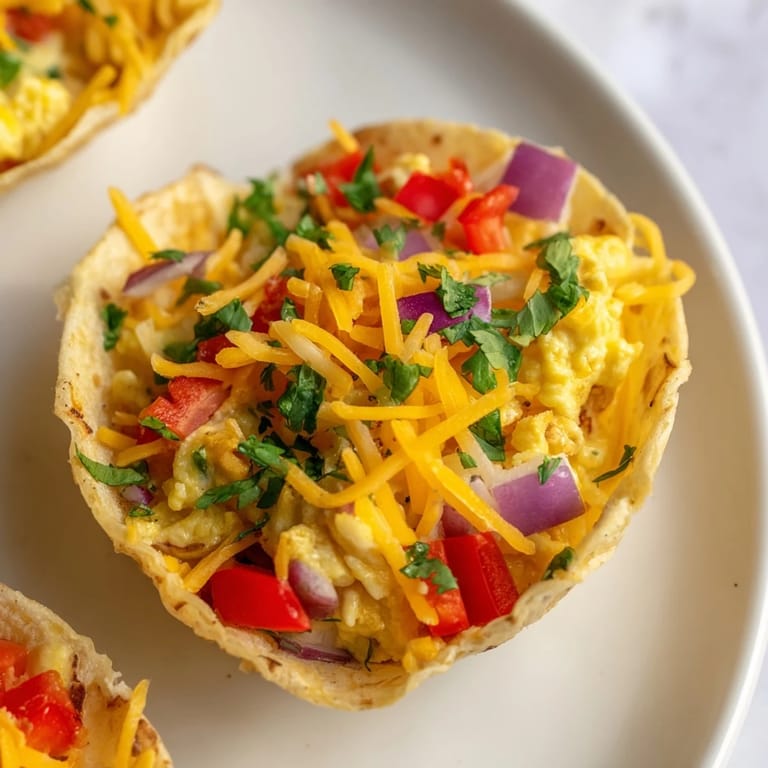
Save My Sunday mornings got infinitely better when I stopped wrestling with a skillet full of scrambled eggs and discovered that taco shells could become tiny, edible vessels for breakfast. A friend mentioned casually that she'd baked eggs in shells on a sheet pan, and I thought she'd lost her mind—until I tried it. Now when the kitchen is still quiet and everyone's shuffling in half-awake, I pull a sheet pan from the oven with eight golden shells bubbling with melted cheese, and breakfast suddenly feels less like a chore and more like a celebration.
I made these for the first time when my roommate's family visited unexpectedly, and I needed to feed five hungry people without looking flustered. I had eggs, cheese, and a half-empty box of taco shells, so I threw it together. Watching their faces light up when they realized the whole thing was baked together—that the shell was still crispy on the outside but soft enough to eat—made me feel like I'd invented something revolutionary. It's become my go-to move when I want to impress without actually trying very hard.
Ingredients
- Eggs: Eight large ones whisked with milk create a custard-like filling that puffs slightly as it bakes, keeping everything tender.
- Whole milk: Just a splash helps the eggs stay silky and prevents them from scrambling into tough little curds.
- Kosher salt and black pepper: Season generously because eggs need a little coaxing to taste like themselves.
- Cheddar cheese: Sharp and dependable, it melts evenly and doesn't disappear into the eggs like some cheeses do.
- Monterey Jack cheese: Milder and creamy, it balances the cheddar and creates a better melt across the whole shell.
- Taco shells: Warm them slightly before filling so they soften just enough to bend without cracking—trust me on this one.
- Bell peppers and red onion: Both add sweetness and crunch; dice them small so they cook through in the oven time.
- Fresh cilantro: A handful scattered on top at the end brings brightness and prevents the whole thing from feeling heavy.
Tired of Takeout? 🥡
Get 10 meals you can make faster than delivery arrives. Seriously.
One email. No spam. Unsubscribe anytime.
Instructions
- Heat your oven and prepare the stage:
- Preheat to 400°F and line your sheet pan with parchment paper so cleanup feels like someone else's problem. A rimmed pan keeps everything contained and makes plating easier than you'd expect.
- Arrange and prop your shells:
- Stand the taco shells upright on the prepared pan, gently opening them just enough so they'll hold filling. They'll look fragile—they're fine, trust them.
- Create your custard:
- Whisk eight eggs with milk, salt, and pepper in a medium bowl until the mixture is pale yellow and uniform. This step takes maybe two minutes and is genuinely the hardest part of the entire recipe.
- Fill each shell evenly:
- Pour the egg mixture into each shell, dividing it as evenly as you can—it doesn't have to be perfect. Overfilling slightly is better than underfilling because the eggs won't puff up much.
- Add your vegetables and cheese:
- Distribute the diced peppers, onion, and both cheeses over the eggs in each shell so every bite has flavor and texture. The cheese should look slightly more generous than feels reasonable.
- Bake until just set:
- Pop the pan into the oven for 16 to 18 minutes—you're looking for eggs that are set but still slightly jiggly in the very center, and cheese that's bubbling at the edges. The eggs will continue to cook slightly after you remove them, so pulling them out one minute earlier is better than one minute later.
- Cool and finish:
- Let everything rest for two minutes so the shells firm up slightly and the eggs set completely. This brief pause is what separates a runny disaster from a perfectly cohesive breakfast.
- Garnish and serve:
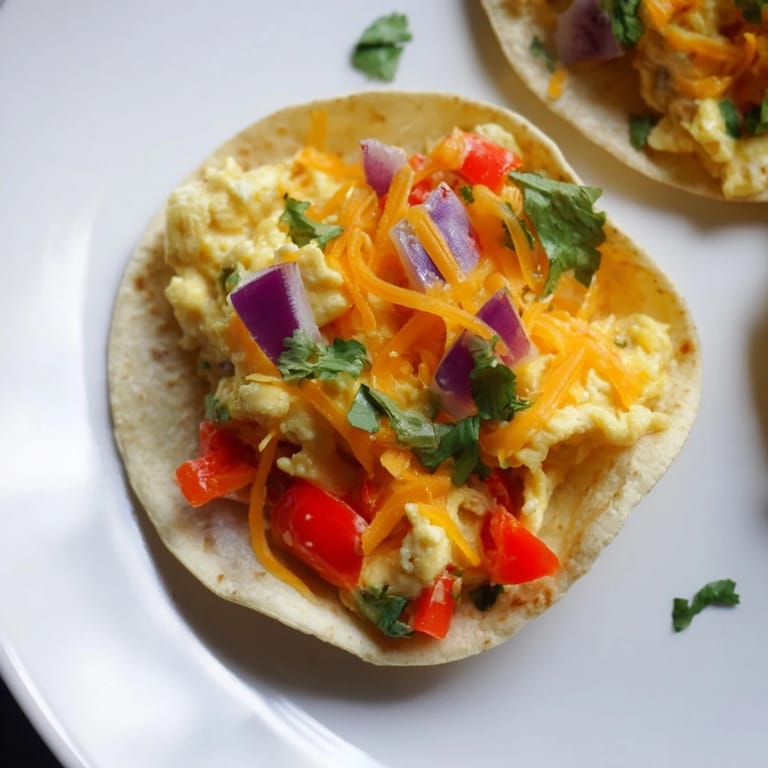
- Scatter fresh cilantro over the top, then set the shells on plates with salsa, avocado, sour cream, or hot sauce alongside. Your guests will reach for toppings and customize, which makes them feel like they helped cook.
 Save
Save The real magic of this dish happened during a chaotic Tuesday morning when my two-year-old nephew watched these shells come out of the oven and got genuinely excited about eating eggs for the first time in his life. Something about seeing the egg still held inside a crispy shell made it feel like an adventure instead of vegetables he usually refuses. That small moment—his face lighting up over something so simple—reminded me that the best recipes are the ones that make people feel taken care of without taking forever.
Why Sheet Pan Cooking Changes Everything
Cooking on a single sheet pan does something to breakfast that feels almost unfair in how easy it becomes. You're not juggling multiple pans, you're not babysitting a skillet, and you're not standing over the stove watching eggs scramble. Instead, you slide one pan into the oven and go pour coffee while everything cooks. The oven does the real work here, heating evenly from all sides so the eggs set gently and the cheese melts without browning too fast. It's the kind of cooking method that makes you feel smarter and less stressed simultaneously.
The Cheese Question
I used to think all cheese was interchangeable in egg dishes, which is how I learned that some cheeses separate and get grainy when heated, while others get stringy and weird. The combination of cheddar and Monterey Jack matters more than you'd think—the cheddar brings flavor and color, the Monterey Jack melts smooth and creamy. You could swap these for gruyere and fontina or use any two cheeses you love, but the rule is: use cheese you'd actually eat on its own, and use about a cup total. Cheese that's fresh and not ancient will melt better and taste brighter.
Customization Without Chaos
The beauty of this recipe is that it's a framework, not a rigid instruction manual. I've made versions with sautéed mushrooms instead of peppers, added crispy bacon crumbled between the shells, even stirred black beans into the egg mixture for a heartier version. The only real rule is: keep any additions relatively small and dry, because too much moisture makes the eggs cook unevenly. Sauté your vegetables slightly before adding them if they're particularly wet, and cooked proteins like bacon or sausage should be ready to go before they hit the pan.
- Add cooked sausage or bacon pieces for a meat-forward version that feels substantial.
- Stir in diced jalapeños for heat that builds as you eat through the shell.
- Use leftover roasted vegetables—they'll warm through and add depth without extra cooking.
 Save
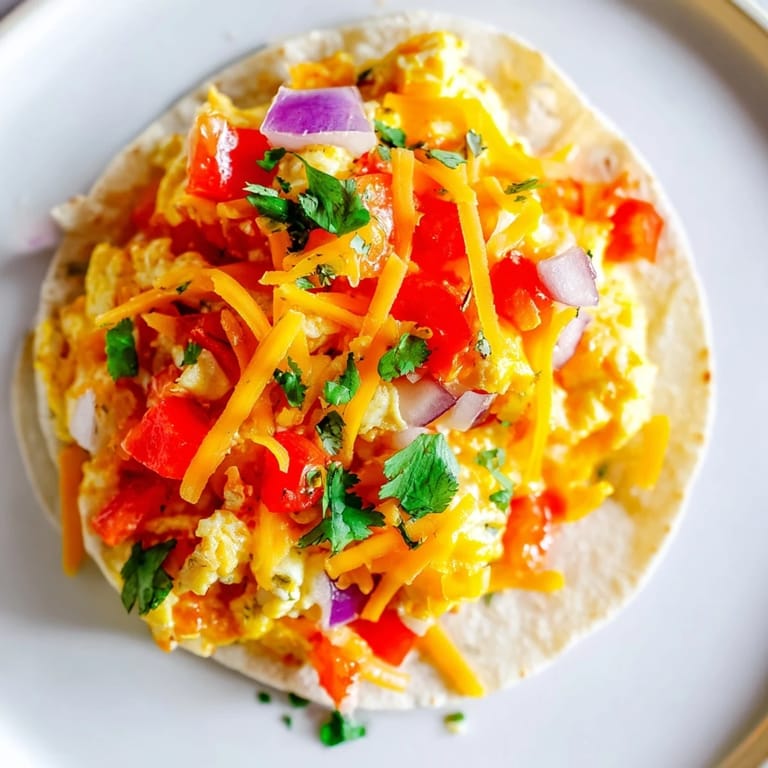
Save These breakfast tacos have become my answer to the question of how to feed a crowd without stress or a sink full of dishes. They're proof that breakfast doesn't need to be complicated to be satisfying.
Cooking Q&A
- → Can I use different cheeses in this dish?
Yes, feel free to swap cheddar and Monterey Jack with your favorite shredded cheeses to suit your taste.
- → How can I make this dish heartier?
Adding cooked sausage, bacon, or black beans before baking will boost the protein and richness.
- → Is it better to use corn or flour taco shells?
Both work well; corn shells add a traditional texture, while flour shells are softer and less prone to cracking.
- → What toppings complement this dish best?
Salsa, sliced avocado, sour cream, and hot sauce all pair nicely, enhancing freshness and flavor.
- → How can I prevent the taco shells from breaking during baking?
Warm the shells slightly before filling and arrange them carefully on the sheet pan to help maintain their shape.