 Save
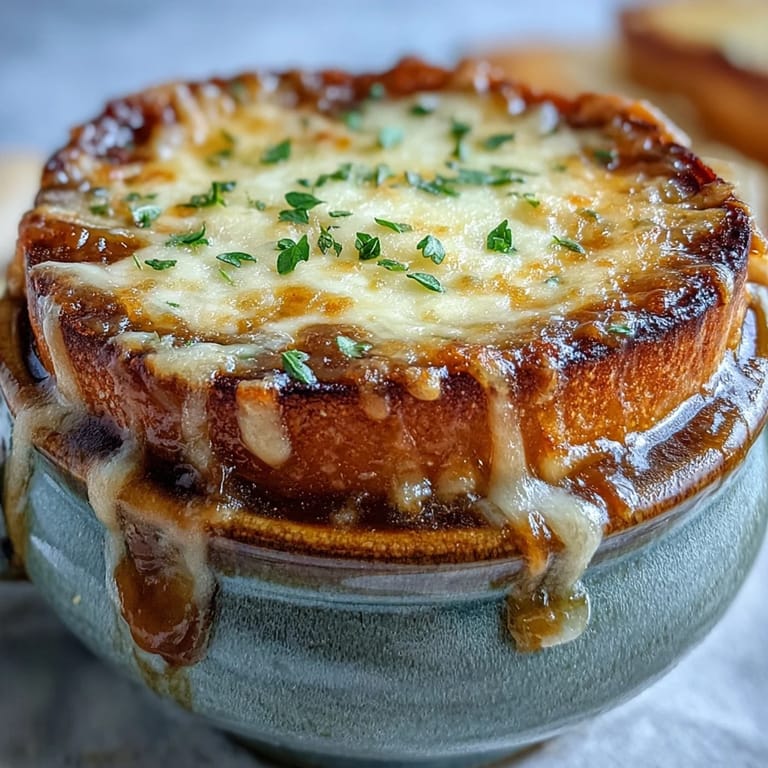
Save The first time I made French onion soup, my kitchen windows fogged completely as the onions slowly transformed from sharp and pungent to deeply sweet and caramelized. I stood there, wooden spoon in hand, watching this alchemical process while snow fell outside, the rich aroma filling every corner of my apartment. My neighbors actually knocked on my door, curious about what heavenly scent was drifting down the hallway. That moment taught me that sometimes the most profound cooking experiences come from the simplest ingredients given proper time and attention.
Last winter, when my friend Sarah was going through a difficult time, I invited her over without telling her what I was making. As she walked through my door, her shoulders visibly relaxed at the aroma filling the apartment. We sat at my tiny table, breaking through that beautiful cheese crust into steaming, rich broth below. Between spoonfuls, her story poured out as freely as the wine we were drinking. Sometimes healing happens over the simplest meals.
Ingredients
- Yellow onions: Look for firm, heavy onions with shiny skins as they contain more natural sugars that develop during the long caramelization process.
- Gruyère cheese: The nutty, slightly sweet flavor is traditional, but I discovered that a mix of Gruyère with a bit of sharp cheddar adds wonderful complexity.
- Dry white wine: It adds acidity that balances the sweetness of the onions while helping to deglaze all those flavorful brown bits from the pan.
- Fresh thyme: Strip the tiny leaves directly into the pot rather than fishing out stems later, a lesson I learned after accidentally leaving a woody stem in a guest's bowl.
- Good stock: The foundation of your soup deserves attention, and homemade is worth it if you can manage, but a high-quality store-bought option works beautifully too.
Tired of Takeout? 🥡
Get 10 meals you can make faster than delivery arrives. Seriously.
One email. No spam. Unsubscribe anytime.
Instructions
- Patience with the onions:
- Heat butter and olive oil in a Dutch oven, then add those thinly sliced onions with a pinch of salt. This is where magic happens slowly, so resist increasing the heat to speed things up.
- The 40-minute transformation:
- Stir occasionally, watching as they soften, shrink, and gradually turn that gorgeous amber color. Add the sugar halfway through to encourage caramelization, noticing how the kitchen fills with an increasingly sweet aroma.
- Building flavor layers:
- Once onions are deeply caramelized, add garlic just briefly until fragrant, then sprinkle in flour to create a light roux. The flour will look clumpy at first but smooths out as you stir.
- The sizzling deglaze:
- Pour in that white wine and listen for that satisfying sizzle as you scrape up all the flavorful bits from the bottom. This step brings acidity and depth that makes this soup special.
- Simmering to perfection:
- Add stock, thyme and bay leaf, then let everything mingle and reduce for about 25 minutes. Youll know its ready when the broth has slightly thickened and tastes rich and complex.
- Creating the crowning glory:
- Toast those baguette slices until golden, then ladle hot soup into oven-safe bowls. Float the toast on top and blanket generously with Gruyère.
- The broiler finish:
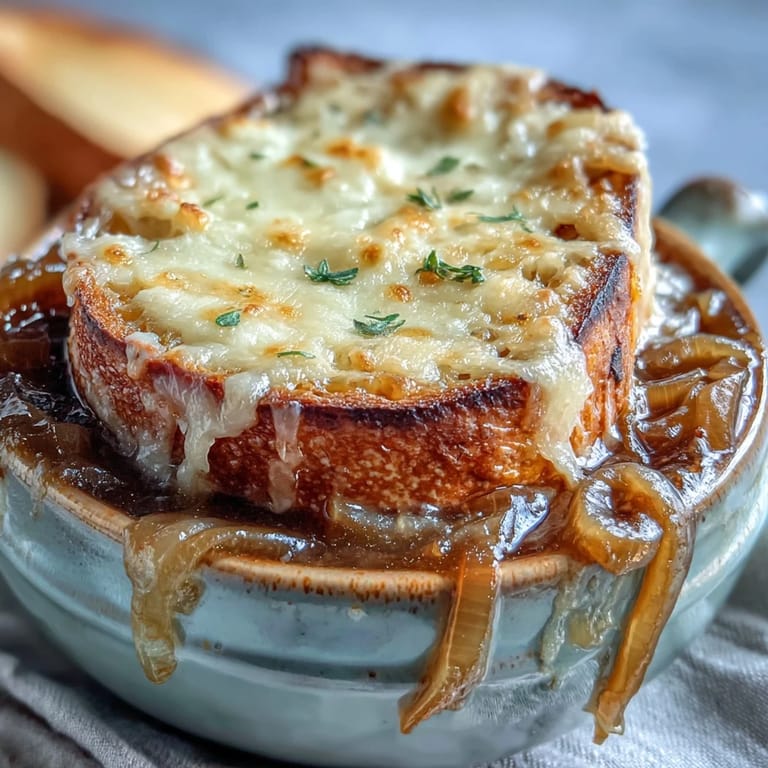
- Place bowls under the broiler and watch carefully as the cheese melts, bubbles, and develops those irresistible browned spots. That crackling sound as the spoon breaks through the top is one of kitchens most satisfying moments.
 Save
Save  Save
Save My brother, who claims to hate onions in any form, stopped by unexpectedly one evening as I was making this soup. The aroma convinced him to try just a spoonful, which turned into a whole bowl, then another. He looked up sheepishly and said, This doesnt count as eating onions. We still laugh about his onion denial years later, but he now requests this soup whenever he visits.
The Secret to Perfect Onions
I learned through multiple batches that slicing technique dramatically affects cooking time and final texture. Cut the onions pole to pole (root to stem) rather than in rings, and they maintain better structure during the long cooking process. Keep the slices consistent but not too thin, about ¼ inch, so they caramelize properly without dissolving completely. The first time I rushed and cut uneven pieces, some burned while others remained nearly raw, teaching me that precision at this stage pays dividends in the finished soup.
Making It Ahead
One winter I discovered the base soup actually improves with an overnight rest in the refrigerator, allowing the flavors to meld and deepen considerably. The broiled cheese and bread topping must be done just before serving, but preparing the soup a day ahead reduces last-minute stress when hosting. I noticed this improvement by accident when unexpected guests canceled, and the reheated soup the next day had developed remarkably more complexity in both aroma and taste, with the onions and broth becoming almost velvety.
Seasonal Variations
Each season offers opportunities to adapt this classic with subtle tweaks that keep it fresh throughout the year. In autumn, I add a splash of apple cider alongside the wine, bringing a gentle sweetness that complements harvest meals. Winter calls for a heartier version with a spoonful of cognac and perhaps a sprinkle of nutmeg, while spring inspires me to float delicate fresh herbs on top just before serving.
- Summer adaptation: Use sweet Vidalia onions when in season and finish with a light sprinkle of fresh thyme for brightness.
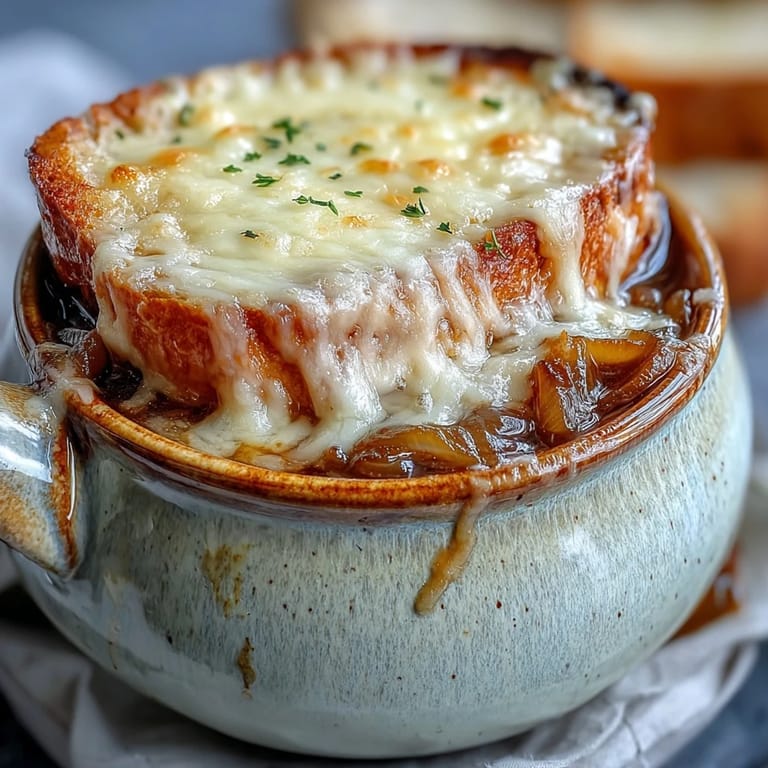
- For a gathering, prepare the soup in a large Dutch oven but broil individual portions as guests arrive so everyone gets that perfect cheese pull moment.
- Let the soup rest for 5 minutes after broiling to avoid burnt mouths, a painful lesson learned through enthusiastic impatience.
 Save
Save 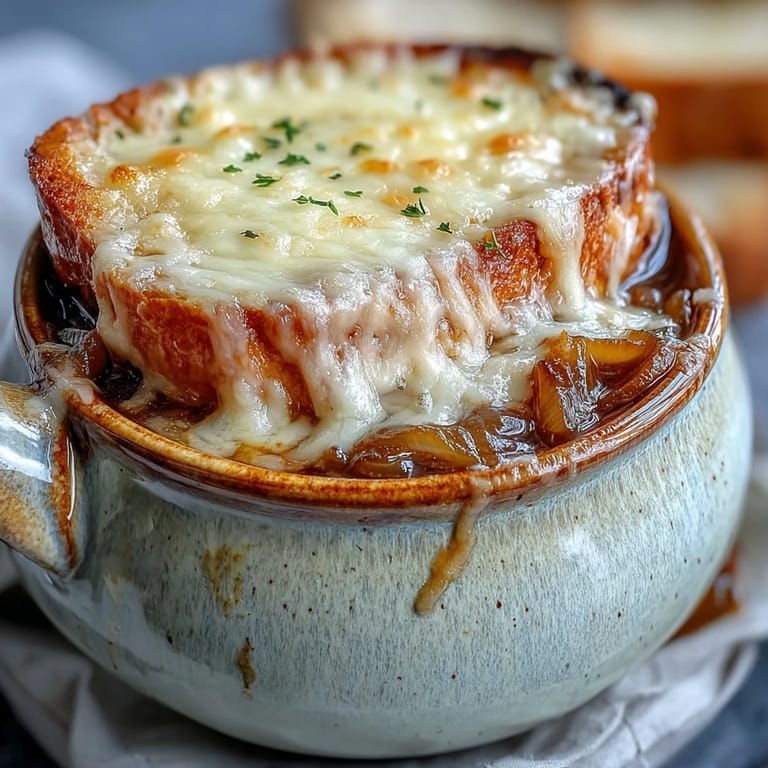 Save
Save This soup has become my kitchen barometer for changing seasons, appearing on my table at the first autumn chill and the last cool spring evening. Its funny how something so humble, essentially onions and broth, can carry so much comfort and connection.
Cooking Q&A
- → How long does it take to caramelize onions properly?
Allow 35-40 minutes over medium heat, stirring frequently. The onions should turn deep golden brown and develop a sweet, concentrated flavor. Adding sugar and salt halfway through helps the caramelization process.
- → What type of cheese works best for the topping?
Gruyère is the traditional choice, offering excellent melting properties and nutty flavor. Emmental or Comté make wonderful alternatives. The key is using a cheese that melts well and develops a golden, bubbly crust under the broiler.
- → Can I make this vegetarian?
Absolutely. Simply substitute vegetable stock for the beef stock called for in the base. The deep flavor comes primarily from the caramelized onions, so the soup remains rich and satisfying even with vegetable broth.
- → How do I achieve the perfect cheese crust?
Use oven-safe bowls and place them on a baking sheet for easy transfer. Broil on the upper rack for 2-3 minutes, watching closely. The cheese should be melted, bubbling, and golden brown with slightly crispy edges.
- → Can I prepare this in advance?
The soup base actually improves after a day or two in the refrigerator. Prepare through step 5, cool, and store. Reheat gently before adding the bread and cheese topping. The flavors will have melded beautifully, making it even more delicious.
- → What wine should I use for deglazing?
A dry white wine like Sauvignon Blanc or Pinot Grigio works beautifully. The wine adds depth and acidity to balance the sweet onions. For extra richness, add a splash of brandy or sherry along with the wine.