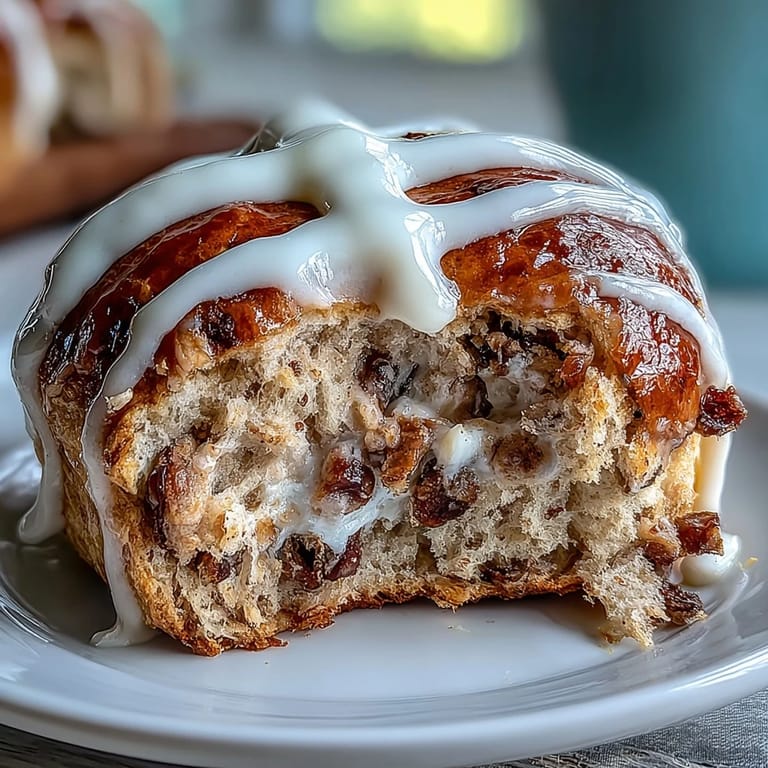
 Save
Save The faint trace of orange zest clung to my fingertips as I rolled the soft dough, sunlight angling through the kitchen window like a marked invitation. It wasn’t any particular holiday—just a chilly weekend afternoon ripe for the promise of warm, spiced buns. I could hear the gentle hum of yeast working its magic, a reassuring soundtrack to my small culinary ritual. There’s something quietly rewarding about forming each bun, knowing their golden domes would soon carry delicate, sugary crosses. Hot cross buns have somehow woven themselves into my routine, far beyond their Easter reputation.
One spring, my neighbors stopped by unannounced just as the buns were coming out of the oven, and the kitchen filled with laughter, apricot-sweet perfume, and easy conversation as if we had planned it all along. Sharing these buns hot and fresh became an unexpectedly joyful way to welcome friends—and now I make a double batch every year, just in case.
Ingredients
- Bread flour: This sturdy flour builds a pillowy crumb—don’t be tempted by all-purpose if you want lift and chew.
- Granulated sugar: The subtle sweetness balances the spices and creates a tender crust.
- Active dry yeast: Proof with warm milk and watch for bubbly life—it’s your assurance the buns will rise beautifully.
- Salt: Just enough to pull the flavors together; too little and the buns fall flat.
- Ground cinnamon: The backbone of warmth, filling the whole kitchen with comforting fragrance—always opt for freshly opened spice.
- Ground nutmeg: A dash is transformative, bringing earthy undertones that mingle perfectly with dried fruit.
- Ground allspice: Adds depth and mysterious charm, so don’t skip it if you have some in the cupboard.
- Whole milk: Use lukewarm, not hot, to keep the yeast happy and dough supple.
- Unsalted butter: Melted and cooled: it adds richness without overwhelming the delicate crumb.
- Eggs: Let them come to room temperature first for even mixing and extra rise.
- Raisins or currants: Their bursts of tangy sweetness are classic, though dried cranberries or apricots can be fun swaps.
- Orange zest (optional): Brightens everything; a microplane is your best friend here.
- All-purpose flour (for cross paste): Blends quickly with water to top each bun in a signature cross.
- Water (for cross paste): Adjust to a pipeable thickness—you’re aiming for toothpaste, not syrup.
- Apricot jam or honey (for glaze): Both lend a gentle shine and subtle floral aroma; strain jam for extra smoothness.
- Water (for glaze): Just a splash loosens the glaze for easy brushing.
Tired of Takeout? 🥡
Get 10 meals you can make faster than delivery arrives. Seriously.
One email. No spam. Unsubscribe anytime.
Instructions
- Mix the dry:
- Add flour, sugar, yeast, salt, cinnamon, nutmeg, and allspice to a large bowl—run your fingers through to blend and feel the grains mix.
- Build your dough:
- Make a well and pour in warm milk, melted butter, and eggs; stir until sticky clumps form and gather it all together.
- Knead with care:
- Turn onto a lightly floured surface, kneading with the heels of your hands for 8–10 minutes—smooth, elastic dough will spring back when pressed.
- Add the fruit:
- Scatter in raisins (and orange zest if desired), folding and kneading gently until evenly distributed—your dough might feel a little lumpy but that’s how the magic happens.
- First rise:
- Lightly grease a bowl, nestle in the dough, and cover—set somewhere cozy and draft-free, letting it grow to double its size (about an hour) as you peek hopefully every now and again.
- Shape and rest:
- Punch down the dough (the soft hiss is so satisfying!) then divide into 12 pieces, cupping each into a plump ball and arranging them on a parchment-lined tray with a bit of space between.
- Buns on the rise:
- Cover and let them puff up for about 45 minutes; look for buns that touch and feel airy under your palm.
- Pipe the crosses:
- Mix flour and water to make a smooth, thick paste—transfer to a piping bag and draw a confident cross atop each bun before they head to the oven.
- Bake:
- Slide the tray into a preheated 375°F (190°C) oven and watch for golden browning after 20–25 minutes; your kitchen should smell heavenly.
- Prepare the glaze:
- While buns bake, warm jam or honey with water until glossy and silky—strain if you like it extra smooth.
- Finish with shine:
- Straight from the oven, brush the hot buns generously with glaze so they gleam invitingly.
- Let cool:
- Wait just a few minutes before pulling them apart and serving warm, maybe with a swipe of butter.
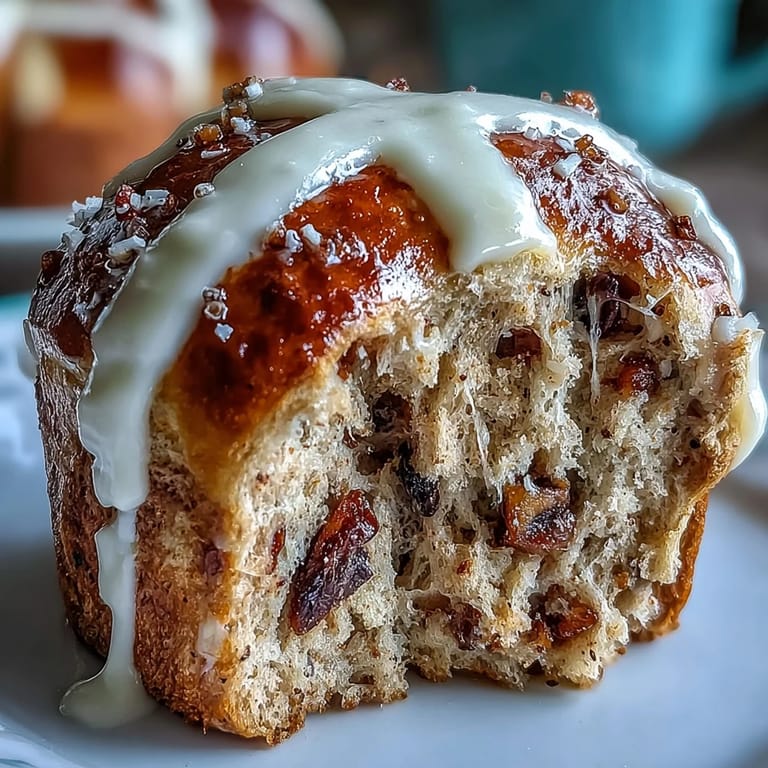 Save
Save The first time someone told me these buns reminded them of their grandma’s baking, I felt a quiet pride mixed with a dash of surprise. It’s not every day your kitchen accidentally turns into a portal for someone else’s memories.
Bringing the Family Together
I’ve watched impatient little hands sneak raisins as I shape the dough, and the sound of buns tearing open turns quiet moments into shared, happy ones. Sometimes, even those usually indifferent to baking pitch in, eager to pipe crosses even if they come out a little wobbly.
Swaps and Variations Worth Trying
If I’m feeling adventurous—or just running low on raisins—a handful of chopped dried apricots or cranberries brings new personality to the mix. A spoonful of mixed candied peel can make the buns taste like a British bakery in the winter, and I love how easily the recipe forgives a substitution or two.
Making It Ahead and Keeping It Fresh
Buns are at their fluffiest the day they’re baked, but a quick toast revives yesterday’s batch into a treat just as tempting. For longer stashes, I freeze cooled buns and warm them gently, so the kitchen smells inviting all over again.
- Slice before freezing to make quick breakfasts a breeze.
- Use honey glaze for a floral note if apricot jam is missing from your pantry.
- A little orange zest always brightens up the entire batch.
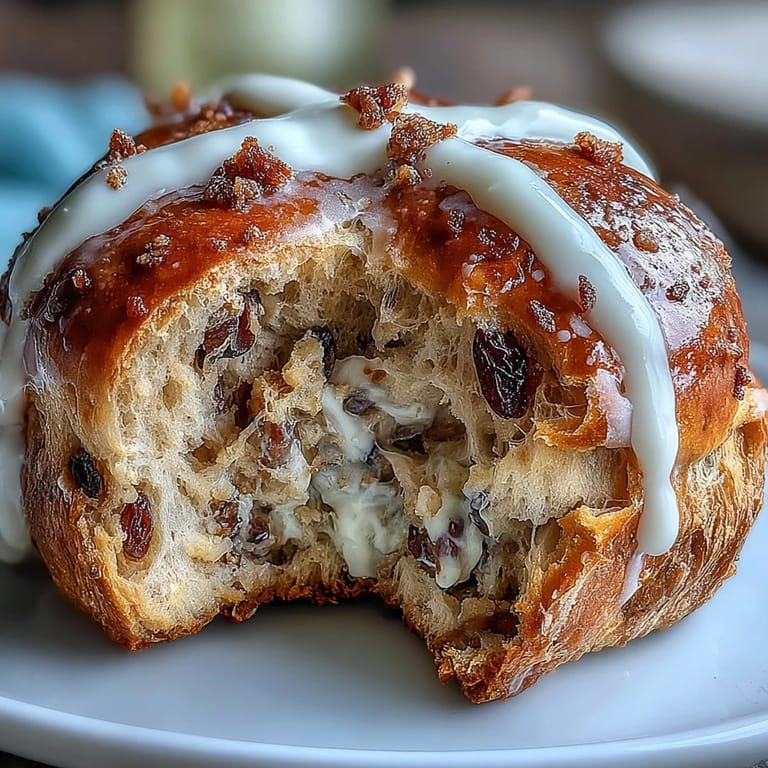 Save
Save No matter how many times I make these, I still pause and inhale the sweetly spiced aroma—and somehow, that little moment makes every batch feel special.
Cooking Q&A
- → How do I know when the dough is properly kneaded?
The dough should feel smooth and elastic and pass the windowpane test: stretch a small piece thinly and it should form a translucent membrane without tearing. Kneading usually takes 8–10 minutes by hand or in a mixer.
- → Can I swap raisins for other dried fruit?
Yes. Substitute half or all the raisins with chopped dried apricots, cranberries, or mixed candied peel for a different flavor and texture. Soak firmer dried fruit briefly in warm water or juice if very dry.
- → What causes dense buns and how can I avoid it?
Dense buns are usually from under-kneading, inadequate rising time, or too much flour. Ensure the dough is well-kneaded, give the full first and second rises in a warm draft-free spot, and measure flour by weight or spoon-and-level to avoid excess.
- → How do I make the piped crosses neat?
Use a thick, pipeable paste of flour and water and a small round piping tip or a snipped zip-top bag. Pipe with steady pressure on slightly risen buns; if the paste is too thin it will spread, so adjust to a firm consistency.
- → What’s the best way to store and reheat leftover buns?
Cool completely, then freeze in a single layer or airtight bag for up to 3 months. To reheat, thaw and warm gently in a low oven or microwave briefly, then brush with warmed jam or honey to restore shine and softness.
- → Can I make the dough ahead and refrigerate?
Yes. After the first rise, punch down and refrigerate the dough in a covered bowl for up to 24 hours. Bring back to room temperature and complete shaping and the second rise before piping crosses and baking.