 Save
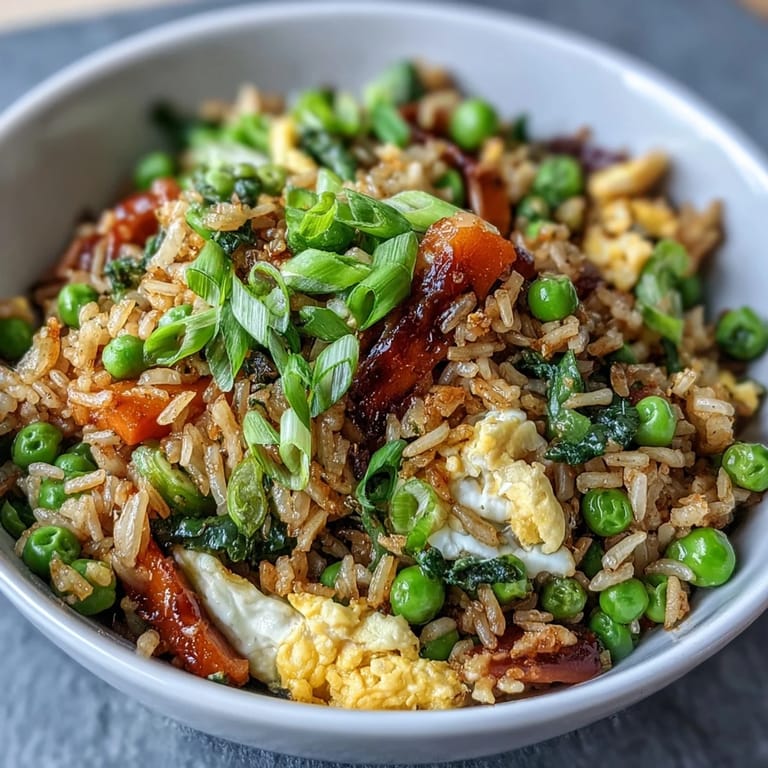
Save My neighbor Sarah showed up at my door one Tuesday evening with a bag of just-picked spring peas from her garden, and I knew exactly what to do with them. That night, I tossed together whatever colorful vegetables I had lingering in the crisper drawer with some day-old rice and a hot wok, and something magical happened—the kind of dish that tastes restaurant-quality but feels completely effortless. Now it's become my go-to when I want something vibrant and nourishing without spending an hour in the kitchen.
I made this for my sister's surprise lunch visit when she called saying she was five minutes away, and watching her eyes light up when she took that first bite reminded me why I love cooking so much. She asked for the recipe immediately, then spent the next week texting me photos of her attempts with slightly different vegetables each time. Food that brings people together like that, without fuss or pretension, feels like the best kind of magic.
Ingredients
- Cooked jasmine or long-grain rice (3 cups, preferably day-old and cold): Day-old rice is non-negotiable here—fresh rice releases too much moisture and turns mushy, while chilled rice stays separate and has this perfect tender-but-distinct texture that makes fried rice sing.
- Spring peas (1 cup, fresh or frozen): These bright little gems stay tender even with high heat, and their natural sweetness balances the savory soy sauce beautifully.
- Carrots, finely diced (1 cup): The smaller you cut them, the faster they cook and the more evenly they distribute throughout every bite.
- Red bell pepper, diced (1): Red peppers bring both sweetness and a vibrant pop of color that makes the whole dish feel celebratory.
- Green onions, sliced (1/2 cup, plus more for garnish): Keep some raw and fresh for garnish—the contrast between cooked and fresh onion is what makes your palate wake up.
- Corn kernels (1/2 cup, optional): A handful of corn adds texture and a touch of natural sweetness that rounds out the savory flavors.
- Garlic, minced (2 cloves): Mince it fine so it distributes evenly and doesn't burn—burnt garlic tastes bitter and ruins the whole balance.
- Fresh ginger, minced (1-inch piece): This is the secret ingredient that lifts everything from ordinary to extraordinary, so don't skip it or reduce it.
- Large eggs, lightly beaten (2): These scramble into golden threads that you'll find yourself picking out of the rice because they're so good, or omit entirely for vegan.
- Soy sauce or tamari (3 tbsp): Tamari is the gluten-free friend that works just as well, and both add that savory umami depth that makes people ask what your secret ingredient is.
- Toasted sesame oil (1 tbsp): A little goes a long way—this stuff is liquid gold, and drizzling it at the end rather than the beginning keeps its nutty flavor bright and present.
- Freshly ground black pepper (1/2 tsp): Fresh pepper tastes completely different from the pre-ground kind, and this dish deserves that small upgrade.
- Sriracha or chili sauce (1 tsp, optional): Add this if you want a gentle heat that creeps up slowly, or skip it if you're feeding people who prefer things mild.
- Vegetable oil (2 tbsp, such as canola or peanut): You need enough oil to coat the rice and vegetables, but not so much that things get greasy—split it into two additions for better control.
Tired of Takeout? 🥡
Get 10 meals you can make faster than delivery arrives. Seriously.
One email. No spam. Unsubscribe anytime.
Instructions
- Get everything prepped and chilled:
- Dice your vegetables into similar-sized pieces so they cook evenly, mince your garlic and ginger fine, and make sure your rice is cold—this is the part that determines whether your fried rice will be a triumph or a disappointment, so take your time here.
- Wake up the wok with carrots and peppers:
- Heat 1 tablespoon of oil until it shimmers and almost smokes, then add your carrots and bell pepper right away. You'll hear them start to sizzle immediately, and after 2 to 3 minutes they should be slightly softened but still have a little snap to them.
- Build layers of flavor with aromatics:
- Push everything to the side, add your garlic, ginger, and peas to the hot pan, and stir for about 2 minutes—you'll smell that moment when the garlic becomes fragrant and stops smelling raw, and that's your signal you're on the right track.
- Scramble the eggs into golden threads:
- Push vegetables to the side again, add the remaining oil, pour in your beaten eggs, and let them sit for just a moment before gently stirring them with the vegetables. This step takes less than a minute because the pan is already screaming hot.
- Marry the rice with everything:
- Add your chilled rice to the pan and break up any clumps with your spatula, tossing constantly for a minute or two until the rice is distributed throughout and starting to warm through.
- Season and coat until golden:
- Drizzle the soy sauce and sesame oil around the pan, add your sriracha if you're using it, and stir everything together for 3 to 4 minutes until the rice takes on a light golden color and smells absolutely irresistible.
- Finish with brightness and serve:
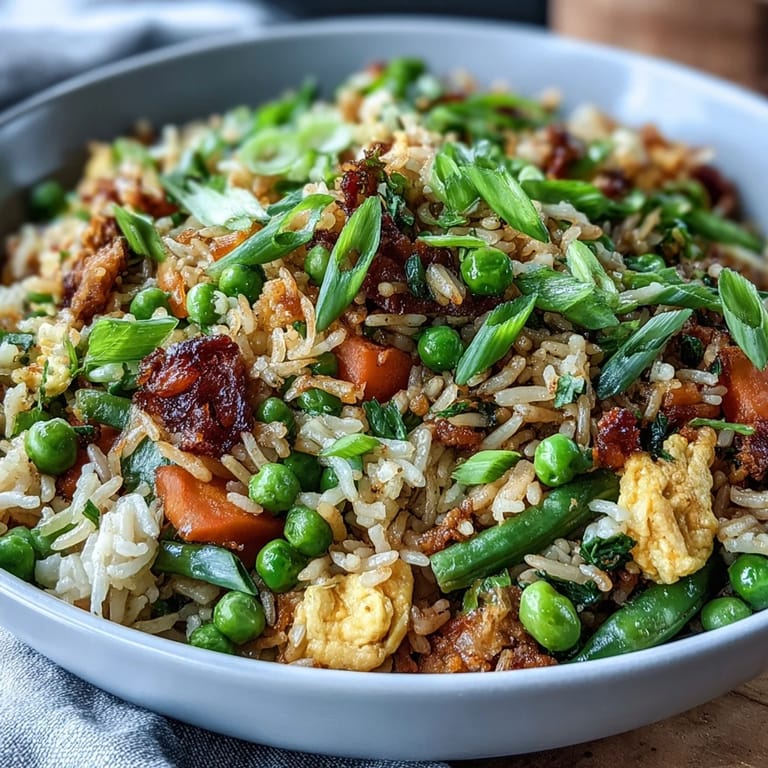
- Remove from heat, stir in your fresh green onions, and taste it once more—this is your moment to decide if it needs another pinch of pepper or a drizzle more sesame oil before you plate it up.
 Save
Save There was a quiet moment one evening when my eight-year-old walked into the kitchen, breathed in that ginger-and-sesame smell, and asked if he could help—and I realized that teaching someone to make this dish is teaching them that dinner doesn't have to be complicated to be delicious. He's made it twice on his own now, and each time the house smells like home.
Why Cold Rice Matters More Than You'd Think
The texture difference between using cold, day-old rice and fresh, warm rice is honestly the difference between a good fried rice and a great one. When rice is cold, each grain has firmed up and separated, so when it hits the hot wok, it fries instead of steams—you get these little pockets of golden crispiness instead of a gluey mass. I keep leftover rice in a glass container on my counter now so it's always ready when inspiration strikes, and my fried rice has gotten noticeably better for it.
Making It Your Own With Seasonal Swaps
Spring peas and carrots are perfect, but this dish is honestly a blank canvas for whatever you've got in your crisper. In summer I throw in zucchini and snap peas, in winter I've used broccoli and mushrooms, and every version feels equally at home on my table. The beauty is that as long as you're respecting the techniques—high heat, cold rice, proper seasoning—you can't really go wrong.
Protein Options and Vegan Variations
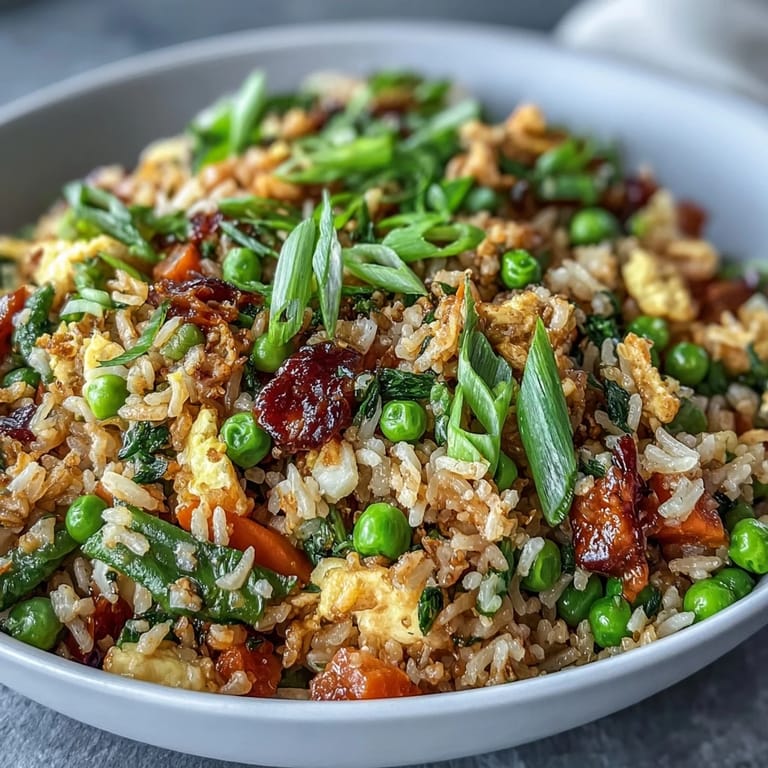
The eggs are wonderful but completely optional, and honestly I've made this dish dozens of ways depending on who I'm cooking for and what I have on hand. Adding scrambled tofu gives you that creamy element if you're going vegan, while some nights I've tossed in cubed tempeh that I sautéed first, and it adds this nutty, hearty note that makes the whole thing feel more substantial. You could also stir in some cooked chickpeas, cashew pieces, or even a handful of peanuts for crunch—the soy sauce and sesame oil will tie everything together beautifully.
- Scramble extra-firm tofu in a bit of oil before adding it to the rice for that golden, eggy texture.
- Keep some chopped peanuts or cashews on the side and let people add their own crunch at the table.
- A squeeze of fresh lime juice right before serving brightens everything up and makes people wonder what your secret is.
 Save
Save This is the kind of recipe that saves you on a random Wednesday evening when you're tired but your people are hungry, and it tastes good enough to feel like you actually tried. There's something deeply satisfying about turning simple leftovers and whatever vegetables you have into something that makes everyone at the table smile.
Cooking Q&A
- → What type of rice works best for this dish?
Day-old jasmine or long-grain rice is ideal as it helps achieve a fluffy and non-mushy texture during stir-frying.
- → Can I make this dish vegan?
Yes, simply omit the eggs or use scrambled tofu as a plant-based alternative without losing richness.
- → How should I prepare the vegetables for best flavor?
Dice the carrots and bell peppers evenly and stir-fry them briefly until just tender to retain freshness and crunch.
- → What can I use instead of soy sauce for gluten-free needs?
Use tamari sauce, which is gluten-free, to maintain the savory umami flavor without gluten.
- → How can I add more protein to this dish?
Consider adding cubed tofu or tempeh; sauté them before mixing into the rice for extra texture and nutrition.
- → Is it okay to use frozen spring peas?
Yes, frozen peas work well; just add them directly when stir-frying to heat through without overcooking.