 Save
Save One sweltering afternoon, my neighbor stopped by with an armful of cucumbers from her garden and said, "I can't eat another plain salad." Within minutes, I'd raided my pantry for peanut butter and lime juice, whisking together a dressing that tasted like a Bangkok street vendor had set up shop in my kitchen. That first bite—cool, creamy, punchy with lime and garlic—changed how I think about summer salads. Now whenever I make this Thai-style peanut cucumber salad, I'm transported back to that kitchen, the smell of toasted sesame oil mixing with fresh cilantro, and the realization that the best meals often come from happy accidents.
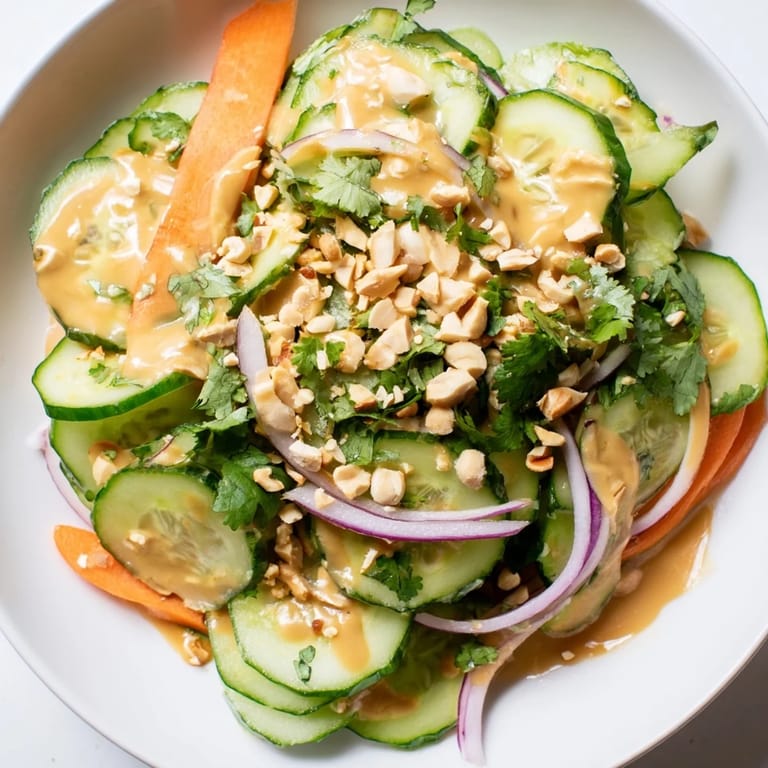
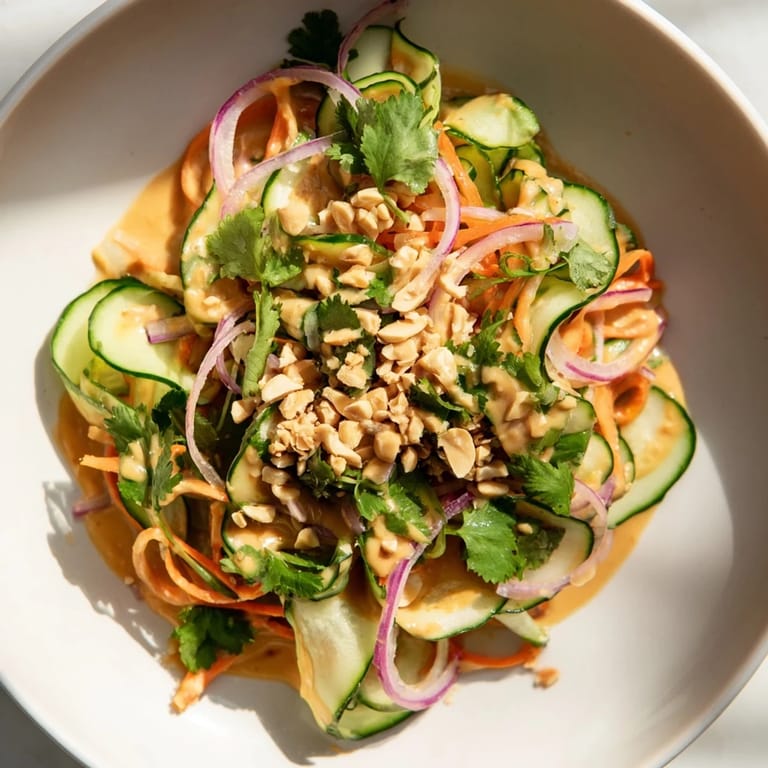
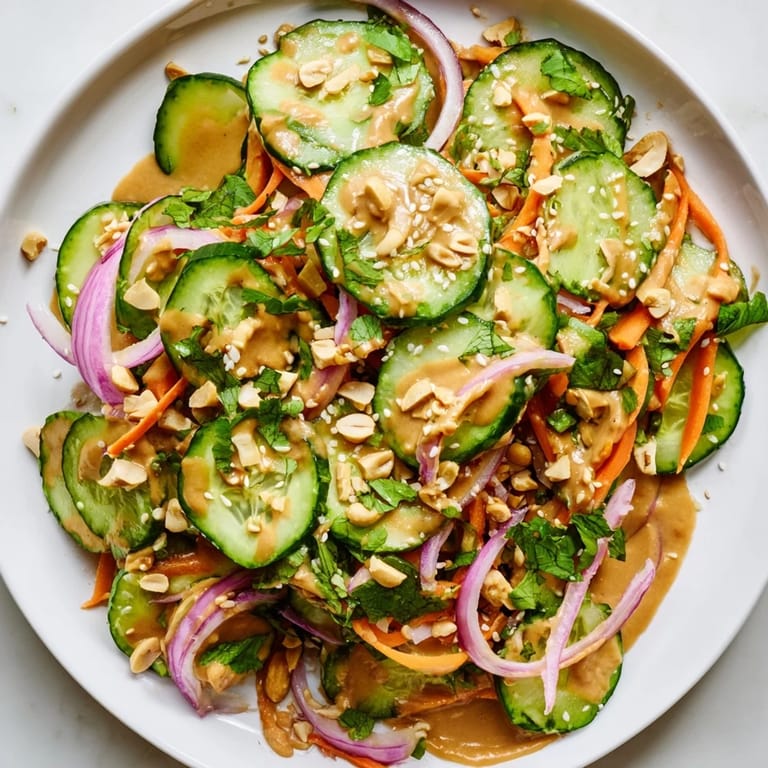
I made this salad for a potluck once, expecting it to sit untouched while people reached for the pasta salad. Instead, someone went back three times and asked for the recipe before dessert was even served. That's when I understood—this isn't just refreshing, it's memorable. The way the creamy dressing clings to each cucumber slice, how the sesame seeds catch the light, how everyone seems surprised that something this restaurant-quality came from a home kitchen.
Ingredients
- Cucumbers (2 large): Use firm, crisp cucumbers sliced thin—they're the foundation of texture here, so don't skip the thinness part or they'll hold too much water.
- Carrot (1 medium, julienned): The ribbons add sweetness and visual brightness; a vegetable peeler works great if you don't have a mandoline.
- Red onion (1/4 small): Just enough for a sharp bite without overpowering; more makes the salad harsh, less and you lose that edge.
- Fresh cilantro (1/4 cup): Non-negotiable for authentic flavor; dried cilantro tastes like sadness, so please buy it fresh.
- Roasted peanuts (2 tablespoons, chopped): These provide textural contrast and a savory finish—roasted nuts are richer than raw.
- Sesame seeds (1 tablespoon): Optional but highly encouraged; they toast slightly when mixed in and add a nutty dimension.
- Creamy peanut butter (1/4 cup): The base of your dressing—use one without added sugar if you can, since we're adding honey anyway.
- Soy sauce (2 tablespoons): Use low-sodium if you prefer control over saltiness; regular soy sauce can make the whole salad too salty.
- Rice vinegar (1 tablespoon): Milder than white vinegar, it rounds out the flavor without sharpness.
- Lime juice (1 tablespoon, freshly squeezed): Bottled lime juice tastes tinny; fresh is worth the two seconds it takes to squeeze.
- Honey or maple syrup (1 tablespoon): A touch of sweetness balances the spice and salt; they're interchangeable here.
- Toasted sesame oil (1 teaspoon): This is concentrated stuff—a little goes far, and regular sesame oil tastes like nothing by comparison.
- Garlic (1 small clove, minced): One clove is enough; two will dominate everything else you've worked for.
- Fresh ginger (1 teaspoon, grated): Use a microplane if you have one—it releases more flavor than chopping.
- Warm water (1–2 tablespoons): Brings the dressing to a pourable consistency without thinning the flavors.
- Red pepper flakes or sriracha (1/2 teaspoon, optional): Add heat only if you enjoy it; the salad is delicious without it.
Tired of Takeout? 🥡
Get 10 meals you can make faster than delivery arrives. Seriously.
One email. No spam. Unsubscribe anytime.
Instructions
- Slice and prep the vegetables:
- In a large bowl, combine your thinly sliced cucumbers, julienned carrot, thin red onion slices, and roughly chopped cilantro. Don't stress about perfect knife work—the slight imperfections actually catch the dressing better.
- Build the dressing:
- In a separate bowl, whisk together the peanut butter, soy sauce, rice vinegar, lime juice, honey, sesame oil, minced garlic, and grated ginger until combined. Slowly add warm water, a tablespoon at a time, whisking as you go until the dressing becomes smooth and pours easily—you want it thick enough to coat but thin enough to distribute evenly.
- Add heat (if desired):
- Stir in red pepper flakes or sriracha now if you want it, tasting as you go since both are easy to overdo. You can always add more, but you can't take it back.
- Bring it together:
- Pour the dressing over your vegetables and toss gently to coat everything, being careful not to crush the cucumber slices. The key is gentle—you want vegetables, not mush.
- Top and serve:
- Sprinkle the chopped roasted peanuts and sesame seeds across the top, serving immediately for maximum crunch or chilling for up to 30 minutes if you prefer it colder and crisper.
 Save
Save My partner took one bite and said it tasted like we'd ordered takeout, which somehow felt like the highest compliment. That's what I love about this salad—it feels fancy and intentional, like you've done something special, even though you've really just whisked together a few pantry staples. It's become the dish I make when I want to feel like I'm treating myself without any of the fuss.
Why This Salad Works
Thai cuisine understands something essential: balance. In this salad, you've got creamy from the peanut butter, tart from the lime and vinegar, sweet from the honey, salty from the soy sauce, and aromatic from the garlic and ginger. Each element pulls in a different direction, which is exactly why one bite never gets boring. The cold vegetables ground all that intensity, and the crunch keeps your mouth engaged. It's a lesson I've carried into other cooking: when flavors are in conversation rather than fighting, everything tastes better.
Customizing Without Losing the Plot
I've experimented with this salad more than most recipes because it's so forgiving. Bell peppers add crunch and sweetness, radishes bring sharpness, mung bean sprouts add texture, and microgreens make it feel restaurant-worthy. The one thing I don't mess with is the dressing base—that's what makes it taste authentically Thai. Some nights I add grilled chicken or crispy tofu and eat it as dinner, other times I serve it alongside a curry and let it cool everything down. The salad adapts to what you need, which is rare and valuable.
Storage and Timing
Here's something I've learned the hard way: assemble this salad as close to serving time as possible. Cucumbers release water, the dressing gets diluted, and all that bright flavor mutes into something sad. If you're prepping for a picnic or gathering, keep the vegetables and dressing separate and toss just before eating. I've made this ahead by 30 minutes and still had a good salad, but pushing beyond that requires accepting some compromise. The taste hasn't changed, but the texture loses that snap that makes people ask for the recipe.
- Keep the dressing in an airtight container and whisk before using.
- Store vegetables separately and dress right before serving for the best texture.
- Leftovers last about 24 hours in the fridge, though they're best eaten fresh.
 Save
Save This salad taught me that the simplest dishes often taste the most sophisticated. There's something grounding about making something fresh and alive with just vegetables, pantry staples, and your own two hands.
Cooking Q&A
- → What ingredients provide the tangy flavor?
Lime juice and rice vinegar contribute to the tangy notes in the dressing.
- → Can I make this salad spicier?
Yes, add red pepper flakes or sriracha to the dressing for a spicy kick.
- → How do I achieve a creamy dressing consistency?
Whisk peanut butter with soy sauce, lime juice, honey, garlic, ginger, and add warm water gradually until smooth.
- → What alternatives are there for honey in the dressing?
Maple syrup can be used as a vegan-friendly sweetener substitute.
- → How long can the salad be stored?
It’s best served fresh or chilled up to 30 minutes to maintain crispness and texture.
- → Are there suggested add-ins to vary the salad?
Adding thinly sliced bell peppers or radish increases crunch and flavor variety.