 Save
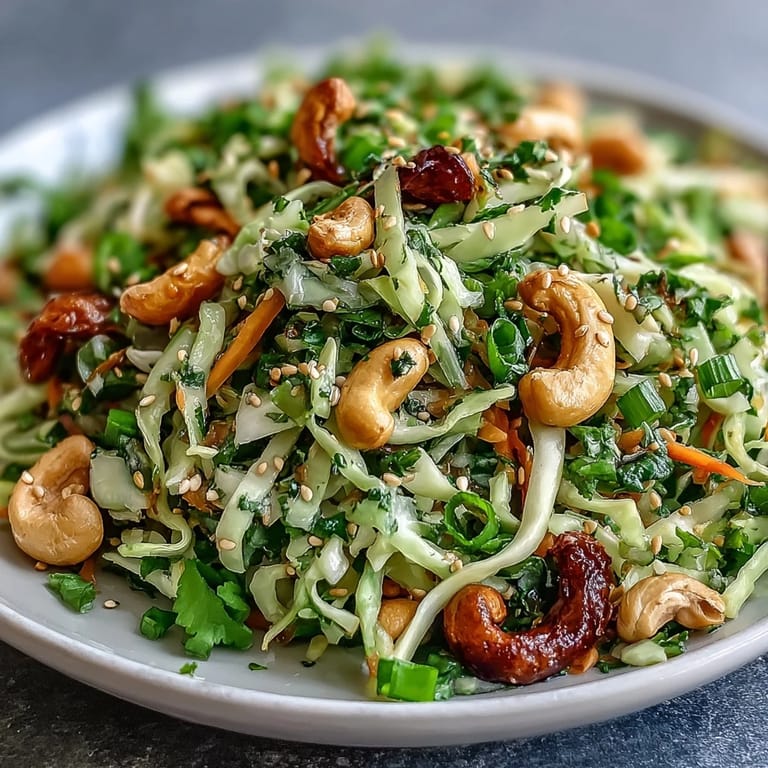
Save My neighbor brought this salad to a block party last summer, and I watched the bowl empty in under ten minutes. Everyone kept asking what made it so addictive, and she just smiled and said it was all about the crunch and the dressing. I went home that night determined to recreate it, armed with nothing but a mental note of colors and textures. After three tries tweaking the balance of sweet, tangy, and savory, I finally nailed it. Now it's the dish I make when I need something fast, bright, and guaranteed to disappear.
I once threw this together for a potluck at work, and my coworker who claimed to hate cabbage went back for thirds. She cornered me later by the coffee machine, asking if I'd used some kind of secret ingredient. I told her it was just fresh ginger and a good squeeze of lime, but she swore there was magic involved. That day I learned that a great dressing can change someone's mind about an entire vegetable. It's been my go-to confidence dish ever since.
Ingredients
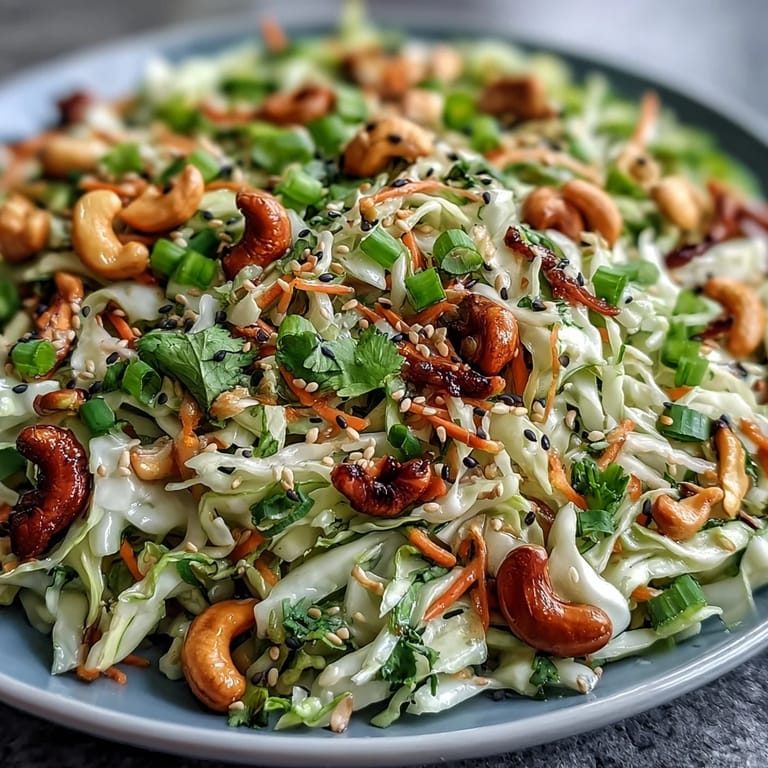
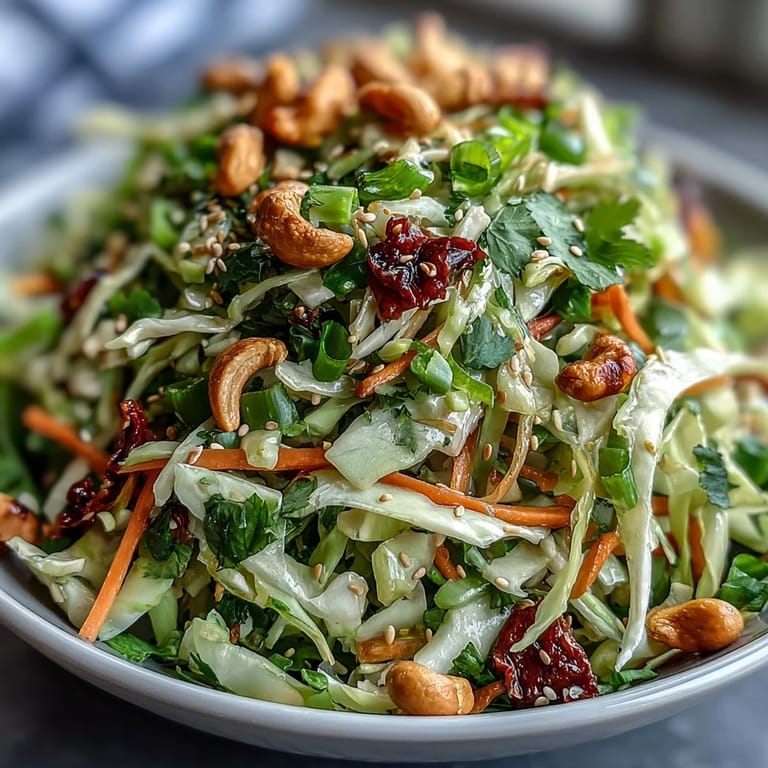
- Shredded green cabbage: The backbone of the salad, offering a mild sweetness and sturdy crunch that holds up beautifully under dressing.
- Shredded red cabbage: Adds a pop of color and a slightly peppery edge that balances the green cabbage's mildness.
- Carrot, julienned: Brings natural sweetness and a vibrant orange contrast, plus extra crunch that makes every forkful interesting.
- Green onions, thinly sliced: Offer a gentle, fresh bite without the harshness of raw white onion.
- Fresh cilantro leaves, chopped: Introduces a bright, herbaceous note that lifts the whole salad, though you can swap parsley if cilantro isn't your thing.
- Roasted cashews or peanuts, roughly chopped: Provide richness and a satisfying crunch that contrasts with the tender vegetables.
- Toasted sesame seeds: Add a nutty, toasted flavor and a delicate texture that clings to the dressing.
- Toasted sesame oil: The soul of the dressing, delivering deep, nutty warmth that makes the salad unmistakably Asian-inspired.
- Rice vinegar: Brings a gentle tanginess that's milder than other vinegars, letting the other flavors shine.
- Soy sauce or tamari: Adds umami depth and a touch of saltiness, with tamari being the gluten-free swap.
- Fresh lime juice: Cuts through the richness with bright acidity and a hint of tropical flair.
- Honey or maple syrup: Balances the tangy and savory elements with just enough sweetness to round everything out.
- Freshly grated ginger: Provides a warm, spicy zing that wakes up your palate and ties the dressing together.
- Garlic clove, minced: Offers a subtle sharpness that deepens the dressing without overpowering it.
- Sriracha or chili sauce (optional): Brings a gentle heat that adds complexity, but it's totally optional if you prefer things mild.
Tired of Takeout? 🥡
Get 10 meals you can make faster than delivery arrives. Seriously.
One email. No spam. Unsubscribe anytime.
Instructions
- Prep the Vegetables:
- In a large bowl, combine the shredded green and red cabbage, julienned carrot, sliced green onions, and chopped cilantro. Toss them gently with your hands so everything mingles and you get a preview of the colors you're about to dress.
- Make the Dressing:
- In a small bowl or jar, whisk together the sesame oil, rice vinegar, soy sauce, lime juice, honey, grated ginger, minced garlic, and sriracha until the mixture is smooth and emulsified. Taste it now, this is your chance to adjust the balance before it hits the cabbage.
- Dress the Salad:
- Pour the dressing over the cabbage mixture and toss well, using tongs or your hands to coat every shred evenly. The cabbage should glisten, and you'll notice the colors deepen as the dressing clings.
- Add the Crunch:
- Sprinkle in the chopped roasted nuts and toasted sesame seeds, then toss again just before serving. This keeps the nuts from getting soggy and ensures every bite has that satisfying crackle.
- Serve or Chill:
- Serve immediately for maximum crunch, or cover and refrigerate for up to 2 hours to let the flavors meld. Just know that the longer it sits, the softer the cabbage becomes, though it's still delicious either way.
 Save
Save One evening, I made this salad to go with grilled salmon, and my partner looked up mid-bite and said it tasted like summer felt. I laughed, but I knew exactly what he meant, the lime, the crunch, the way the ginger danced on your tongue. It became our weeknight ritual after that, a quick side that turned simple dinners into something we actually looked forward to. Sometimes a recipe earns its place not because it's fancy, but because it makes ordinary moments taste a little brighter.
Storage and Make-Ahead Tips
This salad is best enjoyed fresh, but you can prep the vegetables and dressing separately up to a day ahead. Store the shredded cabbage, carrots, and herbs in an airtight container in the fridge, and keep the dressing in a jar. When you're ready to serve, toss everything together and add the nuts and seeds at the last minute. If you've already dressed the salad, it'll keep in the fridge for about 24 hours, though the cabbage will soften and the nuts may lose some crunch. I've learned that a quick stir and a sprinkle of fresh sesame seeds before serving can revive it nicely.
Customization Ideas
This salad is a blank canvas that welcomes whatever you have on hand. I've tossed in thinly sliced bell peppers, snap peas, shredded Brussels sprouts, and even ribbons of cucumber when I wanted extra freshness. For protein, grilled chicken, shrimp, or crispy tofu turn it into a full meal, and I've even crumbled leftover salmon on top with great results. If you're out of cilantro, mint or Thai basil add a surprising twist, and swapping cashews for slivered almonds or sunflower seeds keeps it interesting. The dressing is forgiving, so don't be afraid to play with the ratios until it sings to your taste.
Serving Suggestions
This salad shines alongside grilled or roasted meats, especially teriyaki chicken, Korean short ribs, or glazed pork chops. It also pairs beautifully with noodle dishes, like sesame noodles or pad Thai, adding a refreshing crunch that cuts through richer flavors. I've served it at barbecues, picnics, and casual dinners, and it always holds its own next to heavier sides.
- Serve it in individual bowls topped with extra herbs and a lime wedge for a restaurant-style presentation.
- Pack it in mason jars with the dressing at the bottom and vegetables on top for an easy portable lunch.
- Pair it with spring rolls or dumplings for a light, texturally exciting Asian-inspired spread.
 Save
Save Every time I make this salad, I'm reminded that the best recipes are the ones that feel effortless but taste like you tried. It's become my kitchen shorthand for fresh, fast, and always a crowd-pleaser.
Cooking Q&A
- → Can I make this salad ahead of time?
While best served immediately for maximum crunch, you can refrigerate the dressed salad for up to 2 hours to let flavors meld. For longer storage, keep the dressing separate and toss just before serving to maintain the cabbage's crisp texture.
- → What can I substitute for rice vinegar?
Apple cider vinegar works well as a substitute for rice vinegar, though it has a slightly sharper flavor. You can also use white wine vinegar or a mix of regular vinegar with a pinch of sugar to mimic the mild sweetness of rice vinegar.
- → How do I make this salad nut-free?
Simply omit the cashews or peanuts and increase the toasted sesame seeds to 1/4 cup for added texture and nutty flavor. You can also add crispy wonton strips or toasted sunflower seeds as alternative toppings.
- → Can I add protein to make this a main dish?
Absolutely! Top the salad with grilled chicken, sautéed shrimp, baked tofu, or edamame to transform it into a complete meal. The sesame-ginger dressing pairs especially well with Asian-marinated proteins.
- → Is this salad gluten-free?
Yes, when you use tamari instead of regular soy sauce. Tamari is a gluten-free alternative that provides the same savory umami flavor. Always check product labels to ensure all ingredients meet gluten-free standards.
- → What other vegetables can I add?
Thinly sliced bell peppers, snap peas, edamame, cucumber, or radishes all add wonderful texture and color. Shredded brussels sprouts or kale also work well as cabbage substitutes or additions for extra nutrients.