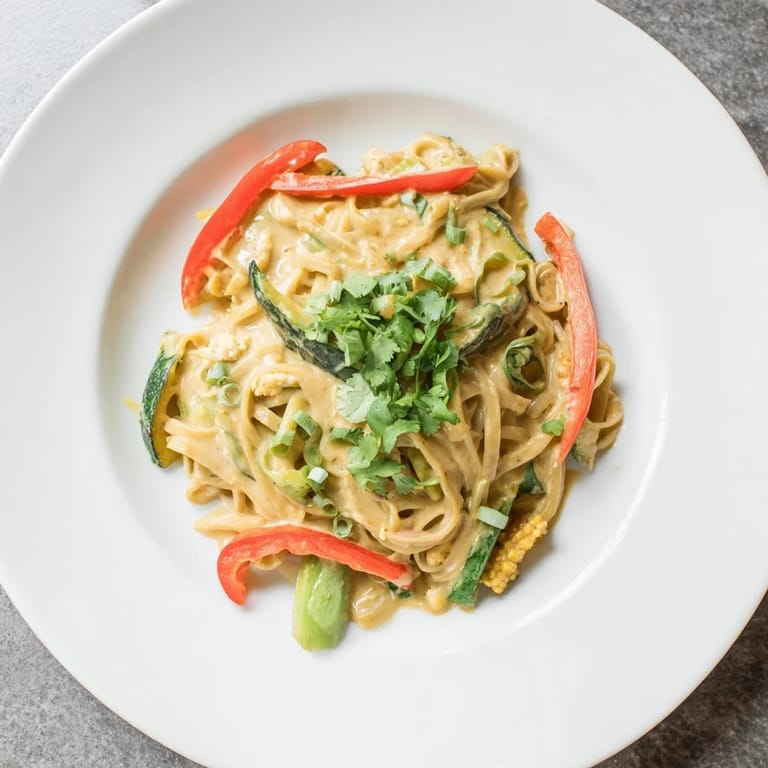
 Save
Save I discovered this dish completely by accident on a Tuesday night when I had half a box of linguine sitting in my pantry and a container of Thai green curry paste I'd been meaning to use. My partner was craving something warm and comforting, but I was tired of the usual routine, so I threw together whatever vegetables looked fresh in the crisper drawer. The moment that curry-coconut aroma hit the kitchen, something clicked—this wasn't fusion for the sake of it, it was just two cuisines that genuinely wanted to meet.
The first time I served this to friends, I was genuinely nervous about the fusion concept—would they think it was too weird, too try-hard? But watching them twirl their forks and actually ask for seconds told me everything. One guest even said it tasted like vacation, which somehow perfectly captured what I was going for: something that feels a little adventurous without leaving your dining room.
Ingredients
- Linguine or spaghetti (350 g): The long strands catch the curry sauce beautifully, and linguine has just enough surface area to hold onto all those flavors without breaking apart.
- Red bell pepper: It adds sweetness and color, plus it stays just crisp enough if you don't overcook it—a quick kitchen lesson I learned the hard way.
- Zucchini and snap peas: These keep the dish light and give you texture contrast against the creamy sauce.
- Baby corn and spring onions: Baby corn adds a tender bite, while spring onions bring a sharp, fresh note at the end that cuts through the richness.
- Thai green curry paste (3 tbsp): This is your flavor foundation—use a good brand or make your own if you're feeling ambitious, and don't skimp on the amount.
- Coconut milk (400 ml, full fat): Full fat is essential here; it creates that silky sauce that makes this dish feel special rather than just saucy.
- Vegetable oil, soy sauce, brown sugar, fresh ginger, and lime juice: Together, these balance the heat with umami, sweetness, and brightness—each one serves a purpose.
- Fresh cilantro: Save this for the end so it stays vibrant and doesn't lose its herbal punch.
Tired of Takeout? 🥡
Get 10 meals you can make faster than delivery arrives. Seriously.
One email. No spam. Unsubscribe anytime.
Instructions
- Boil your pasta water generously:
- Use plenty of salt in a large pot—you want the water to taste like the sea. Cook the pasta about a minute under al dente because it'll continue cooking slightly when it hits the curry sauce, and trust me, you want that tender, not soft texture.
- Build your curry base:
- Heat oil in a large skillet over medium heat, then add the curry paste and ginger together. Let them sizzle for a minute or two until your kitchen smells like a Thai street market—that fragrance is a signal that the paste is blooming and releasing all its depth.
- Create the creamy sauce:
- Pour in the coconut milk slowly, stirring as you go, then add soy sauce and brown sugar. Simmer gently for a few minutes, letting everything get to know each other before you add the vegetables.
- Cook vegetables to just-tender:
- Add your bell pepper, zucchini, snap peas, and baby corn, and cook for about 5-6 minutes. You're aiming for that sweet spot where they're cooked through but still have a little resistance when you bite them.
- Bring pasta and sauce together:
- Toss the drained pasta with the curry mixture, adding that reserved pasta water to loosen everything slightly. Let it all simmer together for a couple of minutes so the pasta actually absorbs the flavors rather than just sitting on top of the sauce.
- Finish with brightness:
- Stir in the spring onions, lime juice, and fresh cilantro at the very end, then taste and adjust. Sometimes you need a touch more lime, sometimes another pinch of salt—trust your palate.
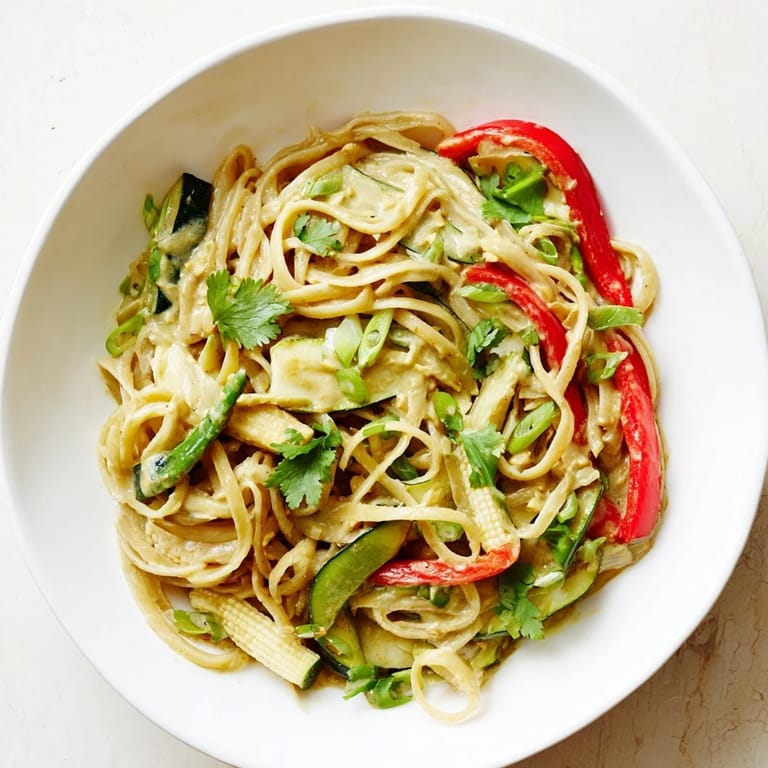 Save
Save There's something about watching someone take their first bite of this dish and seeing their expression shift—that moment when they realize it actually works, that Thai and Italian aren't natural enemies at all. That's when food becomes more than just sustenance; it becomes a small reason to gather around a table and enjoy being together.
Make It Your Own
The beauty of this dish is that it genuinely welcomes improvisation. One night I had leftover roasted chicken sitting in the fridge, so I tossed it in during the last minute of cooking, and suddenly the dish felt heartier without losing any of its elegance. You could add shrimp if you want something more luxurious, or crumbled tofu if you prefer keeping it vegetarian—the curry sauce is accommodating enough to make any addition taste like it belonged there from the start. Even your vegetable choices can shift with the seasons and what's calling to you from the market.
The Spice Spectrum
Thai green curry paste varies wildly depending on the brand and whether you're making it from scratch, so I always start with three tablespoons and taste before committing to more. Some pastes are gentle and herbaceous, while others have a serious kick that builds as you eat. If you're cooking for people who prefer milder food, back off on the paste and let the lime juice be your main flavor star—the brightness of citrus does most of the heavy lifting anyway.
Serving and Pairing
Serve this straight from the skillet while everything is still steaming, with all those optional garnishes laid out so people can customize their bowl. A squeeze of fresh lime, some sliced red chili for heat, a scatter of cilantro for freshness, and maybe some roasted cashews for crunch—these little additions let everyone make the dish their own. A crisp white wine like Riesling or even a cold beer cuts beautifully through the richness of the coconut sauce, and honestly, you could eat this with crusty bread just to make sure nothing goes to waste.
- Lime wedges are non-negotiable—they're not just a garnish, they're the final note that brings everything into focus.
- If you have access to fresh red chilies and really want to impress, slice them thin and let your guests add them to taste rather than serving it spicy for everyone.
- The cilantro should be fresh and added just before serving so it keeps its bright herbaceousness instead of wilting into the warm sauce.
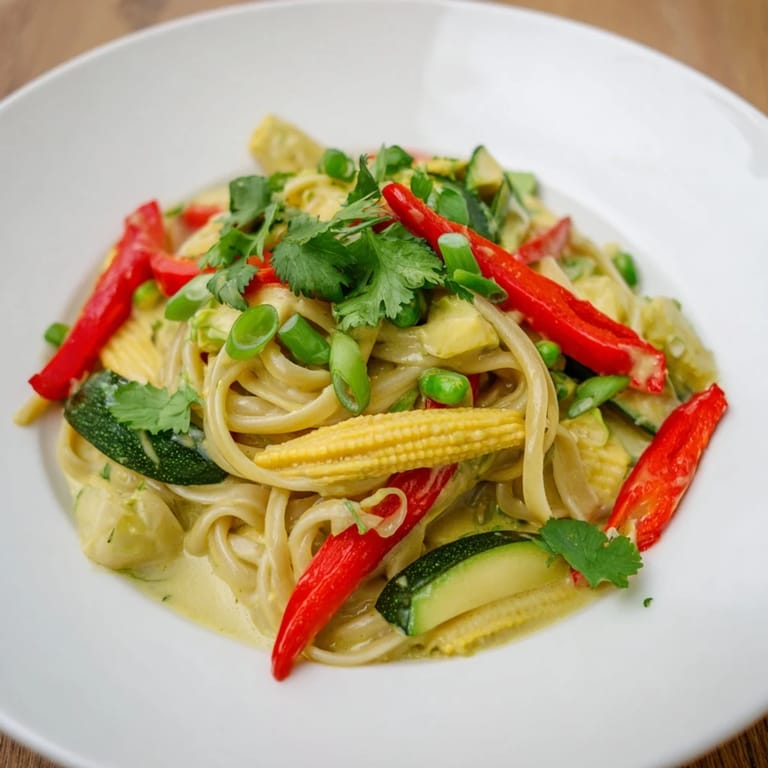 Save
Save This dish has become my go-to when I want to cook something that feels special without needing a whole afternoon of prep work. It's the kind of meal that reminds you why cooking at home is worth the effort in the first place.
Cooking Q&A
- → What pasta types work best with the curry sauce?
Linguine or spaghetti are ideal as they hold the creamy green curry sauce well without overpowering the texture.
- → Can this dish be made vegan?
Yes, ensure the curry paste contains no shrimp or fish sauce, and use plant-based ingredients throughout.
- → How spicy is the dish and can it be adjusted?
The spice level depends on the green curry paste used; you can modify the amount to suit your taste.
- → What vegetables could be substituted or added?
Broccoli, carrots, or green beans are great alternatives or additions to enhance texture and flavor.
- → Any tips for enhancing the flavor profile?
Adding fresh lime juice and chopped cilantro at the end brightens the dish, while roasted nuts add crunch and depth.
- → How can leftover curry pasta be stored?
Store in an airtight container in the fridge for up to 2 days. Reheat gently to preserve texture.