 Save
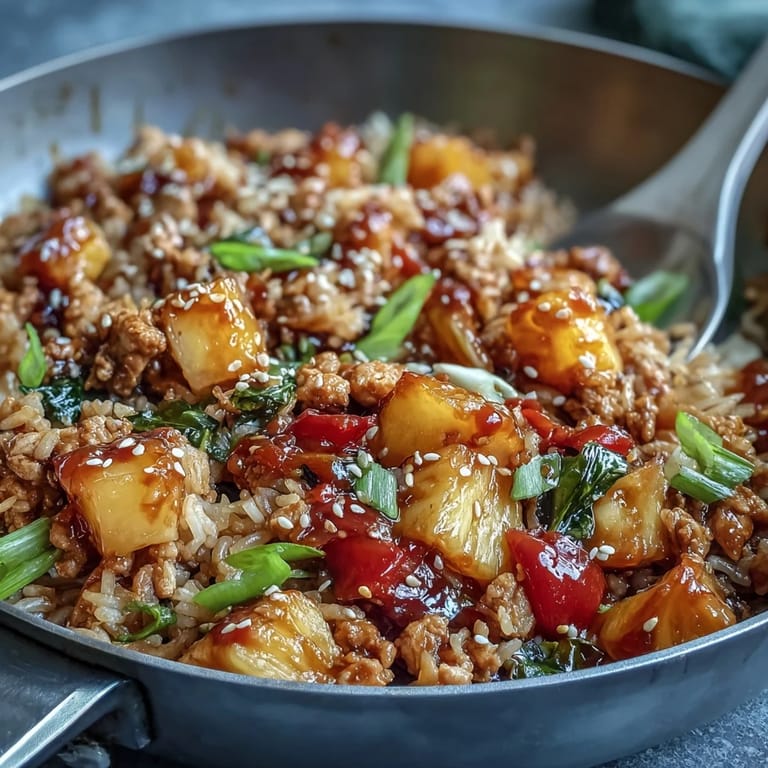
Save One Tuesday night, I stood in my kitchen staring at a half-empty pantry and a pound of ground turkey, wondering how to make something exciting instead of predictable. My neighbor had just returned from Seoul with stories about street food vendors and vibrant one-pan meals, so I decided to play with that vibe—throwing together what I had: pineapple, peppers, and a jar of gochujang that had been sitting in my fridge for months. That first bite was electric, a perfect collision of sweet, sour, and spicy that made me forget I was cooking with leftovers.
I made this for my sister's surprise visit last spring, and she ate three servings before asking for the recipe. Watching her eyes light up when she bit into the pineapple-studded rice told me everything—this dish has that rare quality of feeling both homey and special, casual enough for Tuesday but impressive enough for guests. It became our go-to meal whenever she visits now, a little inside joke about that night I scrambled to make something memorable.
Ingredients
- Ground turkey: Use 1 pound of lean ground turkey for a lighter, healthier base that cooks quickly and absorbs all the sauce flavors beautifully.
- Red and green bell peppers: These add sweetness, crunch, and visual pop; dice them evenly so they cook at the same rate.
- Yellow onion: Finely chop one medium onion to create an aromatic foundation that mellows and caramelizes slightly under heat.
- Pineapple chunks: Fresh or canned works equally well; if using canned, drain thoroughly to avoid watering down your sauce.
- Garlic cloves: Mince two cloves fresh—it makes an enormous difference in brightness compared to pre-minced.
- Cooked white rice: Day-old rice is ideal because it's drier and won't clump; freshly cooked rice works but will be slightly softer.
- Soy sauce: Two tablespoons provides saltiness and umami depth; use low-sodium if you prefer more control over seasoning.
- Rice vinegar: This gentle acid balances sweetness and prevents the dish from tasting cloying.
- Ketchup: Two tablespoons adds subtle sweetness and body to the sauce—trust it, even though it sounds unconventional.
- Gochujang: Korean chili paste brings fermented complexity and moderate heat; start with one tablespoon and adjust upward if you like spice.
- Brown sugar: One tablespoon enhances the sweet-and-sour profile without making it dessert-like.
- Sesame oil: Just one teaspoon adds a toasted, nutty finish that elevates the whole dish.
- Sesame seeds and scallions: Toast the seeds yourself for maximum flavor, and slice scallions just before serving for fresh bite.
Tired of Takeout? 🥡
Get 10 meals you can make faster than delivery arrives. Seriously.
One email. No spam. Unsubscribe anytime.
Instructions
- Brown the turkey with intention:
- Heat one tablespoon of oil in your skillet or wok until it shimmers, then add ground turkey and cook while breaking it into small, even pieces with your spatula. You want it golden and cooked through (no pink) in about 5 to 6 minutes, which means it'll finish cooking before you add the rice and won't overcook later.
- Build your aromatic base:
- Add the remaining oil to the same skillet, then sauté your chopped onion and minced garlic for about 2 minutes until the kitchen smells incredible and the onion turns translucent. This brief window creates the flavor foundation that makes people ask what you're cooking.
- Add color and texture with peppers:
- Stir in your diced red and green bell peppers and let them cook for 3 to 4 minutes until they're tender but still have a slight crunch. You'll notice them soften and brighten as they release their natural sugars.
- Reunite turkey with everything:
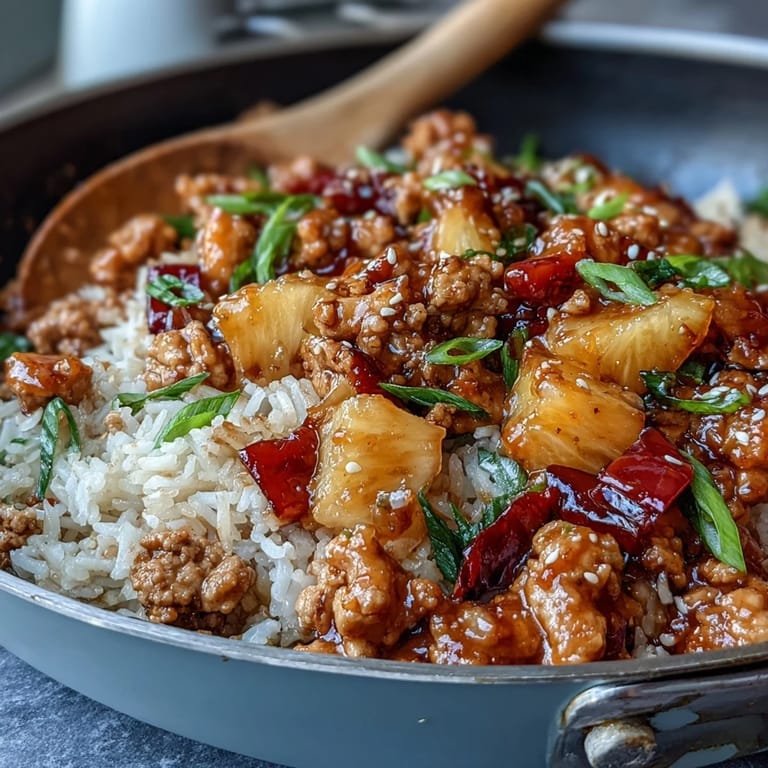
- Return your cooked turkey to the skillet, then add your drained pineapple chunks and stir everything together until well combined. This is when the dish starts to look like the finished product.
- Make and pour the magic sauce:
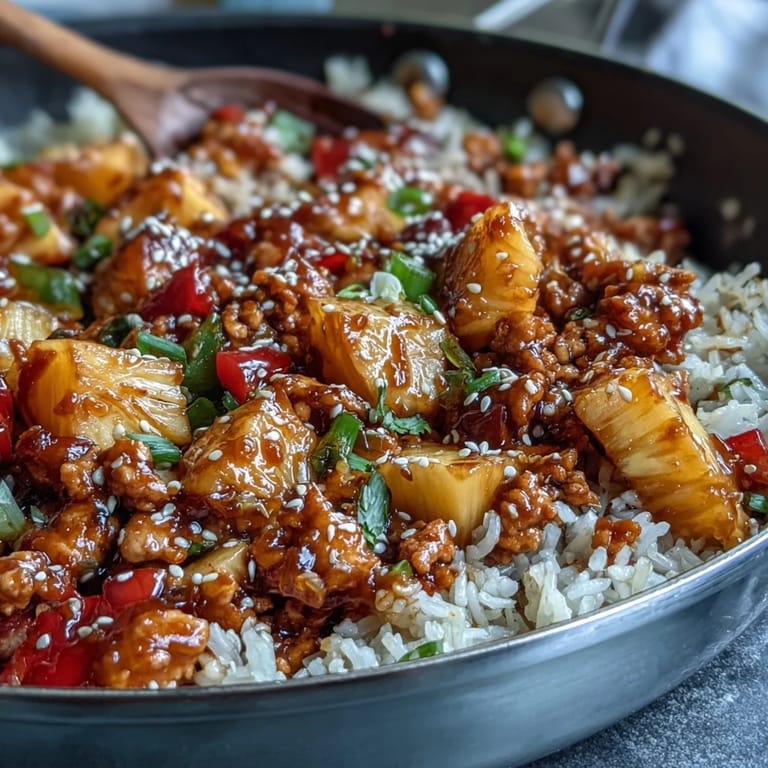
- In a small bowl, whisk together soy sauce, rice vinegar, ketchup, gochujang, brown sugar, and sesame oil until smooth and fully combined. Pour this into the skillet and toss everything until every piece is coated in glossy, fragrant sauce.
- Fold in rice and finish cooking:
- Add your cooked rice to the pan, breaking up any clumps with your spatula, then stir-fry for 3 to 4 minutes so the rice heats through and absorbs the sauce. You'll see the rice transform from white to a warm, sauce-stained golden color.
- Taste, adjust, and taste again:
- This is your moment—add a pinch more salt, a drizzle more sesame oil, or extra gochujang if you want more heat. Trust your palate because everyone's preference is different.
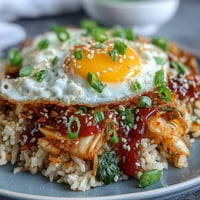
- Optional sunny-side eggs:
- If you're serving eggs, fry them in a separate nonstick pan at the same time you're stir-frying the rice so everything finishes together. Top each portion with an egg just before serving.
- Garnish and serve:
- Scatter fresh sliced scallions and toasted sesame seeds over each serving for brightness, crunch, and aroma. Serve immediately while everything is warm and the flavors are singing.
 Save
Save There's something grounding about watching ground turkey and rice transform into something that tastes like it took three times longer to make. My kitchen filled with pineapple sweetness mixed with fermented heat, a smell that somehow felt both exotic and comforting at once.
The Sweet and Sour Balance
The secret to this dish isn't any single ingredient—it's understanding how sweet, sour, and spicy elements play together. Ketchup and brown sugar provide sweetness, rice vinegar and soy sauce add tang and umami, and gochujang brings heat and fermented depth. When you taste as you go, you're not just checking if something is done; you're calibrating your own preferences and learning what balance means to your palate. I've made this a hundred ways now, and each time I adjust the gochujang based on my mood—more on days when I need comfort, less when someone's visiting who prefers gentler flavors.
Why Day-Old Rice Changes Everything
Fresh rice and cooked rice are fundamentally different creatures in a hot skillet. Freshly cooked rice is steaming and moist, so when you stir-fry it, the grains stick together and turn soft instead of staying separate and toasted. Day-old rice has firmed up, and its grains have lost some surface moisture, which means they'll fry properly and stay light. If you're caught without day-old rice, spread fresh rice on a plate while you prep your other ingredients and let it cool slightly—it's not perfect, but it helps.
Make It Your Own
This recipe is genuinely flexible, which is partly why I love it. You can swap ground chicken or pork for the turkey, add snap peas or water chestnuts for extra crunch, or crank up the heat with more gochujang and red pepper flakes. Some nights I throw in a handful of frozen peas at the last second, other times I swap the pineapple for mango. The structure stays solid regardless, and the flavors adapt beautifully.
- Increase gochujang gradually if you want more spice—it's easy to add but impossible to take out.
- Toasted sesame seeds make a real difference, so try to toast them yourself instead of buying pre-toasted.
- Leftovers taste better the next day because the rice keeps absorbing sauce, so don't hesitate to make extra.
 Save
Save This one-pan dinner has saved countless evenings when I'm tired and uninspired, turning basic ingredients into something that tastes like I actually planned ahead. Make it once and it becomes your reliable friend, the recipe you turn to when you want to feed people something delicious without the stress.
Cooking Q&A
- → Can I use freshly cooked rice instead of day-old rice?
Day-old rice works best because it's drier and less sticky, but freshly cooked rice can be used. Spread it on a baking sheet to cool and dry slightly before adding to the skillet.
- → Is gochujang very spicy?
Gochujang has a mild to medium heat level with a sweet and savory flavor profile. You can adjust the amount to your preference or substitute with sriracha for a different heat profile.
- → Can I make this dish gluten-free?
Yes, use gluten-free soy sauce or tamaji, and check that your gochujang brand is gluten-free. Many traditional gochujang brands contain wheat, so look for certified gluten-free versions.
- → What protein alternatives work in this skillet?
Ground chicken, pork, or even crumbled tofu work well as substitutes. Adjust cooking time accordingly—turkey and chicken cook similarly, while tofu may need less time.
- → How should I store leftovers?
Store cooled leftovers in an airtight container in the refrigerator for up to 3 days. Reheat in a skillet over medium heat, adding a splash of water if needed to prevent sticking.
- → Can I add more vegetables to this dish?
Absolutely! Snap peas, water chestnuts, carrots, or broccoli work well. Add harder vegetables like carrots earlier with the onions, and quick-cooking vegetables like snap peas with the bell peppers.