 Save
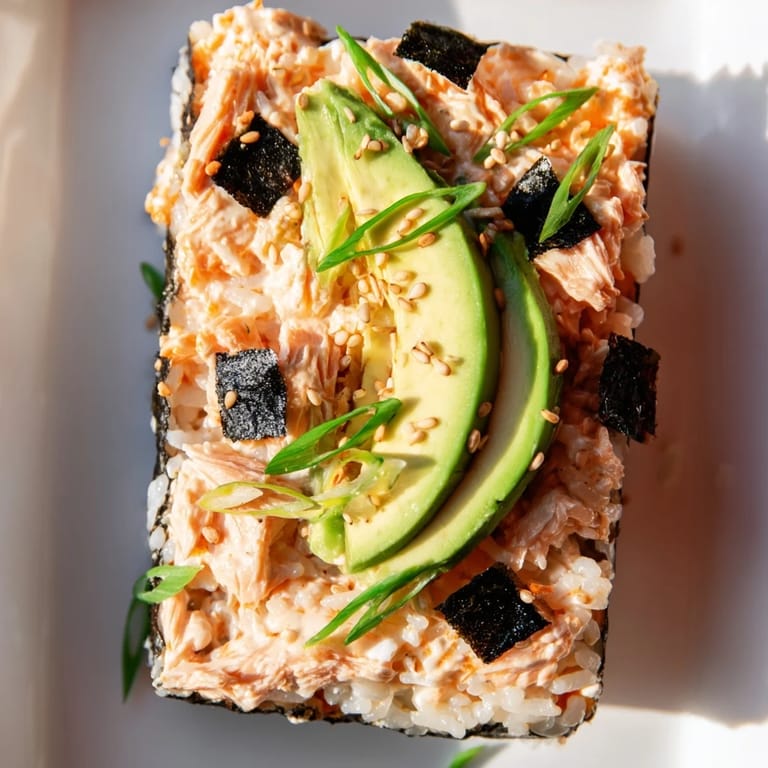
Save My friend texted me a photo of sushi bake at three in the afternoon on a Tuesday, and I knew immediately I had to make it. There's something about deconstructed food that feels both fancy and forgiving, like you've cracked some secret code. The rice steams, the salmon flakes, the avocado melts slightly from the warmth, and suddenly you're eating something that tastes like a sushi roll's cooler, more relaxed cousin. I made it that weekend and couldn't stop thinking about how simple it was.
I brought this to a potluck where someone's aunt was judging everyone's dishes silently from the couch, and somehow this quiet casserole won her over. She came back for seconds and asked how long I'd been making sushi. I told her the truth, and she laughed because she'd been making actual sushi for thirty years. That moment stuck with me, the idea that sometimes the easiest path through the kitchen is the one that lands best.
Ingredients
- Sushi rice: The foundation of everything, and rinsing it matters more than you'd think because it removes the starch and makes each grain separate and distinct.
- Rice vinegar, sugar, and salt: These three together are what makes sushi rice taste like sushi rice, so don't skip seasoning or substitute regular vinegar.
- Salmon fillet: Skinless is easier to flake, and a good quality piece tastes better than trying to save money here.
- Cream cheese and Kewpie mayonnaise: Kewpie is tangier and richer than regular mayo, which is why it's worth the extra hunt through the Asian grocery aisle.
- Avocado: Add it just before serving so it doesn't brown or get mushy from the heat.
- Nori: Toasted sheets torn into small pieces scatter through the casserole and add that essential ocean-y, umami punch.
- Sesame seeds and spring onions: These wake up the whole dish at the end, adding freshness and crunch you can't get any other way.
Tired of Takeout? 🥡
Get 10 meals you can make faster than delivery arrives. Seriously.
One email. No spam. Unsubscribe anytime.
Instructions
- Rinse and cook the rice:
- Rinse sushi rice under cold water while stirring with your fingers until the water runs clear and the rice looks less cloudy. This takes longer than you think but it's the step that actually matters, so don't skip it or rush.
- Season while warm:
- Mix vinegar, sugar, and salt, then fold it into the hot rice with a gentle hand so the grains stay separate. The warmth helps the rice absorb the seasoning evenly.
- Spread and prep:
- Press the seasoned rice into a lightly greased baking dish, keeping it even so everything cooks at the same rate. This is your canvas.
- Bake the salmon:
- Brush the fillet with soy sauce and sesame oil, sprinkle with pepper, and bake on a lined tray at 400°F for 12 to 15 minutes until it flakes easily with a fork. The smell alone is worth it.
- Make the creamy layer:
- Blend softened cream cheese, mayo, optional sriracha, and lemon juice until smooth, then fold in the flaked salmon so it's streaked throughout. Taste it and adjust the salt or heat to your preference.
- Assemble and bake:
- Spread the salmon mixture over the rice and bake for 10 minutes until the edges are warm and slightly golden. This second bake brings all the layers together.
- Top and serve:
- Slice avocado thinly, scatter nori, sesame seeds, and spring onions over the top right before serving so everything stays fresh and crispy. Serve warm with soy sauce for dipping.
 Save
Save My roommate came home to the smell of sesame and salmon and just stood at the kitchen counter eating bites straight from the baking dish. We didn't even plate it properly, just used forks and made a mess, but that's when I realized this recipe had crossed over from being something I made to something we shared without thinking about it. The warmth, the creaminess, the little crispy edges, all of it just worked.
Why This Works as a Casserole
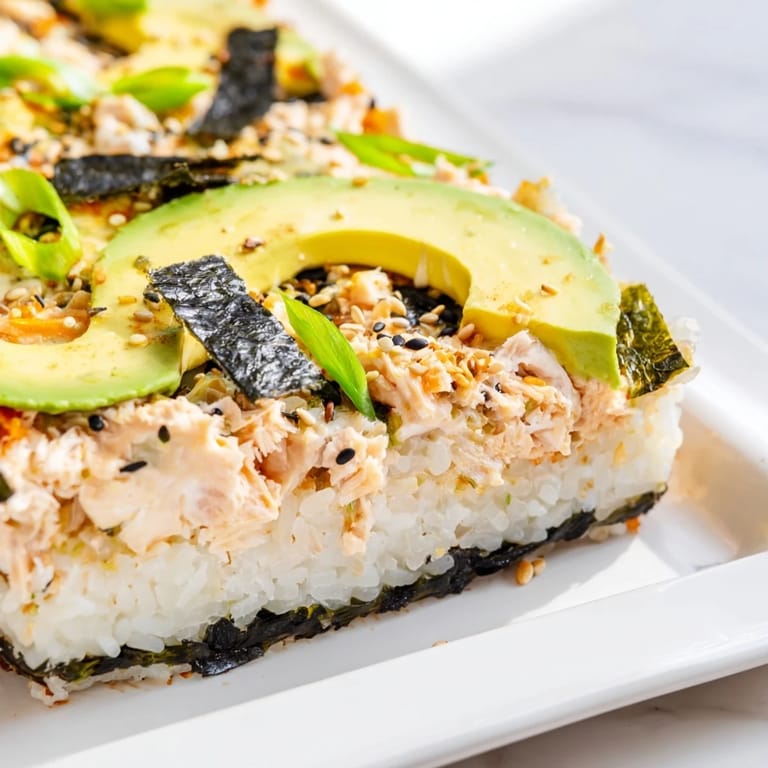
Sushi rolls are delicious but they demand precision and patience, and honestly, sometimes that's not what life asks for. A casserole is permission to be relaxed about the process. You're layering instead of rolling, which means there's no tight winding, no sealing, no worrying about the rice sticking to your hands. The warmth of the baked rice and the creamy salmon layer melding together creates a flavor that's honestly different from a cold roll, almost softer and more indulgent.
Customizing Your Layers
The beauty of this recipe is that it's a framework, not a command. Your friend allergic to salmon? Swap in canned tuna or cooked crab meat and nobody will know the difference. Want it lighter? Use reduced-fat cream cheese and light mayo without apology. There's also a quiet argument for panko breadcrumbs scattered on top before the final bake if you're craving extra crunch, though I usually skip it because the nori and sesame seeds already deliver that texture.
Serving and Timing
Serve this warm, straight from the oven, because the temperature brings out the flavors in a way that room temperature versions just can't match. Have small bowls of soy sauce, pickled ginger, and wasabi ready at the table so people can adjust the flavor to their taste, almost like you're running a tiny sushi counter at your own dinner. Cut it into squares or rectangles, whatever shape makes you happy, and watch how fast it disappears.
- Pair it with crisp white wine like Sauvignon Blanc or chilled sake to balance the richness.
- Leftovers can be reheated gently in the oven, though they're also weirdly good at room temperature the next day with extra soy sauce.
- Make this on a night when you want to feel like you cooked something impressive without spending the evening hunched over a cutting board.
 Save
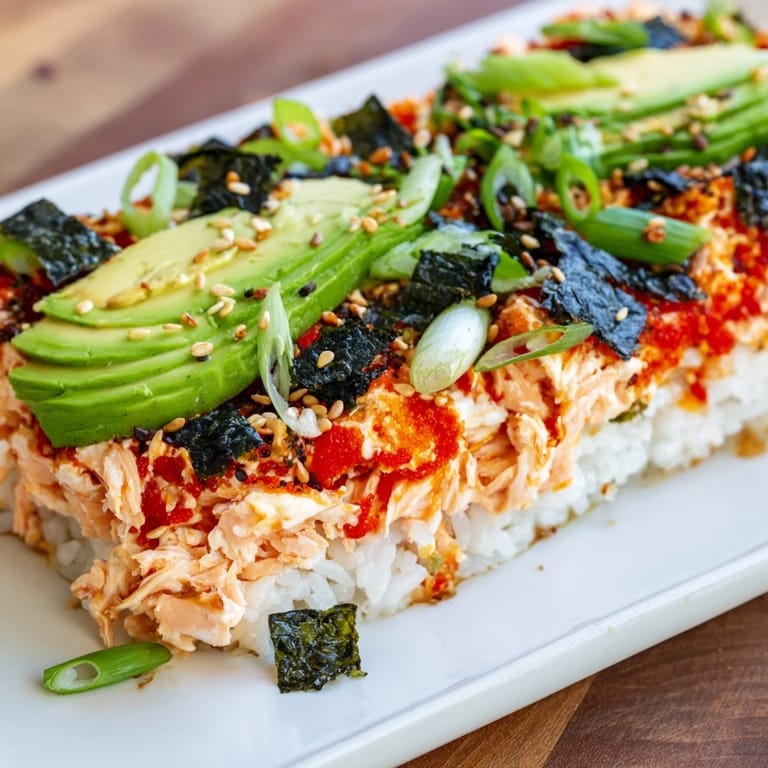
Save This casserole quietly became one of my favorite things to make because it sits right at the intersection of something I love and something I can actually pull off on a regular Tuesday. It's the kind of recipe that sticks around.
Cooking Q&A
- → Can I substitute the salmon with other seafood?
Yes, cooked crab meat, canned tuna, or cooked shrimp work well as alternatives to salmon in this layered dish.
- → How should the rice be prepared for layering?
Rinse the rice until water runs clear, then cook with water before seasoning with rice vinegar, sugar, and salt for a balanced flavor.
- → Is it possible to add a crunchy texture to the top layer?
Sprinkling panko breadcrumbs before baking adds a delightful crunch to the baked layers.
- → What temperature and time are best for baking the salmon?
Bake at 400°F (200°C) for 12–15 minutes until cooked through and easily flaked with a fork.
- → How can I make this dish lighter?
Use light mayonnaise and reduced-fat cream cheese to reduce calories while maintaining creaminess.
- → What are good beverage pairings for this dish?
A crisp white wine like Sauvignon Blanc or chilled sake complements the flavors perfectly.