 Save
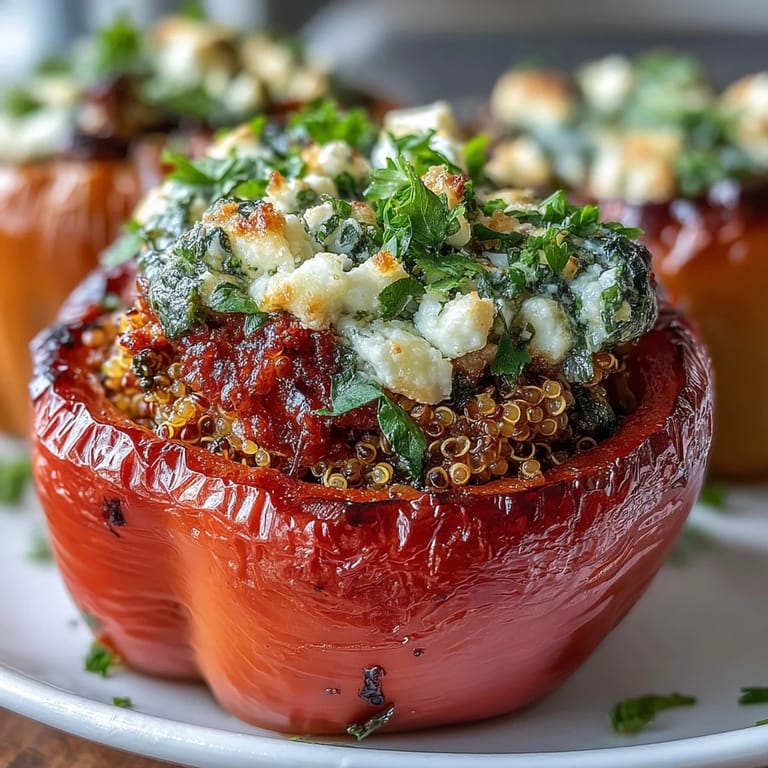
Save There's something about spring that makes me want to fill everything with herbs and good intentions. My neighbor mentioned she'd planted basil and mint that year, and I found myself staring at a bunch of bell peppers at the market thinking about how satisfying it would be to stuff something vibrant and whole. That's when this recipe clicked into place—not from a cookbook, but from a conversation about gardens and the desire to eat something that felt both nourishing and celebratory.
I made this for my sister's first visit after she'd gone vegetarian, nervous about whether I'd get it right. She took one bite and went quiet in that way that means something landed well, then asked for the recipe immediately. That moment of her fork finding the soft pepper skin and the herbs beneath reminded me that food doesn't need to be complicated to matter.
Ingredients
- 4 large bell peppers (any color): Choose peppers that are similar in size so they cook evenly, and let them sit on the counter for a few minutes before cutting—they're easier to work with at room temperature than straight from the fridge.
- 1 cup quinoa, rinsed: Rinsing removes the bitter coating, which makes a real difference, and I learned this the hard way after my first batch tasted vaguely off.
- 2 cups vegetable broth: Use the kind you actually like drinking on its own, because you'll taste it in every bite of the finished dish.
- 1 small zucchini, finely diced: The finer you dice it, the more it breaks down into the filling and disappears if you prefer that texture, or keep it slightly chunkier if you like to see your vegetables.
- 1 small red onion, finely chopped: Red onion stays slightly sweet rather than turning sharp, which balances the baked pepper better than yellow onion would.
- 2 cloves garlic, minced: If you're using a microplane or grater instead of mincing, it distributes more evenly through the filling.
- 1 cup cherry tomatoes, quartered: These add moisture and brightness, but if you can't find good ones, you can skip them and add a splash more broth to compensate.
- 1/4 cup fresh parsley, 2 tbsp fresh basil, 1 tbsp fresh mint: Chop these just before mixing so they stay vibrant and don't oxidize to a dull green.
- 1 tsp dried oregano, 1/2 tsp salt, 1/4 tsp black pepper: The oregano is your anchor flavor—don't skip it even if the fresh herbs are calling all the attention.
- 2 tbsp olive oil: Use something you'd drizzle on bread, not the cooking oil that lives in the back of your cabinet.
- 1/2 cup crumbled feta cheese (optional): Feta adds richness and a salty note that makes people ask what the secret ingredient is, but it's genuinely optional if you're keeping this vegan.
Tired of Takeout? 🥡
Get 10 meals you can make faster than delivery arrives. Seriously.
One email. No spam. Unsubscribe anytime.
Instructions
- Get your oven and dish ready:
- Preheat to 375°F and lightly grease a baking dish that fits your peppers snugly standing upright—they'll cook more evenly and look less lonely this way.
- Cook the quinoa until it's fluffy and just done:
- Bring broth to a boil, add rinsed quinoa, cover and simmer on low for exactly 15 minutes, then fluff with a fork and set aside. You'll know it's done when you can see the little white spiral inside each grain.
- Sauté the vegetables into something fragrant:
- Heat olive oil over medium heat and cook onion and garlic for 2 minutes until the kitchen smells incredible, then add zucchini for 4 minutes until it softens, finish with cherry tomatoes for 2 more minutes. This slow layering of flavors matters more than rushing it.
- Combine everything into your filling:
- In a large bowl, mix the warm quinoa with the sautéed vegetables, fresh herbs, oregano, salt, pepper, and feta if using. The warmth of the quinoa will slightly wilt the fresh herbs in the best way.
- Stuff the peppers generously but not aggressively:
- Fill each pepper with the quinoa mixture, packing it lightly so it stays tender and not compressed. You want the filling to support itself, not be rammed in.
- Bake covered, then uncovered for the finish:
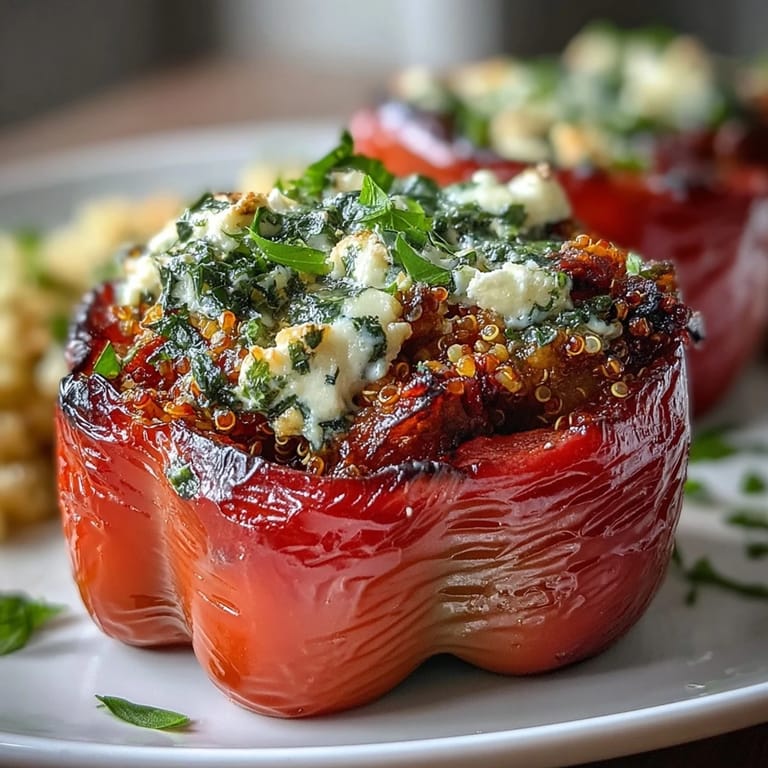
- Cover with foil and bake 30 minutes until peppers are mostly tender, then remove foil and bake 10 more minutes until the peppers are fully soft and the tops are lightly browned. The uncovered time is what gives you those caramelized edges.
- Let it rest briefly before serving:
- Wait 5 minutes after pulling from the oven so the peppers firm up just slightly and don't collapse on the plate. This is a good time to tear some extra fresh herbs to scatter on top.
 Save
Save My partner came home while these were baking and the smell hit them the moment they opened the door—that mix of roasted pepper, fresh basil, and baked zucchini. They stood in the kitchen and just breathed it in, and I realized that cooking something that smells this good makes people feel instantly welcome before they've even sat down to eat.
Making Quinoa Less Intimidating
Quinoa used to feel fancy and slightly suspicious to me, like something I'd get wrong. But once I understood that it's just a grain that needs rinsing and 15 minutes, it became my secret weapon for making vegetarian meals feel substantial and complete. The texture is almost fluffy if you don't overcook it, and it picks up flavors beautifully from whatever's around it.
The Magic of Fresh Herbs
This dish is built on herbs, and the difference between using them fresh versus dried is honestly the difference between a good meal and one that tastes like someone was trying. The parsley, basil, and mint stay bright when you chop them just before assembling, and they don't get bitter or tired. If you only have dried herbs available, use about a third of the amount and accept that the dish will taste different but still good.
Variations and Serving Ideas
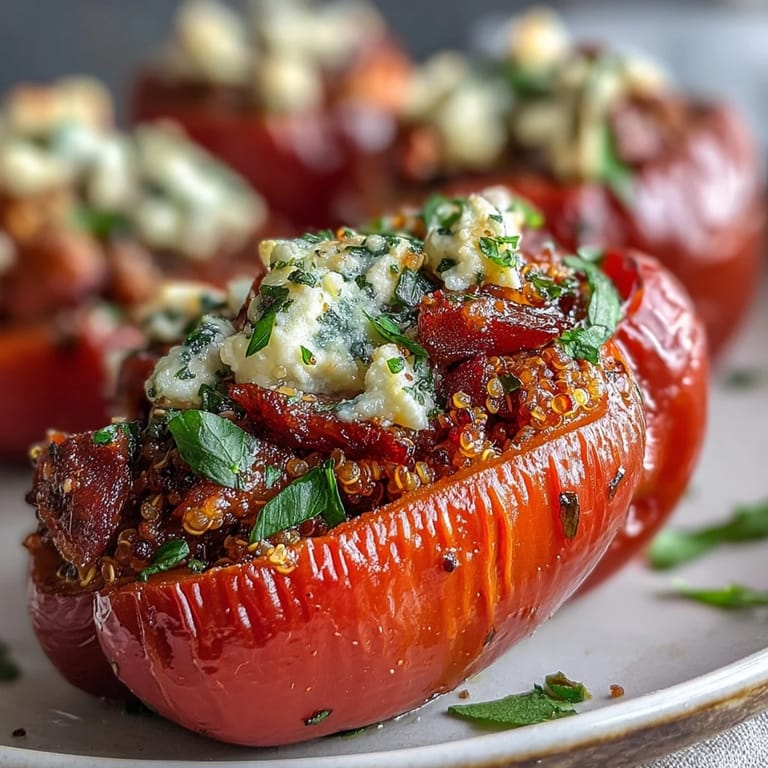
Once you understand the basic structure—grain, vegetables, herbs—you can improvise around what you have on hand. I've made this with farro, with added chickpeas for more protein, with sun-dried tomatoes instead of fresh ones, and with a splash of balsamic vinegar mixed into the filling. Serve it with a simple green salad dressed in lemon and olive oil, or with crusty bread to soak up the juices that pool at the bottom of the baking dish.
- For a heartier version, add a can of white beans or chickpeas to the filling for extra protein.
- Leftovers stay fresh for 3 days in the fridge and taste wonderful eaten cold the next day if you're into that.
- If you're cooking for someone vegan, just omit the feta and nobody will miss it because the filling is already flavorful enough to stand on its own.
 Save
Save This recipe has become my default when I want to cook something that feels intentional without being exhausting. It's the kind of meal that makes people happy for reasons they can't quite articulate until they taste it.
Cooking Q&A
- → How do I prevent the peppers from becoming too soggy?
Make sure to remove seeds and tops completely and bake uncovered for the last 10 minutes to allow excess moisture to evaporate, ensuring a tender but firm texture.
- → Can I substitute quinoa with another grain?
Yes, couscous or bulgur work well as alternatives but adjust cooking times accordingly to maintain texture and flavor balance.
- → What is the best way to preserve leftovers?
Store any uneaten portions in an airtight container in the refrigerator and consume within three days for optimal freshness.
- → How can I make this dish vegan?
Simply omit the feta cheese or replace it with a plant-based cheese alternative to keep it entirely plant-based.
- → What side dishes complement this meal?
A fresh green salad or crusty bread pairs nicely, adding texture and balancing the Mediterranean flavors.
- → Are there any key tips for cooking quinoa perfectly?
Rinse the quinoa thoroughly before cooking and simmer with vegetable broth until liquid is absorbed, then fluff with a fork for light, separate grains.