 Save
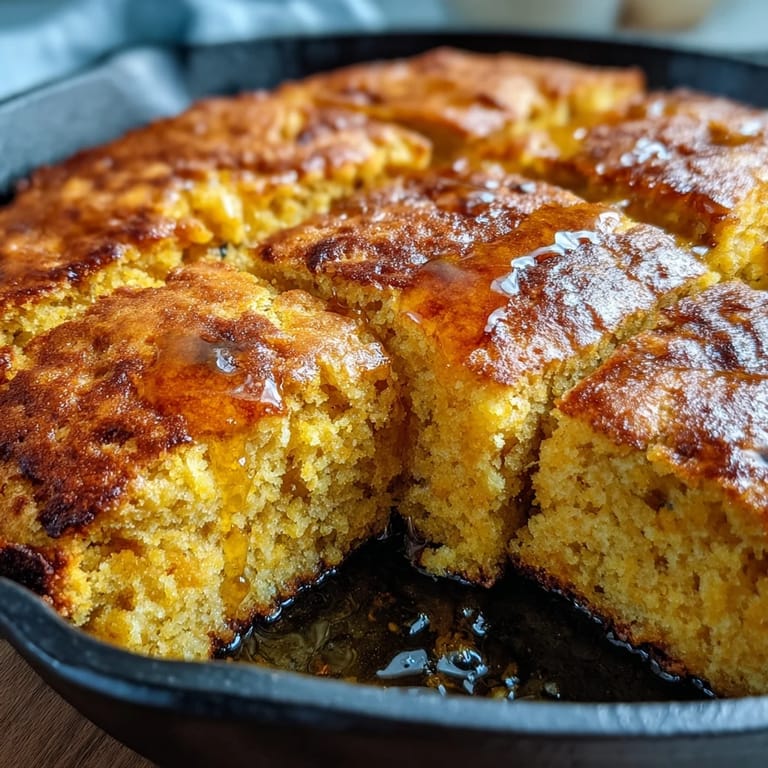
Save My grandmother's cast-iron skillet has been seasoning for decades, and the first time she let me use it, she handed it over with the kind of ceremony you'd reserve for heirlooms. We were making cornbread for a church potluck on a humid August afternoon, and she insisted the skillet had to be screaming hot before the batter hit it. That sizzle when the butter met the pan, the way the edges started crisping before the middle was even set—that's when I understood this wasn't just a side dish, it was theater.
I made this for a potluck once where I arrived late and stressed, convinced everyone would already be eating. Instead, I found my dish becoming the thing people came back to between bites of everything else. An older man actually told me it tasted like home, which stuck with me longer than I expected.
Ingredients
- Yellow cornmeal: This is the soul of the dish—use stone-ground if you can find it, as it has more flavor and texture than the ultra-fine stuff.
- All-purpose flour: Balances the cornmeal so the bread stays tender rather than gritty.
- Granulated sugar: Just enough to bring out the corn's natural sweetness without making it taste like dessert.
- Baking powder and baking soda: Work together to lift the batter and create that light, airy crumb.
- Fine salt: Enhances everything else and makes the honey butter taste even more luxurious.
- Whole milk or buttermilk: Buttermilk adds tang and tenderness if you want extra richness, but whole milk keeps it classic.
- Large eggs: Bind the batter and add structure—room temperature eggs mix in more smoothly.
- Unsalted butter and vegetable oil: The combination creates moisture and that golden, tender crumb that doesn't dry out.
- Cast-iron skillet butter: Creates the crispy, caramelized edges that make this unforgettable.
- Honey butter components: Softened butter whipped with honey becomes silky and melts into every warm slice like edible luxury.
Tired of Takeout? 🥡
Get 10 meals you can make faster than delivery arrives. Seriously.
One email. No spam. Unsubscribe anytime.
Instructions
- Heat your skillet like you mean it:
- Preheat the oven to 425°F and let a 10-inch cast-iron skillet get seriously hot inside for at least 10 minutes. This is non-negotiable—the hot pan is what creates those golden, crackling edges.
- Combine your dry ingredients:
- Whisk together the cornmeal, flour, sugar, baking powder, baking soda, and salt in a large bowl until evenly distributed. This ensures the leavening agents spread throughout so every bite rises.
- Mix the wet ingredients:
- In a separate bowl, whisk the milk, eggs, melted butter, and vegetable oil until they're completely combined. Let this sit for just a moment so everything gets to know each other.
- Fold everything together gently:
- Pour the wet ingredients into the dry and stir with a spatula until just combined—lumps are your friend here. Overmixing develops gluten and makes cornbread tough, which defeats the whole purpose.
- Prepare the hot skillet:
- Carefully pull the screaming hot skillet from the oven and add 2 tablespoons of butter, swirling it around until the bottom and sides are coated. Listen for that sizzle—it's your cue everything is ready.
- Pour and bake:
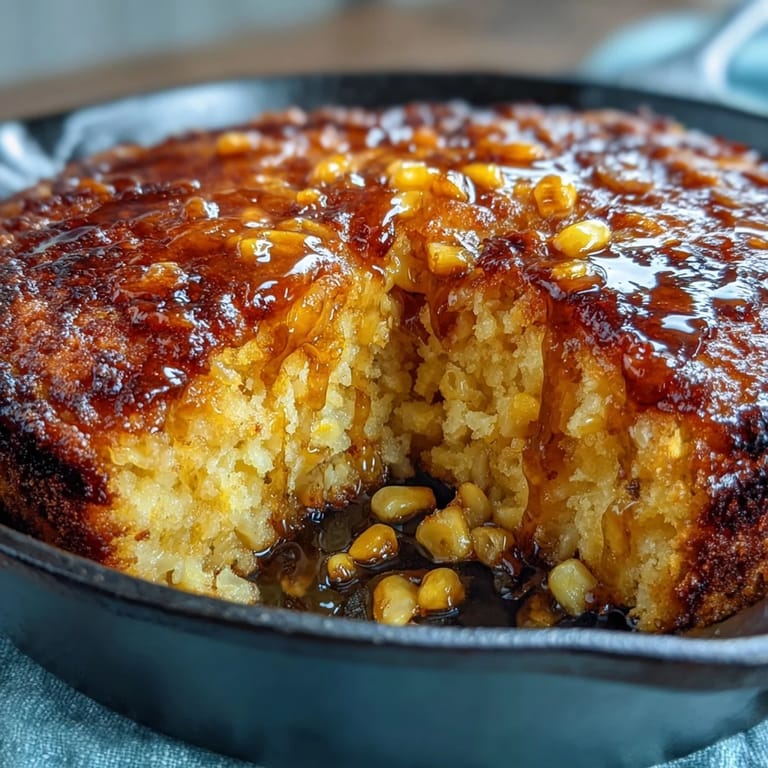
- Quickly pour the batter into the hot buttered skillet and smooth the top with a spatula. Slide it back into the oven and bake for 20 to 25 minutes until the top is deep golden and a toothpick inserted in the center comes out clean.
- Make the honey butter while it bakes:
- Beat softened butter with honey and a tiny pinch of salt until it's smooth, fluffy, and pale. This becomes the crowning touch that transforms warm cornbread into something memorable.
- Cool and serve:
- Let the cornbread rest in the skillet for 5 to 10 minutes so it sets just enough to slice cleanly without falling apart. Serve it warm with that honey butter melting into every crevice.
 Save
Save There was a moment at my friend's dinner party when someone tore into a slice, and the steam rose from the golden interior like it was releasing something precious. She closed her eyes for a second, and I realized cornbread had just become one of those dishes that connects people to memory, comfort, and gratitude all at once.
Why Cast-Iron Matters Here
Cast-iron isn't just traditional—it's the difference between ordinary cornbread and exceptional cornbread. The even heat distribution means the bottom and sides crisp up perfectly while the inside stays tender, and the skillet retains heat so the batter starts cooking the moment it touches down. If you don't have cast-iron, a preheated 9-inch round cake pan works in a pinch, but you'll lose some of that magical caramelization.
The Honey Butter Secret
Whipping softened butter with honey creates an emulsion that spreads like silk and melts into every warm crumb instead of sitting on top like an afterthought. The salt might seem small, but it's the thing that makes people realize why this tastes so much better than plain butter—it heightens both the honey and the butter's flavors, making the whole thing more itself.
Ways to Make It Your Own
The beauty of this recipe is that the base is rock-solid, so you can build on it without worry. Fresh corn kernels folded in at the last moment add sweetness and texture, sharp cheddar creates a savory-sweet thing that pairs beautifully with barbecue, and jalapeños bring heat that contrasts perfectly with the honey butter. The formula stays the same; you're just introducing new friends to the party.
- Corn kernels, shredded cheddar, or diced jalapeños can be stirred in right before pouring into the skillet.
- For a breakfast version, add crispy bacon bits and serve with eggs for a completely different energy.
- Leftover cornbread actually improves over a day or two, becoming more tender and flavorful as it sits.
 Save
Save This cornbread tastes like someone cares about you, which is probably why it's been showing up at Southern tables for generations. Make it once and you'll understand why people ask for the recipe.
Cooking Q&A
- → What type of pan is best for this cornbread?
A 10-inch cast-iron skillet is ideal to achieve a golden crust and even baking.
- → Can buttermilk be used instead of whole milk?
Yes, substituting buttermilk adds extra tang and moisture to the cornbread.
- → How should the honey butter be prepared?
Combine softened unsalted butter with honey and a pinch of salt, then beat until smooth and fluffy.
- → How do I know when the cornbread is done?
Bake until the top is golden and a toothpick inserted in the center comes out clean.
- → Can I add extra ingredients for variety?
Yes, options include corn kernels, shredded cheddar, or chopped jalapeños mixed into the batter.