 Save
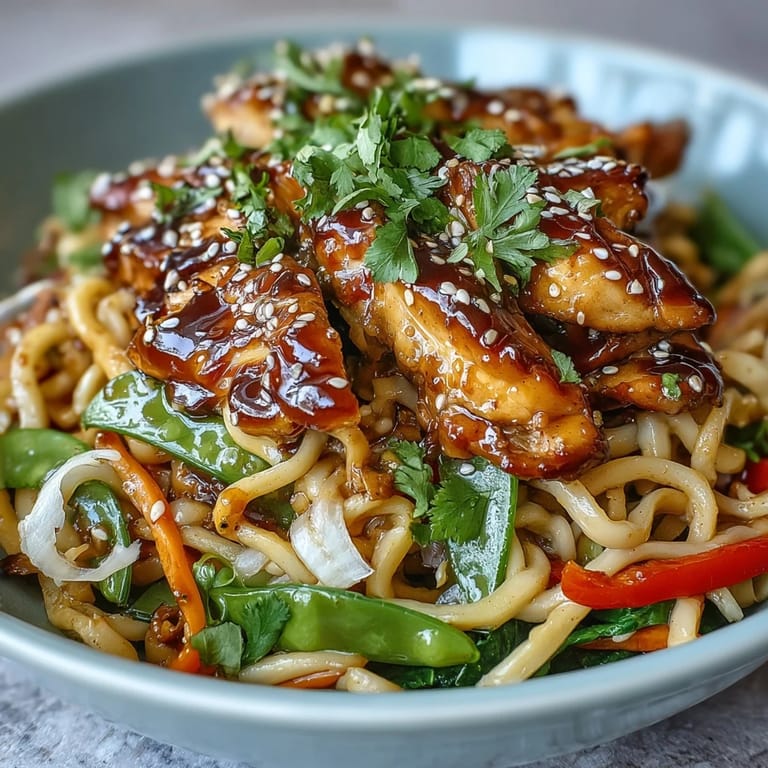
Save There's something about the sizzle of chicken hitting a hot wok that instantly puts me in a good mood, and this sesame noodle bowl became my go-to answer whenever someone asked what I was making for dinner. My neighbor mentioned she'd had something similar at a restaurant and couldn't stop thinking about it, so I spent a weekend experimenting with balancing the salty soy, warm ginger, and that nutty sesame oil until it tasted like something worth recreating. The beauty of this bowl is that it comes together faster than ordering takeout, yet somehow feels like you've put real effort into the meal.
I made this for a weeknight dinner with friends who were tired after work, and watching them perk up after that first bite of the warm noodles and tangy-sweet sauce reminded me why simple food done right hits differently. One friend asked for the recipe before even finishing her bowl, which felt like the highest compliment.
Ingredients
- Chicken breast or thighs, thinly sliced: Thighs stay more forgiving if you're not watching the clock, but breast works beautifully if you slice it thin enough—I learned this the hard way after drying out a batch years ago.
- Udon, soba, or rice noodles: Each brings its own texture, but udon holds the sauce best and gives you that satisfying chew.
- Red bell pepper, carrot, and snap peas: The vegetables should still have a snap when you bite them, so don't leave them in the pan too long.
- Spring onions: Add these at the very end so they stay fresh and bright against the warm noodles.
- Soy sauce: Low-sodium gives you control over the final salt level without overpowering the other flavors.
- Brown sugar: This balances the saltiness and creates that glossy, appealing sauce finish.
- Toasted sesame oil: The toasted variety has flavor already locked in, so a little goes a long way—don't skip toasting it yourself if you buy raw seeds.
- Rice vinegar: A splash of acidity keeps everything from tasting flat and one-dimensional.
- Fresh ginger and garlic: These two are the backbone of the sauce, adding warmth and depth that bottled versions simply can't match.
- Sesame seeds: Toasting your own transforms them from bland garnish to a crunchy, fragrant finish.
Tired of Takeout? 🥡
Get 10 meals you can make faster than delivery arrives. Seriously.
One email. No spam. Unsubscribe anytime.
Instructions
- Cook your noodles ahead:
- Get these going first since they take the longest. Drain and rinse under cold water so they don't stick together while you're juggling everything else on the stove.
- Build your sauce in a quiet moment:
- While nothing's cooking, whisk the soy sauce, brown sugar, sesame oil, rice vinegar, ginger, garlic, and cornstarch together in a small bowl. This step takes two minutes and sets you up for success.
- Get your pan really hot:
- A large nonstick skillet or wok over medium-high heat with just a splash of oil is your sweet spot. You want it hot enough that the chicken browns immediately, not steams.
- Cook the chicken until golden:
- Four to five minutes should do it if your pieces are thin and your pan is hot. Don't crowd the pan—let it sit undisturbed for the first minute or two so it can develop color.
- Stir-fry the vegetables quickly:
- They should still have a bite to them, so two to three minutes is perfect. You're looking for a slight softening, not mush.
- Bring it all together:
- Return the chicken to the pan, pour in your sauce, and toss everything so every strand and piece gets coated. Let it bubble for a minute or two so the sauce thickens slightly and clings to the noodles.
- Add the noodles and finish:
- Toss in your cooked noodles and sliced spring onions, mixing until everything is heated through and well combined. This is when the dish really comes alive.
- Plate and garnish generously:
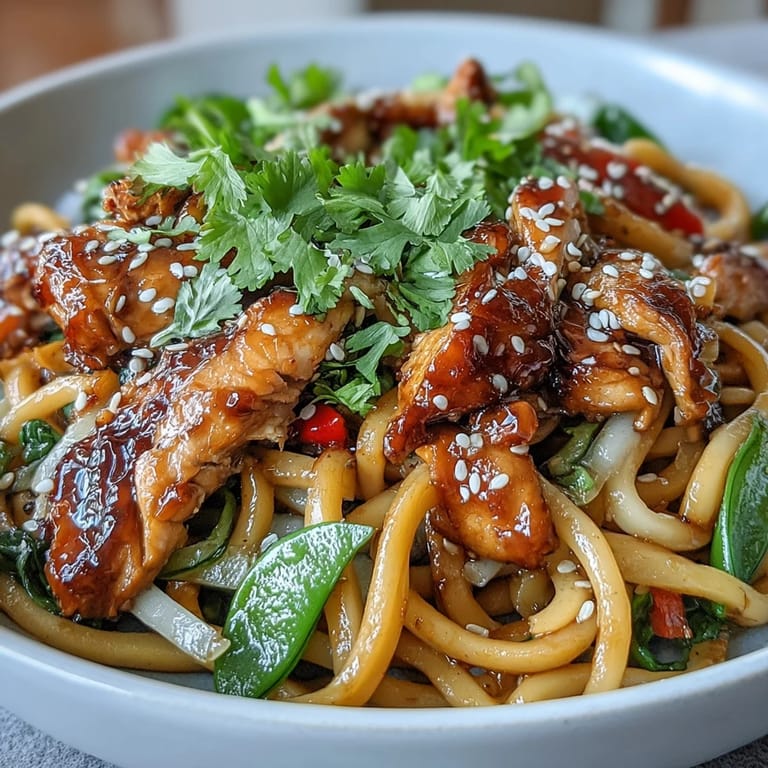
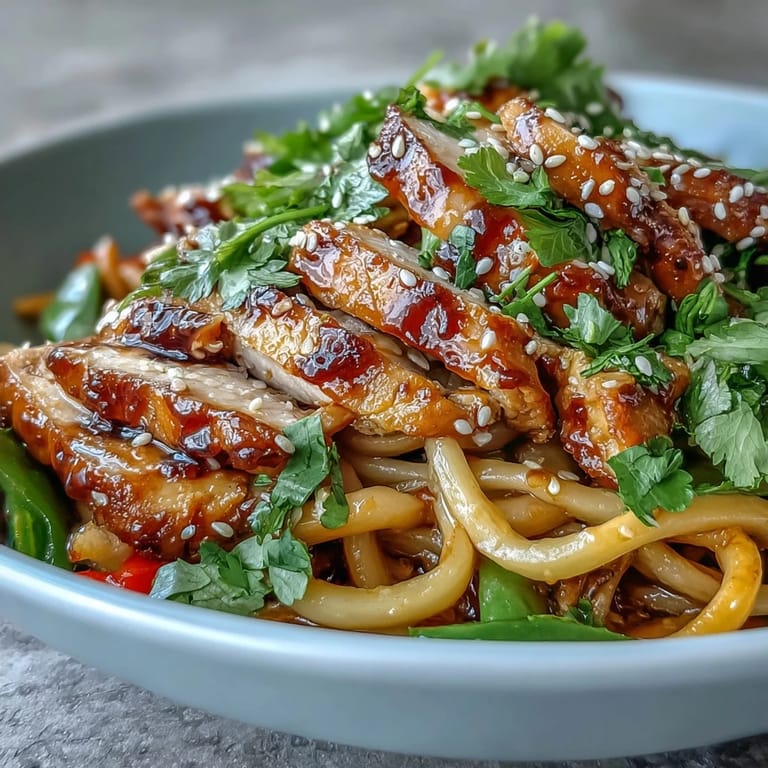
- Divide among bowls and shower with toasted sesame seeds, fresh coriander, and lime wedges if you have them. The toppings add texture and brightness that complete the experience.
 Save
Save There was an evening when my kid tried this bowl without complaint for the first time, which might sound like nothing, but felt like everything. Food that brings people together without drama or negotiation, that actually tastes good and doesn't leave you feeling sluggish—that's the kind of recipe worth keeping close.
Why This Sauce Works
The magic happens when brown sugar dissolves into soy sauce and sesame oil starts to perfume everything with its toasty warmth. Fresh ginger adds a subtle heat that builds instead of shouts, and that splash of rice vinegar keeps your palate interested instead of overwhelmed by salt and richness. I've made this sauce dozens of times now, and I still stop to appreciate how five ingredients in a bowl transform into something complex and crave-worthy.
Making It Your Own
This bowl is genuinely forgiving about swaps and additions. Tofu works beautifully if you're keeping it vegetarian, and honestly, the sauce is so good that the protein almost becomes secondary. Mushrooms, broccoli, bok choy, or whatever's in your crisper drawer all make sense here—just keep your vegetables about the same size so they cook evenly.
Playing With Flavor
Once you've made this bowl a few times, you'll start seeing it as a template instead of a rigid instruction. Some days I add an extra teaspoon of brown sugar because everyone's tired and needs comfort. Other times I shake in chili flakes or drizzle with hot sauce because we're all in a mood for heat. The sauce can handle it all.
- If sweetness isn't your thing, use less brown sugar or add a teaspoon of soy sauce instead.
- Chili flakes, sriracha, or a squeeze of fresh lemon juice all find their place in this bowl.
- Lime wedges are optional but genuinely change the final bite, so try to keep them on hand.
 Save
Save This sesame chicken noodle bowl has become my default when someone asks what I actually like to cook, which says something. It tastes like care without demanding hours of your life.
Cooking Q&A
- → Can I make this bowl vegetarian?
Substitute the chicken with firm tofu, following the same cooking method. Press and cube the tofu before stir-frying for better texture absorption.
- → What noodles work best?
Udon, soba, or rice noodles all work beautifully. Choose based on your preference—udon for chewy texture, soba for nutty flavor, or rice noodles for a lighter option.
- → How do I store leftovers?
Store in an airtight container in the refrigerator for up to 3 days. Reheat gently in a skillet with a splash of water to refresh the sauce.
- → Can I add more vegetables?
Absolutely. Broccoli, mushrooms, bok choy, or snow peas make excellent additions. Adjust cooking times accordingly to maintain crisp-tender texture.
- → Is this gluten-free?
Use tamari instead of soy sauce and select gluten-free rice noodles to make this bowl completely gluten-free while maintaining all the flavor.
- → How can I adjust the spice level?
Add chili flakes, sriracha, or fresh sliced chili to the sauce for heat. Start with 1/2 teaspoon and adjust to your preference.