 Save
Save My neighbor knocked on my door one October afternoon holding a butternut squash the size of a small dog. She'd grown too many and didn't know what to do with them all. I roasted it that evening with onions and garlic, and the smell that filled my kitchen was so sweet and nutty I called her to come taste it. We ended up sitting at my counter with bowls of soup, talking until the sun went down. That's when this recipe became mine.
I've brought this soup to potlucks in mason jars and served it at Thanksgiving as a first course. Once, I made it for a friend going through a rough patch, and she texted me later that night saying it was the first thing that tasted good in weeks. Food has a way of doing that, showing up when you need it most. This soup has become my quiet way of taking care of people.
Ingredients
- Butternut squash: The star of the show, roasting it brings out sugars you'd never taste if you just boiled it, so don't skip that step.
- Yellow onion: It gets soft and sweet in the oven, adding a mellow backbone that balances the squash.
- Garlic cloves: Roasting them whole makes them creamy and mild, not sharp or harsh.
- Carrot: Just one is enough to add earthiness and a little extra sweetness without overpowering anything.
- Vegetable broth: Use a good quality one, it matters more than you'd think when the ingredient list is this short.
- Olive oil: Helps everything caramelize and keeps the vegetables from sticking to the pan.
- Salt, black pepper, nutmeg, cayenne: Nutmeg is the secret, it makes the soup taste warm and cozy, cayenne wakes it up just a little.
- Heavy cream or coconut cream: Optional, but a swirl at the end makes it feel luxurious and silky.
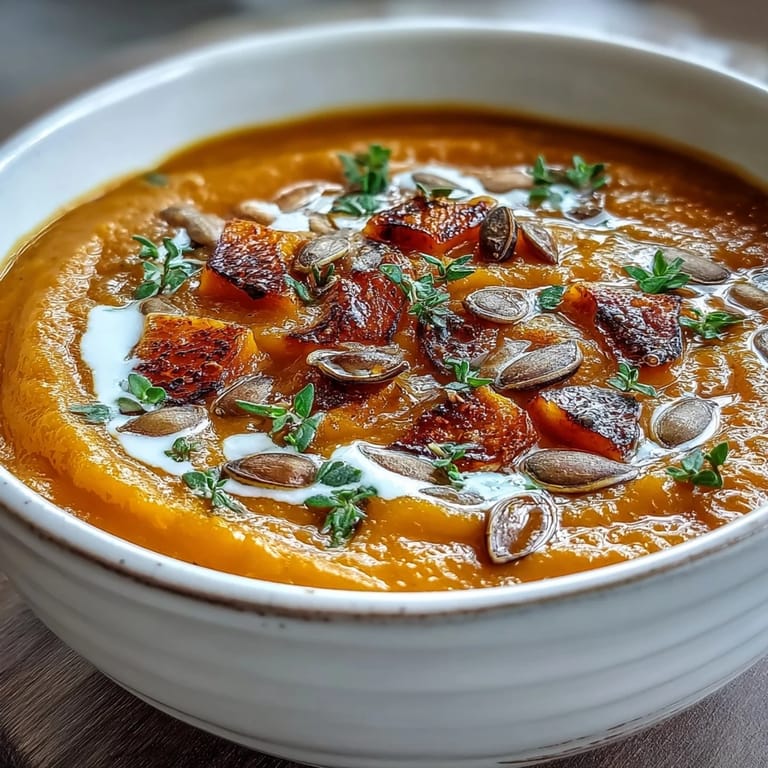
- Toasted pumpkin seeds and fresh thyme: The crunch and the herb smell make it look and taste restaurant quality.
Tired of Takeout? 🥡
Get 10 meals you can make faster than delivery arrives. Seriously.
One email. No spam. Unsubscribe anytime.
Instructions
- Get the oven ready:
- Preheat it to 400°F so it's nice and hot when your vegetables go in. This high heat is what gives you those caramelized edges.
- Prep and toss the vegetables:
- Spread the cubed squash, onion, garlic, and carrot on a baking sheet, drizzle with olive oil, and toss everything with your hands until it's all glossy. It should look like it's ready to sizzle.
- Roast until golden:
- Slide the pan into the oven and roast for 30 to 35 minutes, giving it a stir halfway through. You'll know it's done when the squash has brown spots and smells like sugar and spice.
- Simmer with broth and spices:
- Scrape everything into a large pot, add the broth, salt, pepper, nutmeg, and cayenne if you like a little heat. Let it simmer for 10 minutes so the flavors can get to know each other.
- Blend until silky:
- Use an immersion blender right in the pot, or carefully transfer batches to a countertop blender. Blend until there are no chunks left, just smooth, creamy soup.
- Finish and serve:
- Taste it and add more salt if needed, then stir in cream if you want extra richness. Ladle into bowls and top with pumpkin seeds and a sprig of thyme.
 Save
Save The first time I made this for my family, my dad, who never comments on food, looked up from his bowl and said it tasted like something his grandmother would have made. I didn't grow up eating butternut squash soup, but somehow it felt like I had. That's the magic of simple food done right, it creates memories even when there weren't any before.
How to Pick the Best Squash
Look for one that feels heavy for its size with a matte, tan skin and no soft spots. The longer neck part has fewer seeds and more usable flesh, so I always go for squashes with a longer shape. If the skin is too shiny or greenish, it's not ripe yet and won't taste as sweet.
Make It Your Own
I've added a chopped apple to the roasting pan when I want a hint of sweetness, and I've stirred in a tablespoon of maple syrup when I'm feeling indulgent. Some nights I skip the cream entirely and it's still delicious, other times I go wild with a drizzle of brown butter on top. This soup is forgiving, it'll taste good no matter how you tweak it.
Storing and Reheating
This soup keeps in the fridge for up to five days and freezes beautifully for three months. I portion it into quart containers so I can thaw just what I need. When reheating, do it gently on the stovetop over low heat, adding a splash of broth or water if it's thickened up too much.
- Let it cool completely before storing so condensation doesn't make it watery.
- Label your containers with the date, future you will appreciate it.
- Reheat only what you'll eat, the texture stays better that way.
 Save
Save This soup has become my go to when I need something that feels like care in a bowl. I hope it finds a place in your kitchen the way it has in mine.
Cooking Q&A
- → Can I make this soup ahead of time?
Yes, this soup stores beautifully in the refrigerator for up to 5 days or can be frozen for up to 3 months. Reheat gently on the stovetop, adding a splash of broth if needed to adjust consistency.
- → What can I substitute for butternut squash?
You can use other winter squashes like acorn, kabocha, or even sweet potatoes. Roasting times may vary slightly depending on the vegetable's density, so check for tenderness with a fork.
- → How do I make this soup creamier without dairy?
Coconut cream creates wonderful richness, or you can add soaked cashews before blending. A drizzle of good quality olive oil also adds silky texture and enhances the roasted flavors.
- → Why roast the vegetables instead of just simmering them?
Roasting caramelizes the natural sugars in the vegetables, creating deeper, more complex flavors with subtle sweetness and nuttiness that you cannot achieve through boiling or simmering alone.
- → Can I use pre-cut butternut squash?
Absolutely! Pre-cut squash saves significant prep time. Just ensure the pieces are roughly uniform in size for even roasting, and you may need to adjust roasting time by a few minutes.
- → What other seasonings work well in this soup?
Try adding fresh ginger for warmth, smoked paprika for depth, curry powder for an exotic twist, or fresh sage and brown butter for an earthy, aromatic finish.