 Save
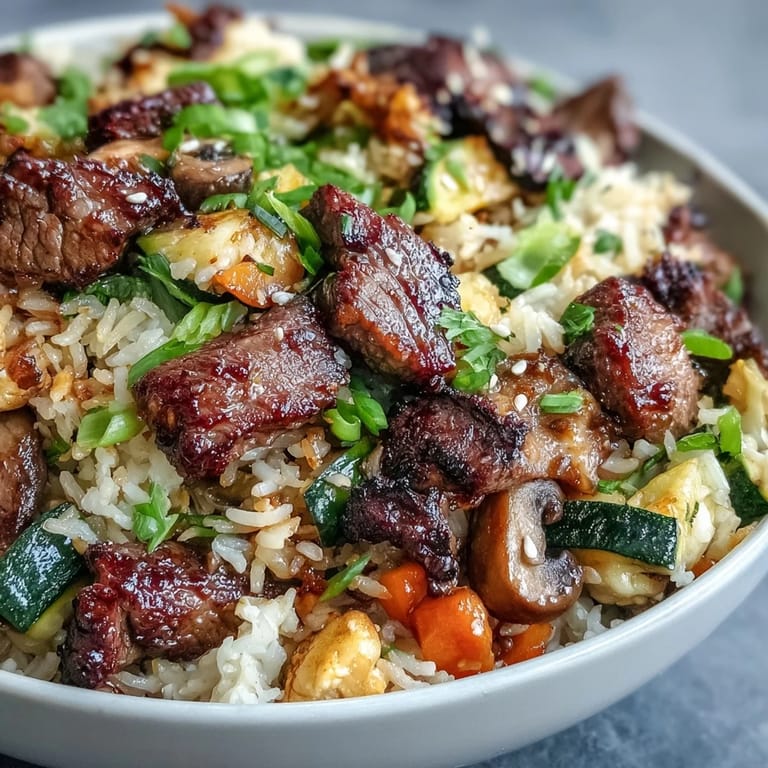
Save My neighbor stopped by unannounced one weeknight with his family, and I had maybe thirty minutes to pull together something that didn't look like I was panicking in the kitchen. I remembered watching a hibachi chef work his magic at a restaurant years ago—the sizzle, the speed, the way everything came together in one pan—and realized I could recreate that magic at home with what I already had. This steak and fried rice became my secret weapon for looking like I had my life together when really I was just borrowing a little theatrical flair.
That first time my neighbor's kids watched me cook this, they were mesmerized by the sizzle and chaos of the wok. One of them asked if I was a professional chef, and I laughed—but honestly, that moment made me realize how much joy there is in cooking something that feels a little theatrical. Now whenever I make this, I channel that same energy, even if it's just for myself on a tired Tuesday.
Ingredients
- Sirloin steak, cut into cubes: Use good quality beef that you'd actually enjoy eating; cheaper cuts can turn tough and chewy when seared quickly, and you'll taste the difference immediately.
- Low-sodium soy sauce: It keeps the dish from becoming oversalted, which is easy to do in a one-pan meal where flavors concentrate.
- Mirin: This sweet rice wine adds subtle depth that regular soy sauce can't provide; dry sherry works if you don't have it, though the flavor shifts slightly.
- Sesame oil: A little goes a long way—it's potent and fragrant, and using too much will overpower everything else.
- Day-old jasmine rice: Fresh rice turns mushy and sticky in the pan; cold rice grains stay separate and actually crisps up beautifully on the bottom of the wok.
- Mixed vegetables: I've learned that uniform dicing matters more than perfection; similarly-sized pieces cook at the same speed so nothing turns to mush while you're waiting for something else to cook.
- Eggs: They act as a binder and add richness; beat them lightly beforehand so they scramble into small, tender curds instead of tough, overcooked chunks.
- Butter: Added at the end, it brings everything together with a silky finish that feels indulgent.
Tired of Takeout? 🥡
Get 10 meals you can make faster than delivery arrives. Seriously.
One email. No spam. Unsubscribe anytime.
Instructions
- Build your marinade and let the steak soak:
- Whisk soy sauce, mirin, sesame oil, minced garlic, and black pepper together in a bowl, then toss in the steak cubes. While it marinates for at least ten minutes, you'll have time to prep your vegetables without rushing—and the steak will absorb those umami flavors that make it taste restaurant-quality.
- Sear the steak with confidence:
- Heat oil in your skillet over medium-high heat until it shimmers and almost smokes, then add the steak and let it sit for a minute before stirring—this brown crust is where the flavor lives. Two to three minutes total gives you a tender inside with a caramelized exterior; longer and you'll lose that juicy texture.
- Quick-sauté your vegetables:
- After removing the steak, add more oil and throw in the onions, carrots, zucchini, and mushrooms. Keep moving them around the pan for four to five minutes—you want them tender but still with a tiny bit of resistance, not soft and sad.
- Create an egg nest:
- Push the cooked vegetables to one side of the pan and pour beaten eggs into the empty space. Let them set for just a moment, then scramble gently until they're barely set; they'll keep cooking slightly when you mix everything together, so slightly underdone here is actually perfect.
- Bring it all together:
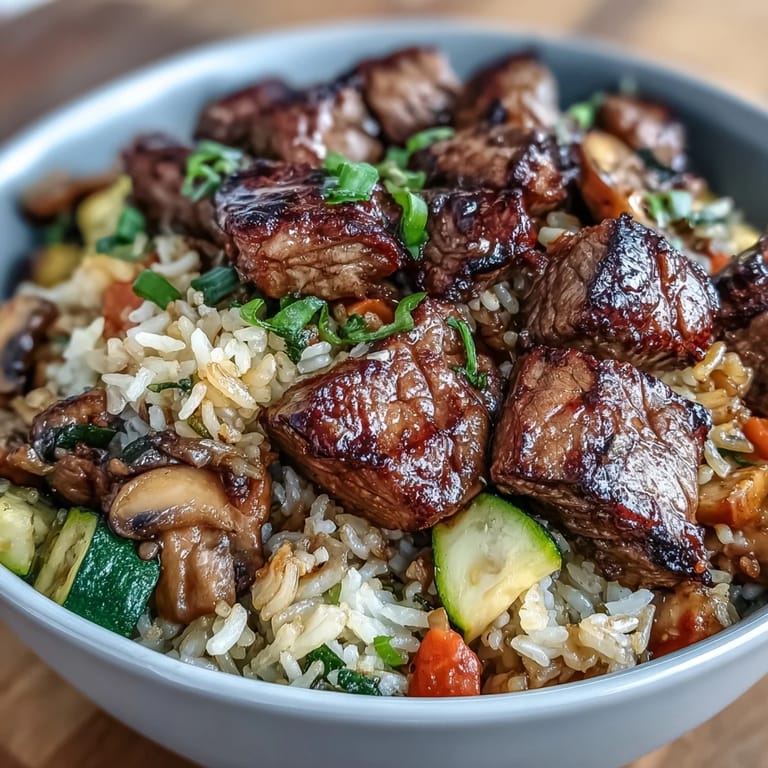
- Add the rice, peas, and seared steak back to the pan and drizzle with soy sauce, breaking up any clumps of rice as you toss. This is where the magic happens—all those flavors and textures combining in one pan.
- Finish with butter and a final toss:
- Stir in butter and half the green onions, then cook for another two to three minutes, stirring frequently. You're looking for those crispy, slightly caramelized rice bits on the bottom—that's the reward for your patience.
- Taste and season to your preference:
- Always taste before serving and adjust salt and pepper as needed. This small step prevents the dish from being either too bland or aggressively salty.
 Save
Save There's something deeply satisfying about watching each component come together in that one pan, the colors shifting from raw to cooked, the aromas building layer by layer. It's not fancy cooking, but it tastes like it is, and that gap between effort and results is where the real joy lives.
Why This Works as a Weeknight Meal
The beauty of hibachi-style cooking is that it's fast but never feels rushed. Everything gets prepped before you touch the pan, so you're just following a rhythm rather than juggling timing. I used to stress about weeknight cooking, but once I realized that organization beats multi-tasking, meals like this became something I actually looked forward to instead of dreaded.
Making It Your Own
I've made this with shrimp when steak felt too heavy, and with chicken when I was being budget-conscious. The formula stays the same—protein, vegetables, rice, sauce—so you can swap nearly everything and it still tastes fantastic. The beauty of a one-pan meal is that it's flexible enough to work with whatever's in your fridge, yet structured enough that nothing ever feels like an afterthought.
Serving and Storage Wisdom
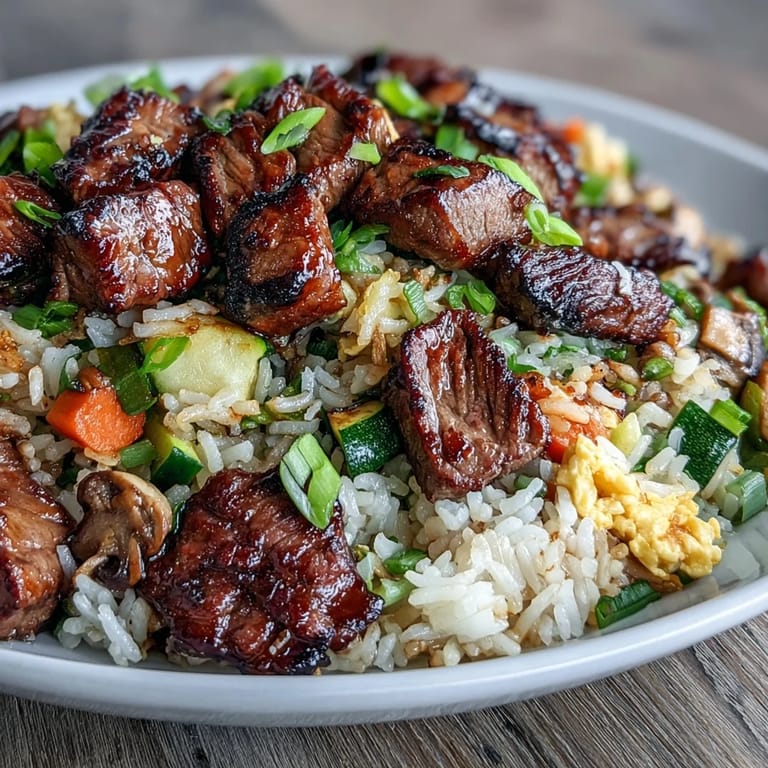
This dish is best eaten immediately while the crispy rice bits are still crispy and the steak is warm. Leftovers reheat in a wok with a splash of water, though they'll never quite match that first-serve texture, so I usually make just enough for one meal.
- Serve with extra soy sauce on the side so people can adjust to their salt preference without overseasoning the whole pan.
- A sprinkle of sesame seeds and fresh green onions adds visual interest and a final brightness that feels polished.
- If you're feeling adventurous, a drizzle of spicy mayo or yum yum sauce on the side brings everything into a more indulgent territory.
 Save
Save This recipe taught me that restaurant-quality meals don't require fancy techniques or obscure ingredients, just respect for temperature, timing, and the small details that separate good food from forgettable food. It's become my go-to whenever I want to impress without the stress.
Cooking Q&A
- → Why should I use day-old rice for fried rice?
Cold, day-old rice has dried out slightly, which prevents it from becoming mushy or sticky during cooking. The grains stay separate and develop a pleasant texture with slightly crispy edges when stir-fried at high heat.
- → Can I use fresh rice instead of day-old?
Yes, spread freshly cooked rice on a baking sheet and refrigerate for at least 2-3 hours to cool and dry out slightly. This helps mimic the texture of day-old rice for better frying results.
- → What cut of steak works best for hibachi?
Sirloin is an excellent choice for its balance of tenderness and flavor. You can also use ribeye, New York strip, or flank steak. Just be sure to cut the steak into uniform 1-inch cubes for even cooking.
- → How do I prevent the steak from overcooking?
Cook steak over medium-high heat for just 2-3 minutes until browned but still tender. Remove it from the pan before adding the rice, then return it at the end to heat through. This prevents the steak from becoming tough.
- → Can I make this dish vegetarian?
Absolutely. Substitute the steak with extra-firm tofu cubes or additional vegetables. Use vegetarian oyster sauce or mushroom sauce instead of fish-based sauces, and ensure your soy sauce is vegetarian-friendly.
- → What vegetables can I add or substitute?
Beyond the classic carrots, zucchini, mushrooms, and peas, try adding bean sprouts, bell peppers, snap peas, corn, or baby corn. Feel free to use whatever fresh vegetables you have on hand.