 Save
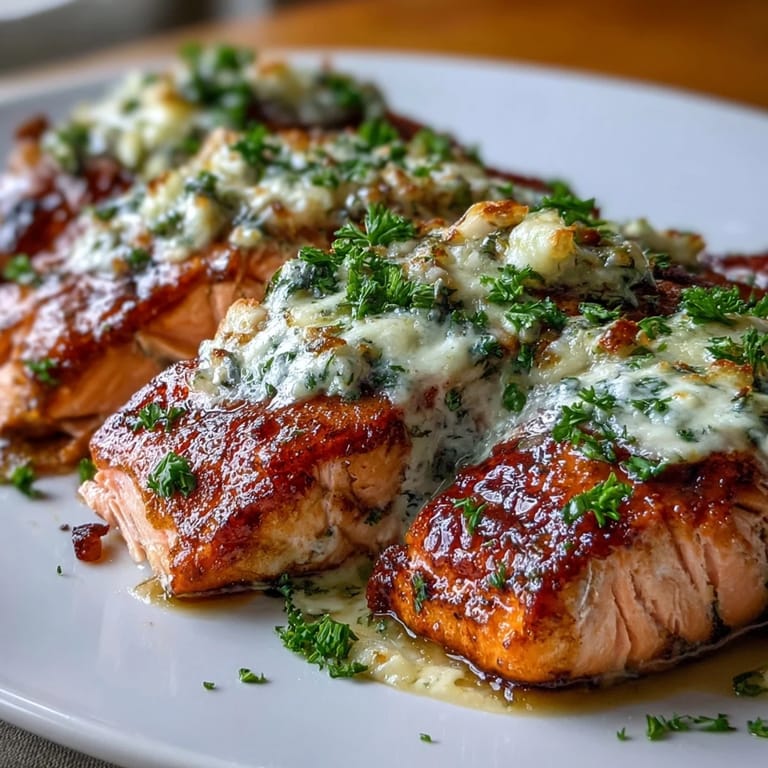
Save There's something about the smell of butter melting with garlic that makes me stop whatever I'm doing in the kitchen. One Tuesday evening, I was rushed, didn't have much inspiration, and opened the fridge to find salmon fillets staring back at me. Instead of the usual heavy cream sauce I'd normally reach for, I grabbed cream cheese and Parmesan on impulse—what I thought would be a quick fix turned into the most elegant weeknight dinner I'd made in months. The sauce came together so easily, pooling around the salmon like liquid gold, and suddenly I understood why this simple combination had become my go-to when I needed to feel like I'd actually cooked something impressive.
I made this for my in-laws last spring, and my mother-in-law asked for the recipe before dessert was even cleared—I'd never seen her that impressed with my cooking. The whole house smelled incredible while it baked, and when I brought it to the table still steaming, everyone went quiet for a moment. That's when you know you've done something right.
Ingredients
- Salmon fillets (4, about 6 oz each): Look for fillets that feel firm and smell like the ocean, not fishy—skin-on holds the fish together beautifully during baking, but skinless works just as well if that's what you prefer.
- Unsalted butter (4 tablespoons): This is your foundation; use good butter because you'll taste it, and room temperature makes it easier to blend into the sauce smoothly.
- Garlic (3 cloves, minced): Fresh garlic is non-negotiable here—add it to the melting butter immediately so it perfumes the sauce without turning bitter and harsh.
- Fresh lemon juice and zest (2 tablespoons juice, 1 teaspoon zest): Squeeze the lemon yourself rather than using bottled juice; the brightness makes the whole dish sing and the zest adds little pops of flavor.
- Cream cheese (2 oz, softened): This creates the creamy texture without overwhelming the dish—soften it in the microwave for 10 seconds so it incorporates smoothly into the warm butter.
- Parmesan cheese (1/4 cup, grated): Freshly grated Parmesan melts into the sauce in a way that pre-grated never quite does, adding a subtle nutty depth.
- Fresh parsley, salt, and black pepper: Parsley is your final flourish that makes everything look intentional; season thoughtfully as you go rather than all at once at the end.
Tired of Takeout? 🥡
Get 10 meals you can make faster than delivery arrives. Seriously.
One email. No spam. Unsubscribe anytime.
Instructions
- Prepare your stage:
- Preheat the oven to 375°F and grease your baking dish lightly with butter or cooking spray. Having everything ready before you start means you can move smoothly through the cooking without scrambling.
- Dry and season the salmon:
- Pat each fillet dry with paper towels—this helps the sauce cling instead of sliding off—then season lightly with salt and pepper on both sides. Arrange skin-side down in the prepared dish, leaving a little space between each fillet so they cook evenly.
- Make the sauce base:
- Melt the butter in a small saucepan or microwave-safe bowl, then immediately add the minced garlic and stir it constantly for about 30 seconds until it becomes fragrant but before it has a chance to brown. You want that garlic perfume without the bitter edge.
- Build the sauce:
- Remove from heat and whisk in the lemon juice, lemon zest, softened cream cheese, and Parmesan until everything comes together into a smooth, creamy sauce. Taste it and adjust the salt and pepper—this is your moment to make it taste exactly how you want it.
- Coat the salmon:
- Spoon the sauce evenly over each fillet, making sure some gets on top and some pools around the sides. The sauce will bubble and caramelize slightly as it bakes, creating little golden spots.
- Bake until perfect:
- Slide into the oven for 15 to 18 minutes until the salmon is opaque in the center and flakes gently with a fork—don't overbake or you'll end up with dry fish and regret. The sauce should be bubbling around the edges and lightly golden.
- Optional golden finish:
- If you want a deeper golden crust, turn on the broiler for the last 1 to 2 minutes, but watch it like a hawk because it goes from perfect to burnt in seconds.
- Finish and serve:
- Sprinkle fresh parsley over the top, add lemon wedges on the side, and bring it straight to the table while the sauce is still warm and the salmon is at its most tender.
 Save
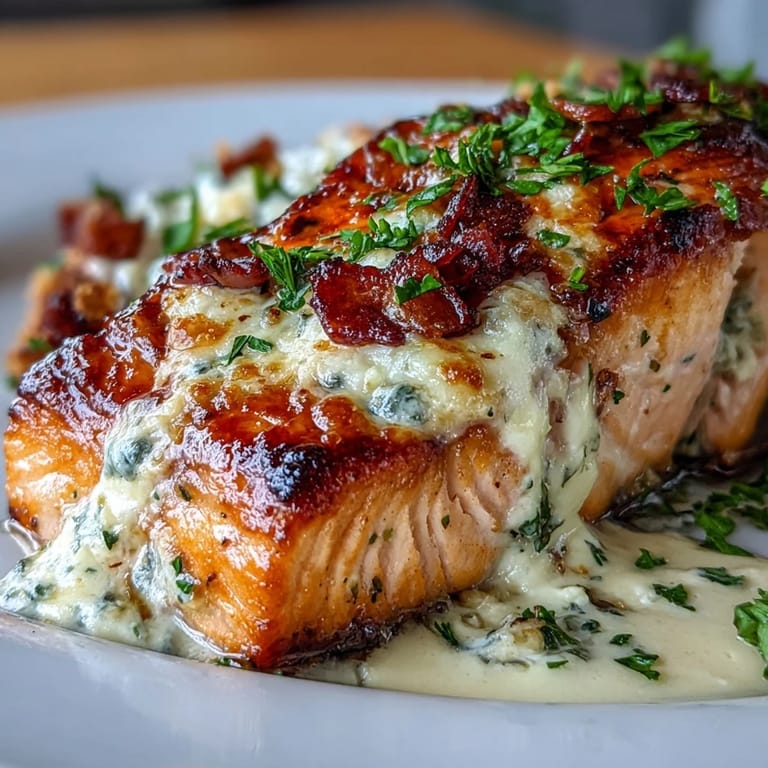
Save What struck me most about this dish wasn't just how delicious it was, but how it changed my weeknight cooking mindset. I realized I didn't need to spend hours in the kitchen or follow complicated techniques to create something that felt special—sometimes the best meals come from working with what you have and trusting that good ingredients know what to do.
Why This Sauce Works Without Heavy Cream
Cream cheese and Parmesan are quietly brilliant here because they both contain fat and milk solids that emulsify into a creamy sauce when they meet warm butter. I learned this completely by accident when I was out of heavy cream one night and grabbed what I had instead—the texture is actually silkier and the flavor more complex because the cheese adds depth that cream would dilute. Now I actually prefer it this way, and it means the sauce tastes more like actual food and less like a heavy coating.
Timing and Temperature Matter More Than You Think
The 375°F oven temperature is the sweet spot—hot enough to cook the salmon through and make the sauce bubble and develop some color, but not so hot that the outside chars before the inside finishes. I learned this the hard way by experimenting with different temperatures and watching carefully each time. Watch for that moment when the salmon goes from translucent to opaque; that's your sign to pull it out rather than leaving it in until you think it might be done.
Customizing Without Losing the Soul
This recipe is flexible in ways that matter and rigid in ways that don't—you can swap the vegetables you serve alongside it, adjust the lemon to your preference, or even play with fresh herbs in the parsley slot. What you can't skip are the fundamentals: good salmon, real lemon, and the combination of butter with the cheese base that makes the sauce taste like itself.
- If dairy isn't in your diet, olive oil replaces butter beautifully and dairy-free cream cheese works in the sauce without changing the technique.
- Serve alongside steamed green beans, roasted potatoes, or wild rice—anything that can catch the extra sauce on the plate.
- Make this when you want to impress someone without spending all day in the kitchen or revealing how easy it actually was.
 Save
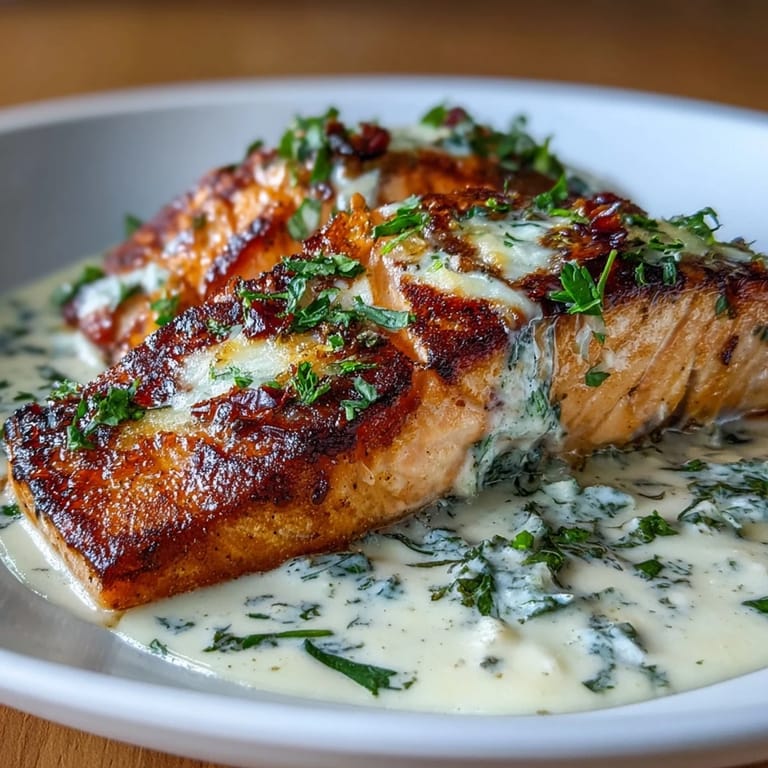
Save This salmon has become the dish I make when I want to feel competent and when I want to feed someone I care about something that tastes genuinely delicious. It's proof that elegant cooking doesn't require complexity, just good instincts and ingredients that actually matter.
Cooking Q&A
- → How do I ensure the salmon stays moist when baking?
Pat the salmon dry before seasoning and baking, then cover it evenly with the lemon butter sauce to lock in moisture and flavor.
- → Can I use skin-on or skinless salmon fillets?
Both skin-on and skinless fillets work well. Skin-on helps keep the fish moist and adds texture when baked skin-side down.
- → What is the best way to soften cream cheese quickly?
Microwave cream cheese for 10–15 seconds until softened to blend smoothly into the sauce.
- → Can I substitute the butter in the sauce for a dairy-free option?
Yes, replace butter with olive oil and use a dairy-free cream cheese or omit it for a similar texture and flavor.
- → How can I achieve a golden crust on the salmon?
Broil the fillets for 1–2 minutes at the end of baking, watching carefully to prevent burning.