 Save
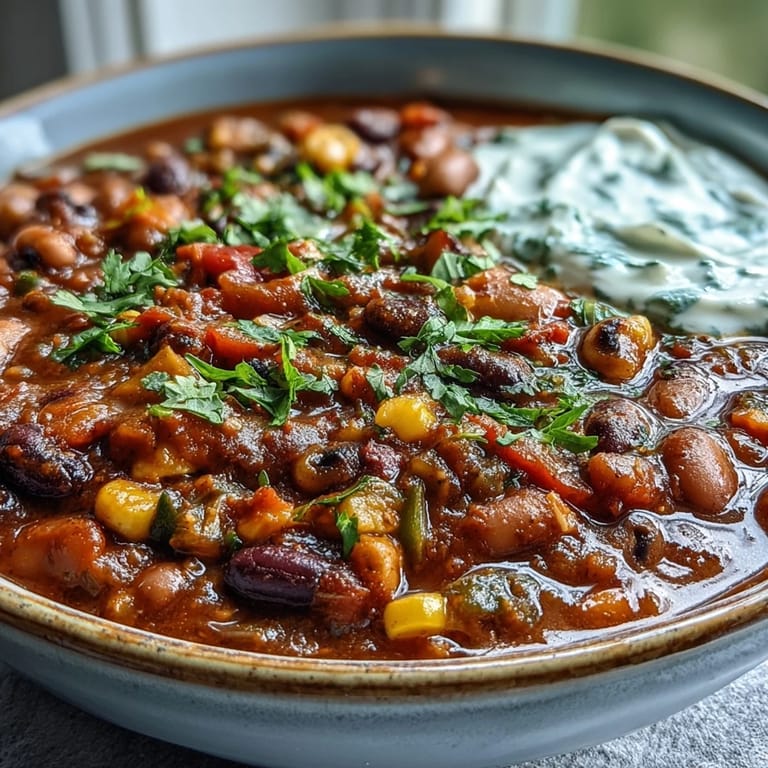
Save My neighbor knocked on the door one October evening with a jar of fresh black-eyed peas from her garden, and I had no idea what to do with them. I'd always associated them with holiday traditions I hadn't grown up with, but something about their humble appearance and her enthusiasm made me want to figure it out. That night, I invented this chili by accident, combining what I had in the pantry with her gift, and the result surprised us both—warm, complex, and somehow both comforting and a little adventurous at the same time.
I made a big pot of this for a potluck last spring when I wasn't sure what to bring, and it was the first thing that disappeared. Someone asked for the recipe before they'd even finished their bowl, and I realized it wasn't just good—it was the kind of dish that makes people feel welcome and cared for, which is really what cooking is about anyway.
Ingredients
- Black-eyed peas: Use canned if you're short on time, but dried peas cooked fresh have a creamier texture that makes the chili feel more luxurious.
- Kidney beans: They hold their shape beautifully and add a deeper earthiness that balances the lighter peas.
- Onion, garlic, bell peppers, carrot, and celery: This vegetable base is where the flavor foundation lives, so don't rush the sautéing step.
- Diced tomatoes: Canned tomatoes are actually better here than fresh because they're packed at peak ripeness and give you consistent acidity.
- Corn kernels: Fresh corn is wonderful if you have it, but frozen works beautifully and is honestly more reliable year-round.
- Vegetable broth: A good broth makes all the difference, so use one you actually like drinking—that's your quality test.
- Tomato paste: This concentrated umami bomb is what gives the chili its deep, savory backbone.
- Olive oil: Not the expensive stuff, just a reliable one that won't smoke.
- Ground cumin, chili powder, smoked paprika, dried oregano, and cayenne: These spices are the personality of the dish, so taste as you go and trust your own heat preference.
Tired of Takeout? 🥡
Get 10 meals you can make faster than delivery arrives. Seriously.
One email. No spam. Unsubscribe anytime.
Instructions
- Build your flavor base:
- Heat olive oil in a large pot over medium heat, then add your diced onion, garlic, carrot, celery, and both bell peppers. Let them sauté for 5 to 7 minutes, stirring occasionally, until they soften and the kitchen smells alive with possibility. You'll know it's ready when the onion turns translucent and the raw edge is gone from the garlic.
- Toast the spices:
- Stir in cumin, chili powder, smoked paprika, oregano, and cayenne if you're using it, cooking for just about a minute until the spices bloom and release their essential oils. This single minute transforms everything, deepening the flavor from background to foreground.
- Wake up the tomato paste:
- Add your tomato paste and stir it through the vegetables for another minute, letting it caramelize slightly against the heat. This step looks small but it's where blandness becomes richness.
- Bring everything together:
- Pour in your diced tomatoes, vegetable broth, black-eyed peas, kidney beans, and corn, stirring until everything is submerged and distributed. Bring the pot to a gentle boil, letting the ingredients introduce themselves to each other for a moment before you turn down the heat.
- Let it simmer and marry:
- Reduce heat to low, cover the pot, and let it simmer for 25 to 30 minutes, stirring occasionally, until the vegetables are completely tender and the flavors have melded into something greater than their individual parts. This is when you can step back and let the alchemy happen.
- Taste and season:
- Sample a spoonful, then add salt and black pepper until it tastes like your version of perfect. The vegetables will have released their own salts, so taste before you add.
- Serve with generosity:
- Ladle into bowls and let everyone choose their own toppings, because the best part of chili is how personal it becomes.
 Save
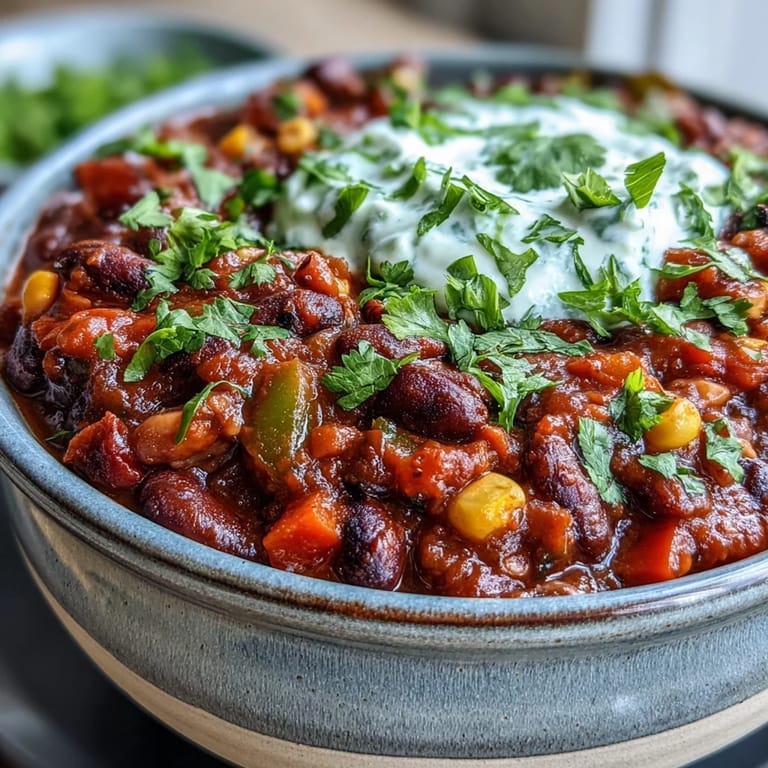
Save There's something quietly magical about feeding someone a bowl of chili they didn't expect to love. My partner, who thought he disliked vegetarian cooking, asked for seconds and then thirds, and I didn't need to tell him there was no meat in it because he was already too busy enjoying the moment to care.
The Magic of Black-Eyed Peas
Black-eyed peas have this understated elegance that most people overlook, probably because they're not trendy or Instagram-worthy. But they're incredibly creamy when cooked, they absorb flavors like little sponges, and they have a subtle earthiness that plays beautifully with warming spices. I used to think they were just for New Year's traditions until I realized they're actually one of the most versatile legumes in the kitchen, and this chili became my favorite way to celebrate that discovery.
Why This Works as Vegetarian Chili
Most people expect vegetarian chili to feel like something is missing, but this one doesn't because the combination of two different beans, tomato paste, and proper spicing creates genuine depth. The vegetables add body and texture, the spices add complexity, and the long simmer allows everything to develop the kind of richness that usually takes hours. You won't find yourself wishing for meat halfway through a bowl because the dish is complete on its own terms.
Serving Suggestions and Customization
This chili is wonderful on its own, but it becomes something special when you surround it with good toppings and let people build their own experience. Fresh cilantro adds brightness, sour cream adds richness, jalapeños add heat, and cheese adds comfort if that's your style. Serve it over rice or with cornbread on the side, or eat it as is in a bowl while you sit with someone you enjoy, because chili is really just an excuse to slow down and nourish yourself properly.
- A dollop of plant-based yogurt gives you creaminess without dairy if that matters to your kitchen.
- Sliced jalapeños on top add a fresh kick that cuts through the warming spices beautifully.
- Cornbread is the perfect companion because its slight sweetness balances the savory depth of the chili.
 Save
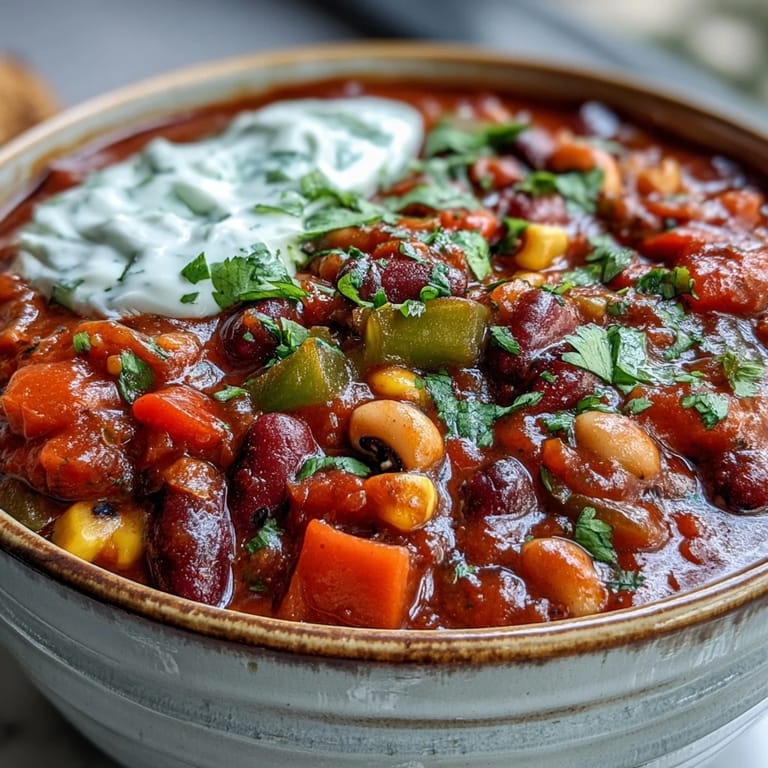
Save This chili taught me that vegetarian cooking isn't about replacing anything—it's about honoring the vegetables and legumes as the stars they actually are. Keep a pot of this in your life and you'll find yourself making it again and again.
Cooking Q&A
- → What makes black-eyed pea chili different from regular chili?
Black-eyed peas bring a creamy, earthy texture and mild nutty flavor that distinguishes this dish from traditional kidney bean varieties. The peas soften beautifully during simmering, creating a thicker consistency while absorbing the warming spices like cumin and smoked paprika.
- → Can I make this chili thicker?
Yes, simply mash about a cup of the cooked peas and beans against the side of the pot during the final 10 minutes of simmering. This releases their natural starches and creates a richer, heartier texture that clings to vegetables and spices.
- → What toppings work best with this dish?
Fresh cilantro adds bright herbal notes, while sour cream or plant-based yogurt provides cooling contrast to the spices. Shredded cheese, sliced jalapeños, crushed tortilla chips, or a squeeze of fresh lime juice all complement the earthy flavors beautifully.
- → How long does this chili keep in the refrigerator?
Stored in an airtight container, this chili keeps well for 4-5 days. The flavors actually deepen and improve after a day or two. Reheat gently on the stovetop, adding a splash of vegetable broth if needed to adjust consistency.
- → Can I freeze this chili?
This chili freezes exceptionally well for up to 3 months. Cool completely before transferring to freezer-safe containers, leaving some space for expansion. Thaw overnight in the refrigerator and reheat slowly on the stove, stirring occasionally.
- → What can I serve alongside this chili?
Cornbread is a classic pairing that soaks up the flavorful broth. Warm tortillas, crusty bread, or steamed rice also work well. For a lighter option, serve with a simple green salad dressed with vinaigrette to balance the hearty, spiced flavors.