 Save
Save My friend texted me a photo of her grandmother's dumpling soup one winter evening, and somehow that image stuck with me while I was making regular lasagna the next week. I stood there with a box of wonton wrappers in one hand and ground pork in the other, thinking: what if I stopped playing it safe? The result was this unexpected hybrid that tastes nothing like either dish alone, but somehow feels like both at once. My kitchen smelled like ginger and sesame for days afterward.
I made this for a dinner party where half the guests were expecting Italian and the other half were hoping for something Asian, and I watched their faces change when I pulled it from the oven golden and bubbling. Someone asked for the recipe before dessert even happened, which never occurs in my kitchen. That moment taught me that the best meals aren't about fitting into categories, they're about surprising people you care about.
Ingredients
- Dumpling or wonton wrappers (24 sheets): These stay tender through baking instead of getting crispy, which is the whole point of this fusion approach, so don't substitute with pasta sheets no matter how tempting.
- Ground pork or chicken (500 g): Pork carries the soy and ginger flavors better, but use what you have on hand and don't stress the choice.
- Vegetable oil (1 tablespoon): Just enough to get everything moving in the skillet without making the filling greasy.
- Onion, garlic, ginger: This is your flavor foundation, so mince them fine and give them those first two minutes to become fragrant and sweet.
- Carrot, red bell pepper, napa cabbage: Cut them thin so they soften in the time it takes you to cook the meat, and the napa cabbage adds that crisp vegetable texture that makes every bite interesting.
- Soy sauce, hoisin, rice vinegar, sesame oil: These four ingredients are the reason this tastes authentically Asian instead of just confused, so measure carefully.
- Mozzarella and cheddar cheese (300 g total): Mozzarella melts beautifully, cheddar adds sharpness, and mixing them prevents the filling from becoming one-note.
- Spring onions and sesame seeds: These go on at the very end and transform the whole plate visually.
- Low sodium soy sauce (120 ml), rice vinegar, honey, fresh ginger, garlic: The sauce is what elevates this from good to memorable, so don't skip making it from scratch.
- Chili flakes (1 teaspoon): Optional but highly recommended if you like your sauces with a gentle heat that builds as you eat.
- Cornstarch slurry (2 teaspoons cornstarch with 2 tablespoons cold water): This thickens the sauce so it doesn't pool at the bottom of your dish and stays put on each layer.
Tired of Takeout? 🥡
Get 10 meals you can make faster than delivery arrives. Seriously.
One email. No spam. Unsubscribe anytime.
Instructions
- Heat your oven and prep your workspace:
- Preheat to 180°C (350°F) and lightly grease your 9x13 inch baking dish with oil or butter so nothing sticks when it comes time to serve. This small step saves frustration later.
- Build your flavor base in the skillet:
- Heat vegetable oil over medium heat and let your onion, garlic, and ginger get to know each other for about two minutes until the kitchen smells unmistakably fragrant. You'll know it's ready when you can't help but lean in and breathe.
- Brown the ground meat:
- Add the pork or chicken and break it up as it cooks, stirring occasionally until no pink remains and the meat has taken on a slightly golden edge. Don't rush this part, as it builds the savory foundation everything else rests on.
- Add vegetables and let them soften:
- Stir in carrot, bell pepper, and napa cabbage, cooking for three to four minutes until the raw edge softens but everything still has texture. The cabbage will start to wilt gently and release its own subtle sweetness.
- Season with soy, hoisin, vinegar, and sesame oil:
- Pour in these four flavor makers and stir for two more minutes, letting everything meld together. Taste it at this point and remember this flavor, because it's going to be divided across three layers and that's the secret to distribution that feels even throughout.
- Make the soy ginger sauce while the filling cools slightly:
- In a separate saucepan, combine soy sauce, rice vinegar, honey, ginger, garlic, optional chili flakes, and sesame oil, bringing to a gentle simmer. Let it bubble softly for a minute or two while the flavors marry, then whisk in your cornstarch slurry and watch it transform from thin to silky in less than two minutes.
- Assemble the first layer:
- Spread a thin layer of soy ginger sauce across the bottom of your prepared baking dish, then lay eight dumpling wrappers to cover the base, overlapping slightly so they feel secure. They'll look fragile but they're stronger than they seem.
- Build the first full layer:
- Spread one-third of the meat and vegetable mixture over the wrappers, sprinkle one-third of your cheese blend, and drizzle with sauce. Don't be timid with the sauce, as it keeps everything moist as it bakes.
- Repeat the layers two more times:
- Add eight more wrappers, one-third of the remaining filling, one-third of the cheese, and sauce, then do it all again for the final layer. Finish the very top with remaining cheese and one last drizzle of sauce so the top gets golden and slightly crispy.
- Bake covered, then uncovered:
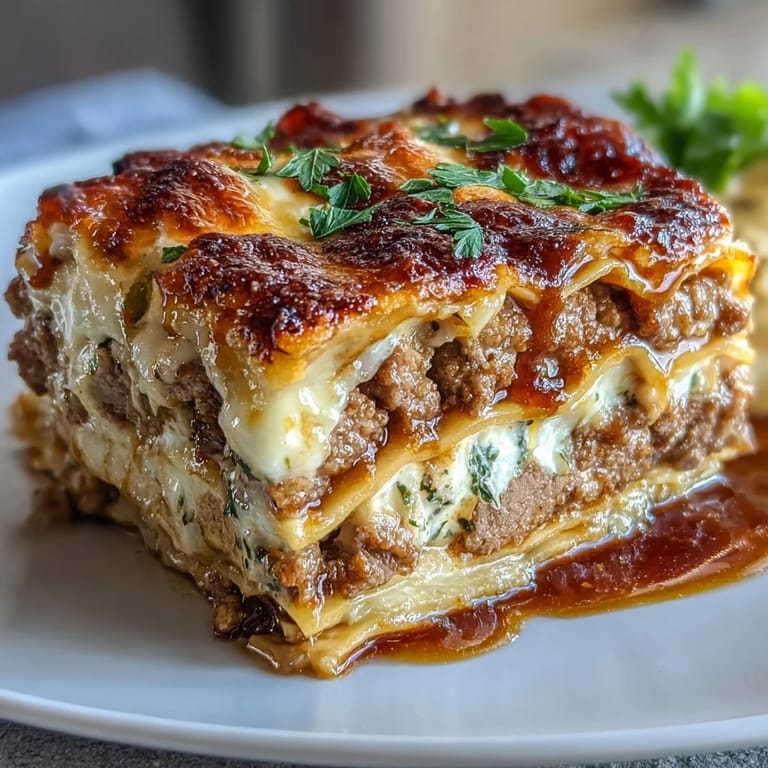
- Cover with foil and bake for twenty-five minutes to let everything heat through gently, then remove the foil and bake for another ten to fifteen minutes until the cheese bubbles at the edges and the top turns golden brown. The change from matte to glossy tells you it's ready.
- Rest before serving:
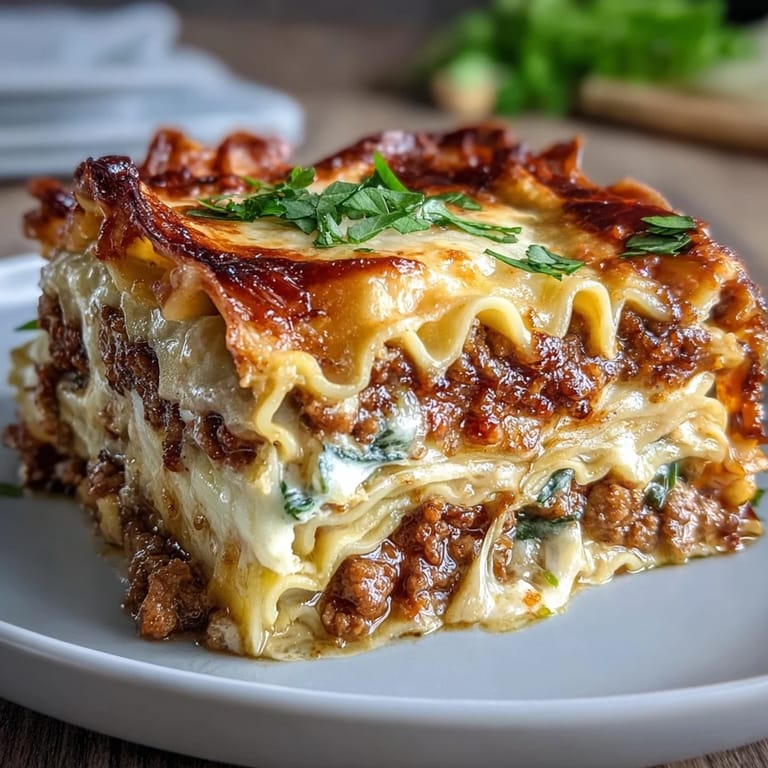
- Let it sit untouched for ten minutes after it comes out of the oven, which feels like an eternity but allows the layers to settle and hold together when you cut into them. Top with spring onions and sesame seeds just before plating.
 Save
Save There's a particular moment when you pull this out of the oven and the whole thing jiggles slightly because the cheese is still working, and you know you've created something that exists in a space between disciplines. It became my go-to dish when I wanted to show someone I could cook, because it requires technique but feels like play.
Why This Fusion Works
Lasagna is all about layers and comfort, while dumpling cuisine celebrates delicate wrapping and soy-based umami, and it turns out they were always meant to meet. The wonton wrappers stay surprisingly tender instead of crisping, which gives you a texture that's nothing like pasta but somehow equally satisfying in a completely different way. When you combine that with cheese and Asian flavors, you're not confused by the identity, you're freed by it.
Variations and Adaptations
For a vegetarian version, finely chop mushrooms or crumble firm tofu as your base instead of meat, and the umami from the soy sauce ensures it still tastes deeply savory. I've added spinach, bok choy, and snap peas in different versions, and they all work beautifully because this dish is fundamentally forgiving. The Soy Ginger Sauce is the constant, and everything else can flex based on what you have or what sounds good that evening.
Storage and Pairing
This dish lives beautifully in the refrigerator for up to three days, and reheats either in the oven wrapped in foil or in small portions in the microwave. Pair it with a crisp Riesling if you're drinking wine, or serve alongside jasmine tea or even a cold beer if you prefer, as the bright soy and ginger sauce adapts to whatever beverage you choose.
- Reheat leftovers covered with foil at 160°C for fifteen minutes so the cheese doesn't brown further but everything warms through gently.
- Double the sauce recipe if you like things extra glossy and flavorful on every bite.
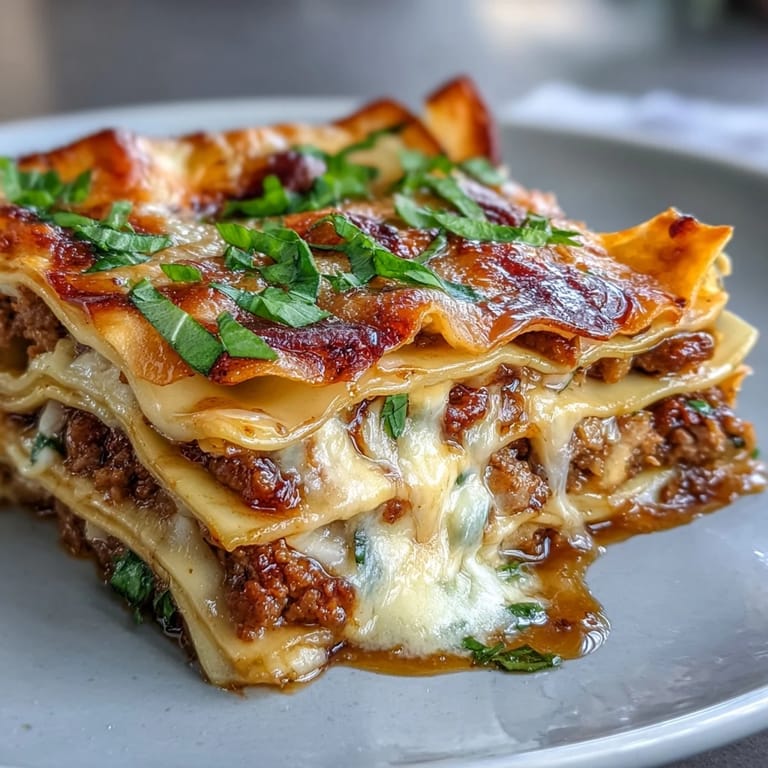
- Cut straight pieces using a hot, wet knife, wiping it clean between cuts so you don't drag cheese around.
 Save
Save This dish proved to me that the most satisfying meals come from trusting your instincts and not asking permission from tradition. Make it once, and it becomes yours to adapt endlessly.
Cooking Q&A
- → Can I substitute the meat for a vegetarian option?
Yes, finely chopped mushrooms or tofu work well as meat substitutes while retaining texture and flavor.
- → What type of wrappers can I use for layering?
Dumpling or wonton wrappers are ideal for layering, providing a delicate yet sturdy base.
- → How is the soy ginger sauce thickened?
The sauce uses a cornstarch slurry added at the end to achieve a smooth, glossy consistency.
- → What cheeses complement this dish best?
Mozzarella and cheddar cheeses melt beautifully, adding creaminess and a mild sharpness.
- → Can I prepare this dish ahead of time?
Yes, it can be assembled in advance and baked just before serving to maintain freshness.
- → What garnishes enhance the final flavor?
Thinly sliced spring onions and a sprinkle of black and white sesame seeds add aroma and crunch.