 Save
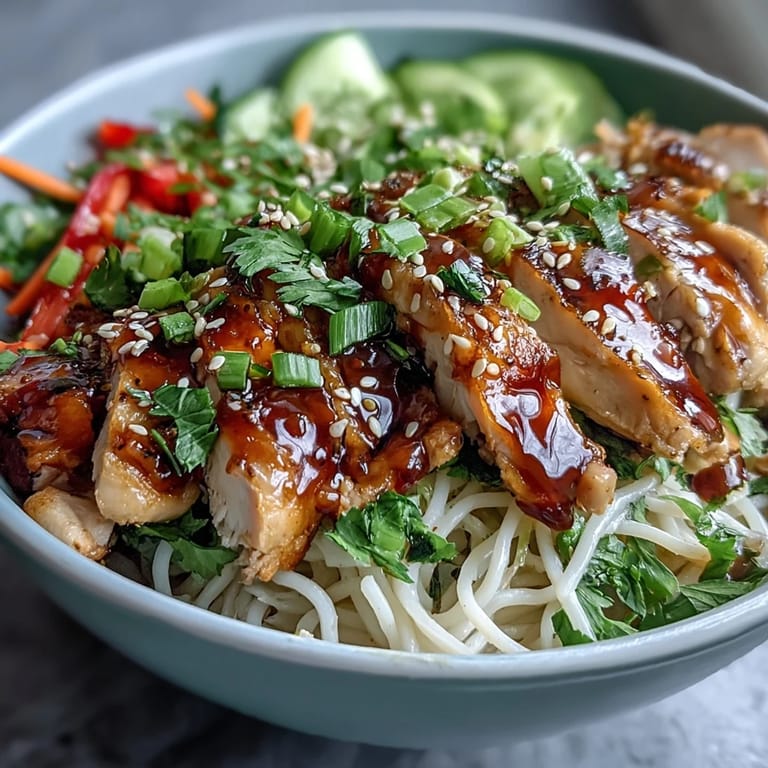
Save There's something about standing in front of a steaming bowl of noodles that makes everything feel manageable, even on the kind of Tuesday where nothing went right. My neighbor dropped off a container of homemade chili oil once, and that single gesture sparked a whole evening of experimentation in my kitchen—mixing it into broths, swirling it into creamy things, until I landed on this bowl. The chicken stays tender, the vegetables keep their snap, and the sauce tastes like you've been thinking about it all day when really, you haven't.
I made this for a friend who'd just moved into her apartment with nothing but a wok and a dream, and watching her face light up when she tasted it felt like I'd given her something more useful than a housewarming gift. She's made it maybe twenty times since, each version slightly different depending on what she found at the market that day. That's when I realized this isn't really a recipe—it's permission to trust your instincts.
Ingredients
- Boneless, skinless chicken breast or thighs (500 g): Thighs stay more forgiving if you're not watching the clock obsessively, but breasts work beautifully too—slice them thin so they cook through quickly.
- Tamari or low-sodium soy sauce (3 tbsp): This is your umami anchor, and tamari keeps it gluten-free if that matters to you.
- Fish sauce (1 tbsp): Trust this even if you're skeptical—it disappears into the background and makes everything taste more like itself.
- Rice vinegar (2 tbsp): Brings brightness that prevents the bowl from feeling heavy.
- Honey (1 ½ tbsp): Rounds out the sharp edges and gives the sauce a subtle gloss.
- Toasted sesame oil (2 tbsp): The real deal, not the clear kind—this is where half the magic lives.
- Neutral oil (2 tbsp): Keeps the chicken from sticking and helps everything cook evenly.
- Garlic and ginger (3 cloves and 1 tsp): Fresh makes an enormous difference, especially with ginger—it wakes up your whole mouth.
- Chili flakes or Sriracha (1 tsp optional): Add it if you want heat, leave it out if you're cooking for someone cautious.
- Dried rice noodles (250 g): The thinner ones absorb sauce better, but honestly whatever you find works.
- Fresh vegetables (carrot, cucumber, bell pepper, spring onions, bean sprouts): Raw vegetables keep their texture and provide contrast—don't skip the crunch.
- Fresh cilantro (2 tbsp): Chopped right before serving, not hours ahead.
- Toasted sesame seeds (2 tbsp): Buy them pre-toasted or toast them yourself—the difference is noticeable.
- Lime wedges: Essential, not optional—the acid ties everything together.
Tired of Takeout? 🥡
Get 10 meals you can make faster than delivery arrives. Seriously.
One email. No spam. Unsubscribe anytime.
Instructions
- Make your sauce first:
- Whisk together tamari, fish sauce, rice vinegar, honey, sesame oil, neutral oil, garlic, and ginger in a medium bowl. This takes about two minutes and you'll immediately understand the balance—taste a drop on your finger and you'll feel why each ingredient belongs. Split the mixture in half: one half becomes the marinade, the other stays clean for finishing.
- Let the chicken soak:
- Toss your sliced chicken with the marinade half and let it sit for 15 minutes while you handle everything else. This isn't a rigid rule—even 5 minutes helps, though 15 gives the flavors a chance to settle in.
- Cook the noodles properly:
- Follow the package instructions, then drain and rinse with cold water until they stop steaming—this stops them from cooking further and keeps them from clumping. Set them aside in a bowl so they're ready when you need them.
- Sear the chicken until golden:
- Heat a large skillet or wok over medium-high heat until it's genuinely hot (this matters), then add the marinated chicken and cook for 5 to 7 minutes until the edges are lightly browned and the thickest piece feels firm when you press it. Listen for the sizzle when it hits the pan—that's how you know the heat is right.
- Assemble your bowls:
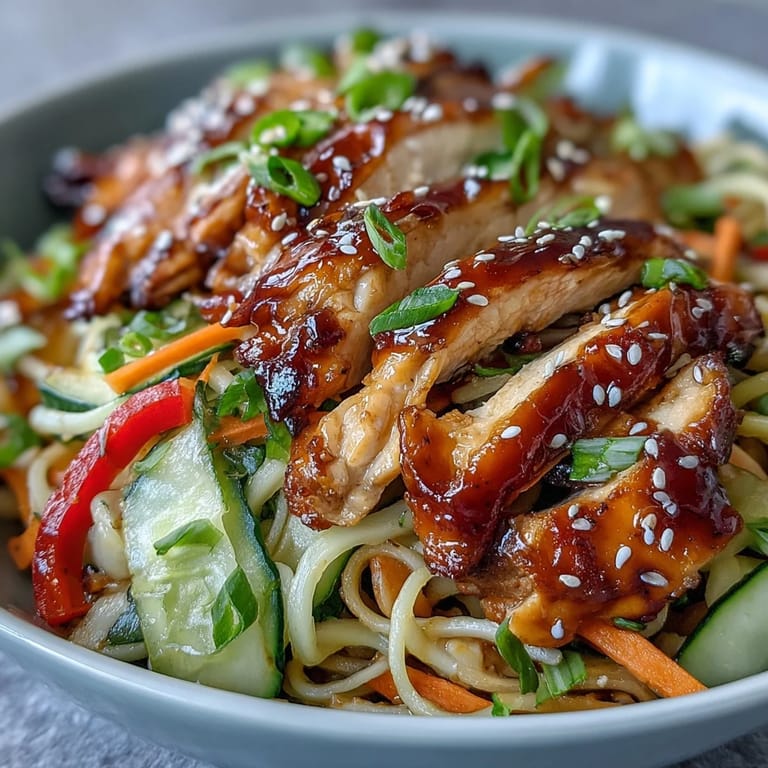
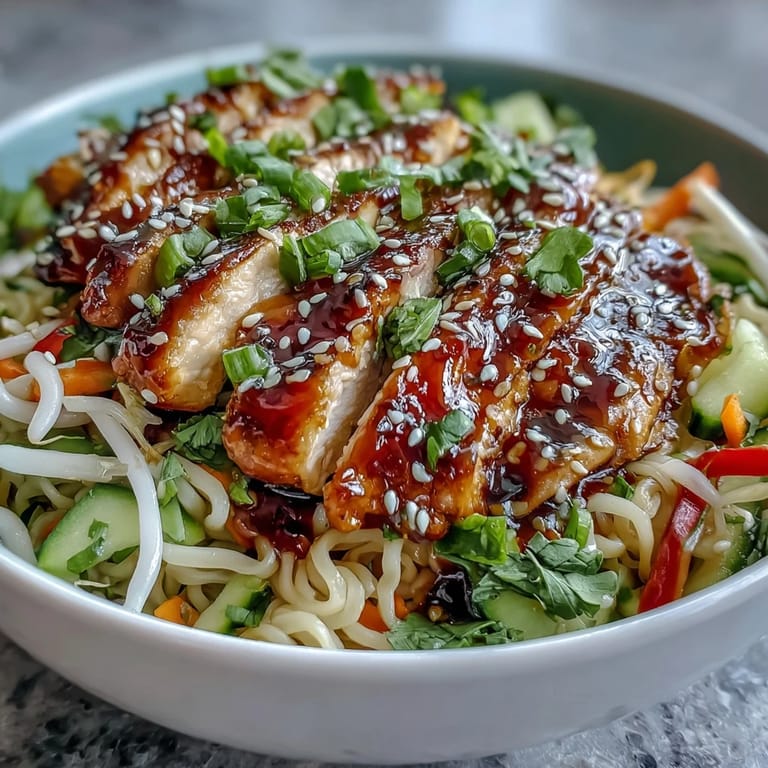
- Divide the cold noodles among four bowls, then arrange the cooked chicken and all your raw vegetables on top in whatever pattern feels good. There's no wrong way to arrange this.
- Finish with sauce and brightness:
- Drizzle the reserved sauce over each bowl, scatter cilantro and sesame seeds on top, then squeeze lime juice over everything. Serve immediately so the vegetables stay crisp.
 Save
Save My mom watched me make this once and asked why I was fussing over a noodle bowl like it mattered, and I realized it's because it does—not because it's complicated, but because when food is built with intention, people feel that. The act of arranging vegetables, balancing flavors, finishing with something bright—it changes how the meal lands.
Why Temperature and Texture Matter
The contrast between warm chicken, cold noodles, and crisp vegetables is not accidental—it's what makes this bowl feel alive instead of just filling. When you add hot elements to cold ones, you're creating a temperature journey in each bite, and your mouth stays engaged instead of bored. I learned this by accident when I once served everything warm and the dish felt flat, like someone had muted the volume on flavor.
Sauce Strategy and Flavor Balance
The sauce is technically a marinade first, which does double duty and saves you a step while building depth. The reserved half stays clean for finishing because double-dipping with raw chicken involved is a food safety thing, but it also keeps the final sauce bright and balanced. Think of the marinade as the opening note and the finishing sauce as the chord resolution—same components, completely different impact depending on when they arrive.
Building Your Own Bowl Philosophy
This recipe is genuinely flexible, and I've watched enough people make it differently to know that's a strength, not a flaw. You can swap proteins, change vegetables, adjust the sauce heat, or add other toppings without breaking anything fundamental. The structure stays solid as long as you keep the core idea: tender protein, fresh vegetables, good noodles, balanced sauce.
- Tofu works beautifully if you press it first and cube it instead of slicing it, and you can skip the fish sauce entirely if you increase tamari by half a tablespoon.
- Shrimp cooks in about 3 minutes if you go that route, so don't walk away from the pan.
- Edamame, snap peas, or shredded cabbage add substance without requiring you to rethink anything about the method.
 Save
Save This bowl has become the thing I make when I want to feel like I've cooked without having spent the whole evening in the kitchen, and somehow people keep asking for the recipe. Maybe it's because it tastes simple but made, and that's a feeling worth sharing.
Cooking Q&A
- → Can I make this ahead of time?
Prepare the sauce and marinate the chicken up to 24 hours in advance. Cook noodles and vegetables fresh for best texture, or store components separately and assemble when ready to serve.
- → What other proteins work well?
Sliced beef, shrimp, or crispy tofu are excellent alternatives. Adjust cooking times accordingly—shrimp needs just 2-3 minutes, while beef benefits from quick searing over high heat.
- → Can I use different noodles?
Soba, udon, or even spaghetti work nicely. Rice noodles offer the most authentic texture, but wheat noodles provide a satisfying chew and hold sauce beautifully.
- → How do I adjust the spice level?
Start with less chili flakes or Sriracha, then add gradually. For milder heat, omit the chili entirely. Extra spice lovers can add fresh sliced chilies or chili oil at the table.
- → Is this gluten-free?
Use certified gluten-free tamari instead of soy sauce and ensure your rice noodles are labeled gluten-free. The dish naturally contains no wheat when made with these substitutions.
- → What vegetables can I add?
Snap peas, shredded cabbage, baby corn, or edamame work wonderfully. For heartier versions, add bok choy or mushrooms—sauté them briefly before adding to the bowl.