 Save
Save I discovered this idea by accident at a gallery opening—watching someone's eyes light up as they approached a cheese platter shaped like a work of art. The combination of visual drama and genuine deliciousness stuck with me, and I realized cheese didn't have to sit in ordinary arrangements. Now when I set this out, people actually pause before they eat, and that moment of recognition feels as satisfying as the first bite.
A few years ago, I made this for a small dinner party on an impulse, having guests arriving in an hour. What started as nervousness about impressing them turned into something genuine—we all stood around the platter like kids admiring a compass, and suddenly the pressure evaporated. The conversation that followed felt easier, warmer.
Ingredients
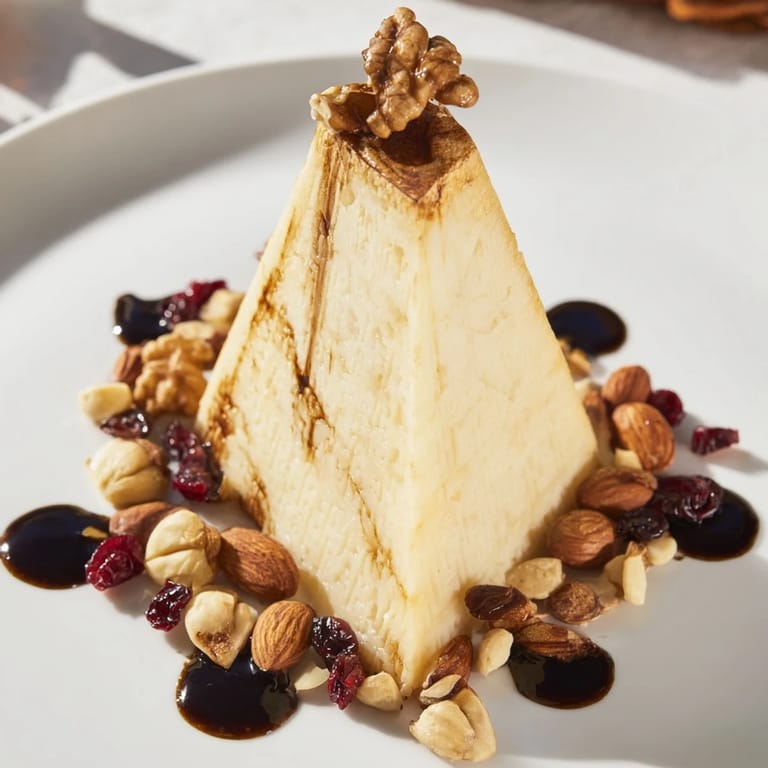
- Aged hard cheese (150 g): A thick wedge of Parmigiano-Reggiano, aged Gouda, or Manchego becomes your centerpiece gnomon—choose one with enough character that it stands as the visual anchor, not just filling space.
- High-quality balsamic glaze (3 tbsp): The glaze is your shadow line, so don't skimp; a thin, watery version disappears, while a proper glaze catches the light and creates depth.
- Roasted almonds (1/3 cup), roasted walnuts (1/3 cup), roasted pecans (1/3 cup), roasted hazelnuts (1/3 cup): Four different nuts create rhythm and surprise—each cluster tastes different, keeping people reaching back.
- Dried cranberries (2 tbsp, optional): These add color punctuation and a tart note that balances the richness.
- Fresh grapes, figs, edible flowers, or microgreens (optional): These turn a clever platter into something that feels like it belongs in a still life painting.
Tired of Takeout? 🥡
Get 10 meals you can make faster than delivery arrives. Seriously.
One email. No spam. Unsubscribe anytime.
Instructions
- Set your stage:
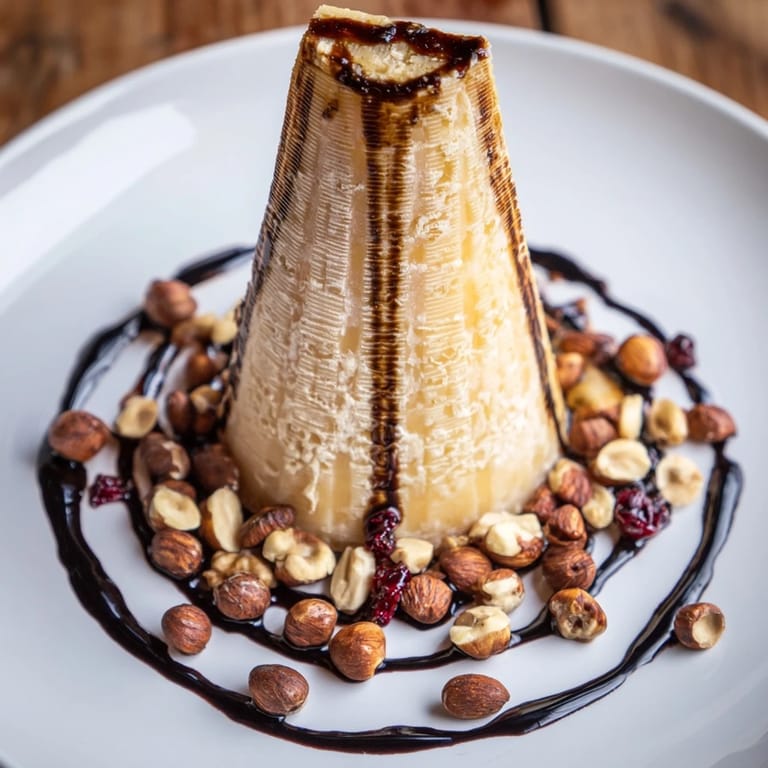
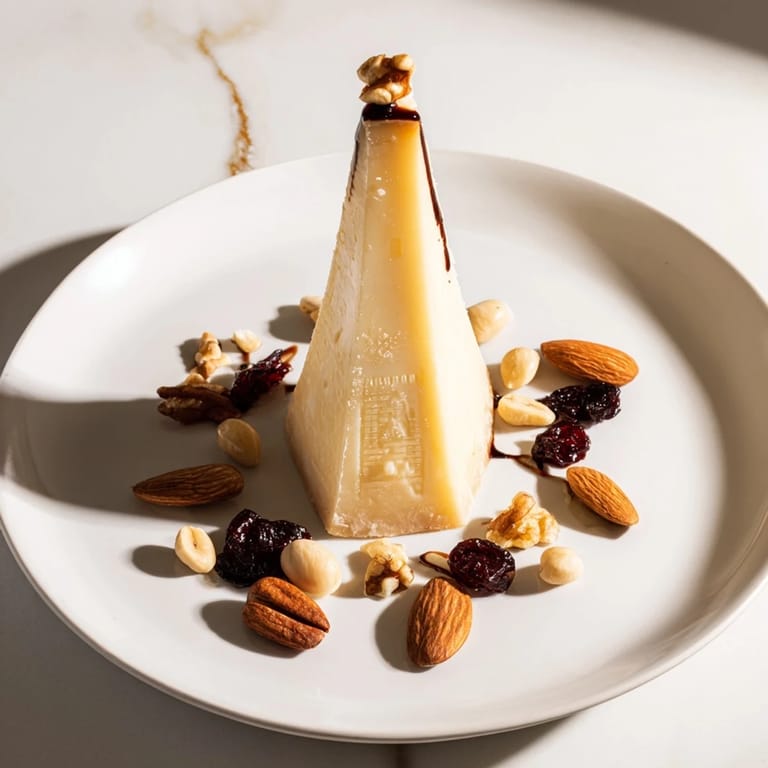
- Place the cheese wedge point-out in the center of a large round platter, letting it stand tall like an actual sundial gnomon. This is your anchor—everything else radiates from here.
- Cast the shadow:
- With a spoon, drizzle the balsamic glaze in one thick, confident line extending outward from the cheese, mimicking how sunlight creates a shadow. A wobble or two is fine; it actually makes it feel handmade.
- Mark the hours:
- Arrange twelve small clusters of mixed nuts evenly around the cheese in a circle, treating each like a number on a clock face. Mix the nuts within each cluster so every bite holds surprise.
- Add the final touches:
- Tuck dried cranberries into a few clusters for color, scatter grapes or figs around the outer edge, and perhaps add a few edible flowers or microgreens for elegance. Step back and admire—you've just made functional art.
- Invite people in:
- Set out small cocktail picks or forks nearby, then watch as guests pause before they reach for anything.
 Save
Save I remember my cousin asking if she could take a photo before anyone touched it—not for social media, just because she wanted to capture that moment. That's when I understood this dish does something beyond feeding people; it creates a memory before the first bite.
Why the Presentation Matters
A cheese platter arranged this way stops people mid-conversation. There's something almost meditative about seeing cheese and nuts ordered with intention, especially when it doubles as a functional serving piece. The shape gives permission for people to linger and admire instead of rushing through a snack—it transforms the appetizer moment into an actual event.
Adapting This for Your Crowd
This recipe stays flexible because it's really a framework for whatever you love. Some friends prefer candied nuts, others bring olives to tuck between clusters, and one person even added thin apple slices standing upright like more sundial markers. The structure holds; what fills it is yours to decide.
Pairing and Serving
This shines alongside a dry white wine or a light Italian red like Chianti—drinks that refresh between bites rather than compete with the cheese. I've learned to leave it out for no longer than an hour, as the balsamic can eventually soak into the platter and the cheese warms. Set it where people gather, not hidden on a side table.
- A plant-based hard cheese works beautifully if you're serving vegan guests—the visual magic stays intact.
- Prepare the components ahead but assemble just before guests arrive; the glaze line stays sharper and the cheese stays cool.
- If you're nervous about the glaze line, practice it once on a plate—muscle memory takes the second-guessing away.
 Save
Save This dish taught me that entertaining doesn't require complexity—just a little intention. When you feed people something beautiful, they feel cared for before they even taste it.
Cooking Q&A
- → What type of cheese works best for the sundial centerpiece?
Aged hard cheeses like Parmigiano-Reggiano, aged Gouda, or Manchego hold their shape well and provide a rich flavor ideal for this presentation.
- → Can I substitute the nut clusters with other nuts?
Absolutely! Roasted or spiced nuts such as cashews or pistachios offer different textures and flavors while maintaining visual appeal.
- → How do I create the balsamic glaze line?
Use a spoon to carefully drizzle a thick line of high-quality balsamic glaze extending outward from the cheese wedge, mimicking a sundial's shadow.
- → Are there suggestions for garnishes to enhance the platter?
Fresh grapes, figs, edible flowers, or microgreens add vibrant color and elegance to the platter presentation.
- → Is this platter suitable for vegetarian and gluten-free diets?
Yes, it includes vegetarian-friendly cheese and gluten-free nut clusters, making it suitable for both dietary preferences.
- → What drinks pair well with this cheese platter?
Pair with dry white wines or light Italian reds like Chianti to complement the rich cheese and nut flavors.