 Save
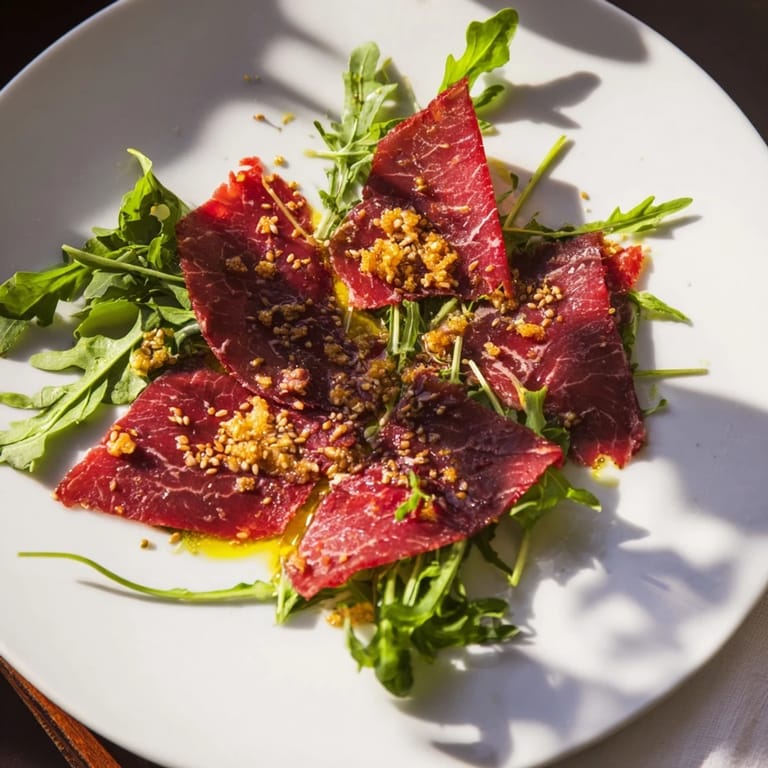
Save I discovered origami beef at a dinner party where someone brought an appetizer so visually striking it stopped conversation mid-bite. The moment I unfolded one of those geometric beef triangles on my tongue, I understood the magic—it wasn't just about looks. The thin slices held just enough marinade to whisper soy and lemon with each fold, and suddenly I was determined to master the technique myself.
The first time I attempted this at home, I was hosting a small wine tasting and honestly panicked when the folds kept slipping. Then I realized the imperfect angles actually made each one feel handmade and genuine. By the time my guests arrived, I'd found a rhythm with the folding, and watching them carefully arrange each piece on their plate felt like vindication.
Ingredients
- Beef carpaccio or thinly sliced roast beef (300 g): The thinner the slice, the easier it folds and the more elegantly it drapes on the plate—ask your butcher for help if needed, it makes all the difference.
- Extra virgin olive oil (2 tbsp): Quality matters here since it's a star ingredient, not just a supporting player in the background.
- Soy sauce (1 tbsp, gluten-free if needed): This gives the beef its savory backbone and cuts through the richness beautifully.
- Lemon juice (2 tsp): Adds brightness and keeps the beef from feeling one-dimensional on the palate.
- Dijon mustard (1 tsp): A small amount brings complexity and a subtle tang that guests won't identify but will taste.
- Freshly ground black pepper (1/2 tsp): Grind it yourself right before—pre-ground loses its bite and presence.
- Sea salt (1/4 tsp): Enhances every other flavor without announcing itself.
- Baby arugula (40 g): Provides a peppery bed that echoes the black pepper and keeps the presentation verdant.
- Toasted sesame seeds (2 tbsp): The toasting step is non-negotiable—raw ones taste like nothing, toasted ones add nutty warmth.
- Finely chopped chives (1 tbsp): Use them to secure folds if needed, or just scatter for onion-forward freshness.
- Shaved Parmesan cheese (50 g): A vegetable peeler does this better than a grater, creating delicate curls that melt slightly against warm beef.
Tired of Takeout? 🥡
Get 10 meals you can make faster than delivery arrives. Seriously.
One email. No spam. Unsubscribe anytime.
Instructions
- Make the marinade:
- Whisk together the olive oil, soy sauce, lemon juice, Dijon mustard, pepper, and salt in a small bowl until the mustard dissolves and everything looks glossy. Taste it on a clean fingertip—it should taste bold and a little salty since it'll only touch the beef lightly.
- Prepare the beef:
- Lay each slice of beef on a clean, dry surface. Brush lightly with marinade, using just enough to coat without making the slices soggy or hard to handle.
- Fold into shapes:
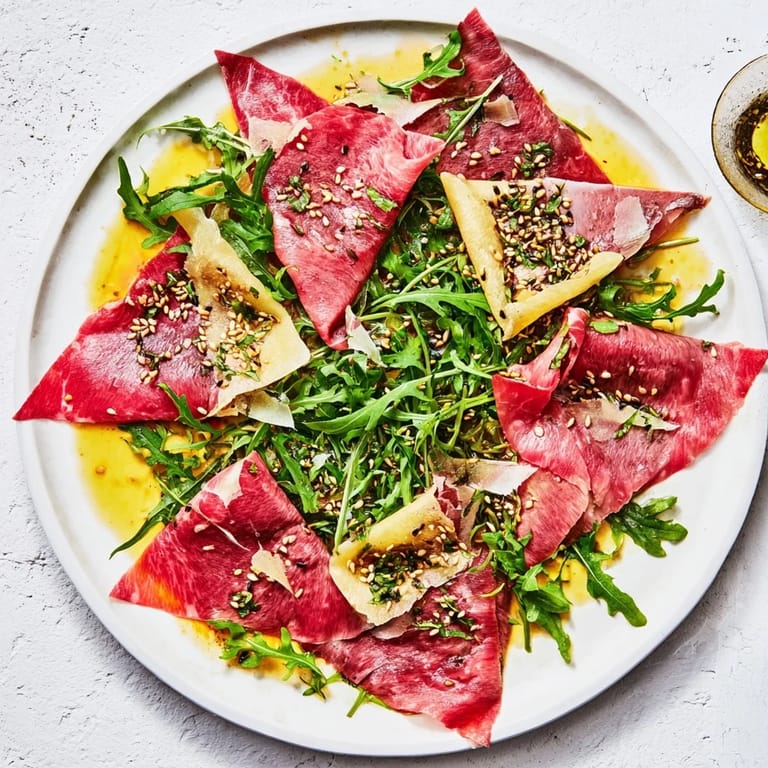
- This is where patience wins—fold each slice gently into triangles, squares, or fan shapes, applying soft pressure rather than force. If a fold threatens to slip, use a chive stem or cocktail pick to anchor it in place, which also adds to the visual story.
- Build the platter:
- Arrange the folded beef pieces on a platter lined with baby arugula, spacing them so each one has room to be admired.
- Add the finishing touches:
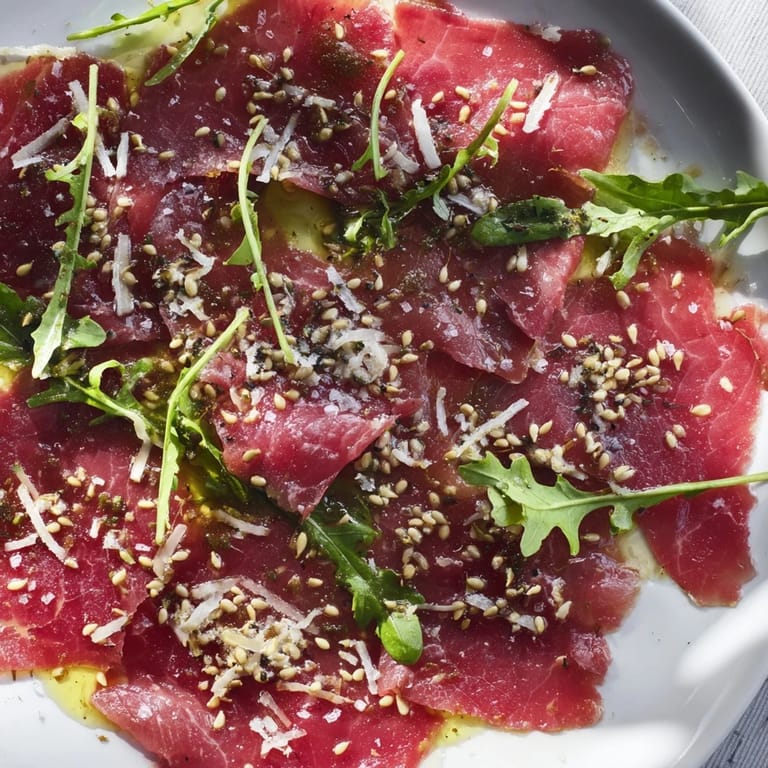
- Sprinkle the toasted sesame seeds, chopped chives, and shaved Parmesan over the beef in a way that feels intentional but not fussy.
- Final drizzle:
- Just before serving, drizzle the remaining marinade around the platter—this timing keeps everything fresh and prevents sogginess.
 Save
Save One evening, a guest told me this appetizer reminded her of origami classes she'd taken years ago—how folding paper had taught her patience. I hadn't thought of it that way, but suddenly the dish felt like it held more than flavor; it held intention and care in every crease.
The Art of Slicing
Finding the right beef was half the battle for me. I realized that asking the butcher to slice the roast beef on the deli slicer gave me consistently thin pieces that folded like silk, whereas buying pre-packaged beef often came too thick or inconsistent. Now I call ahead and specify my needs, and they always deliver. The investment of 30 seconds of planning saves minutes of frustration at home.
Marinade Magic
I experimented with different ratios until I found that the Dijon mustard shouldn't dominate—it should lurk in the background, adding complexity without announcing itself. The lemon juice and soy sauce are the real stars, creating a umami-forward profile that lets the beef shine. Once I stopped overthinking and trusted these three ingredients to carry the flavor story, the whole recipe clicked into place.
Serving and Pairing
This appetizer feels elegant enough for a formal dinner but casual enough for a casual gathering, which is why it's become my go-to when I'm unsure about the vibe. Serve it slightly chilled, never straight from the fridge—the cold dulls the flavors. A crisp Sauvignon Blanc or dry rosé beside it makes the whole experience feel intentional and complete, and if your guests ask about wine pairing, you'll sound like you know exactly what you're doing.
- Consider thinly sliced baguette or rice crackers on the side for those who want to build something more substantial.
- This dish is naturally gluten-free if you use gluten-free soy sauce, making it perfect for mixed dietary needs.
- Prepare everything except the final marinade drizzle up to an hour ahead—the folds stay intact and the platter looks fresh.
 Save
Save This dish taught me that sometimes the most memorable food isn't complicated—it's about respecting each ingredient and taking time with the details. Every time I make it, I remember why people pause mid-conversation to ask how it's done.
Cooking Q&A
- → How should the beef be sliced for optimal folding?
Use very thin slices such as beef carpaccio or thinly sliced roast beef to ensure easy folding and a tender bite.
- → Can the marinade be altered for added flavor?
Yes, adding a drop of truffle oil enhances the richness, while maintaining balance with lemon juice and Dijon mustard.
- → What garnishes complement the folded beef best?
Baby arugula, toasted sesame seeds, chopped chives, and shaved Parmesan add freshness, texture, and savory notes.
- → Is this dish suitable for gluten-free diets?
Ensure soy sauce used is gluten-free to maintain suitability for gluten-sensitive diners.
- → Are there pescatarian alternatives for the beef?
Thinly sliced tuna or salmon can be substituted for a pescatarian version without compromising the presentation.