 Save
Save The first time I layered Korean BBQ flavors onto nachos was completely accidental—I'd made too much gochujang-marinated beef for a weeknight dinner and had half a bag of tortilla chips left over. Instead of eating them plain, I thought, why not? The sizzling beef, the melty cheese, the snap of fresh vegetables—it became something I couldn't stop thinking about. Now whenever friends come over wanting something that feels adventurous but isn't complicated, this is what I reach for.
I remember bringing this to a potluck where someone had also made traditional nachos—mine disappeared first, and then people started asking what made the beef taste so different. There's something about that combination of soy, ginger, and chili paste that just works on crispy chips in a way that feels both familiar and surprising at the same time.
Ingredients
- Flank steak or sirloin, thinly sliced (300 g): The thinner you slice it, the faster it absorbs the marinade and the easier it is to eat on a chip without sliding off.
- Gochujang (2 tbsp): This is the backbone—don't be tempted to use less or you'll lose that signature Korean BBQ depth.
- Soy sauce (1 tbsp): Adds umami and saltiness that prevents the dish from tasting one-dimensional.
- Brown sugar (1 tbsp): Balances the heat and saltiness with subtle sweetness that caramelizes beautifully when seared.
- Sesame oil (2 tsp): A small amount is all you need—it's potent and gives everything that toasted, nutty aroma.
- Garlic and ginger (2 cloves and 1 tsp): Fresh versions matter here; they brighten the marinade instead of tasting stale.
- Rice vinegar (1 tsp): Cuts through the richness and adds a subtle tang that lifts the whole dish.
- Tortilla chips (200 g): Look for sturdy ones that won't immediately go soggy—thicker chips hold up better to the toppings and heat.
- Mozzarella and Korean cheese blend (200 g total): The combination creates better stretch and flavor than mozzarella alone; if you can't find Korean cheese, a mozzarella-cheddar mix works.
- Fresh vegetables (red onion, carrot, cucumber, scallions, optional chili): These stay crisp while everything else is warm, which is where the real textural magic happens.
- Toasted sesame seeds (1 tbsp): Sprinkle these last—they add nuttiness and prevent the dish from feeling too soft.
- Kimchi (2 tbsp): Chopped up, it brings funk and fermented complexity that changes everything.
- Fresh cilantro or shiso (2 tbsp): Choose based on your mood—cilantro feels brighter, shiso feels more authentically Korean.
- Sriracha mayo or gochujang mayo: Optional but honestly, a thin drizzle ties all the flavors together.
Tired of Takeout? 🥡
Get 10 meals you can make faster than delivery arrives. Seriously.
One email. No spam. Unsubscribe anytime.
Instructions
- Prepare the marinade:
- Whisk together gochujang, soy sauce, brown sugar, sesame oil, minced garlic, grated ginger, rice vinegar, and black pepper in a bowl. The mixture should smell intensely savory and slightly sweet. Add your thinly sliced beef and make sure every piece gets coated.
- Let the beef sit:
- Twenty minutes is the minimum, but if you have an extra 10, the flavors will deepen noticeably. The beef will absorb the marinade and start looking darker and more flavorful.
- Heat your skillet:
- Get a large skillet smoking hot over medium-high heat—you want it hot enough that the beef sizzles immediately when it hits the pan. This is what gives you those caramelized edges.
- Sear the beef:
- Work in batches so you don't crowd the pan; overcrowding releases steam and prevents browning. Sear for 2–3 minutes per batch, moving the pieces around so they brown on both sides. The beef should be cooked through and have dark, sticky bits clinging to it.
- Prepare your baking setup:
- Preheat your oven to 200°C (400°F). Line a baking tray with parchment paper and spread out your tortilla chips in an even layer, trying to keep them in a single layer so they all get crispy.
- Layer the base:
- Scatter about half of your combined cheeses over the chips. Don't worry about covering every chip perfectly—the cheese will melt and pool into the gaps.
- Add the beef:
- Distribute the warm, cooked beef evenly across the cheesy chips. Sprinkle the remaining cheese on top so it can melt over both the beef and the chips beneath.
- Bake until melted:
- Slide into the oven for 6–8 minutes. You'll know it's ready when you see the cheese bubbling at the edges and starting to turn golden. Don't leave it in too long or the chips will lose their crispness.
- Top with fresh elements:
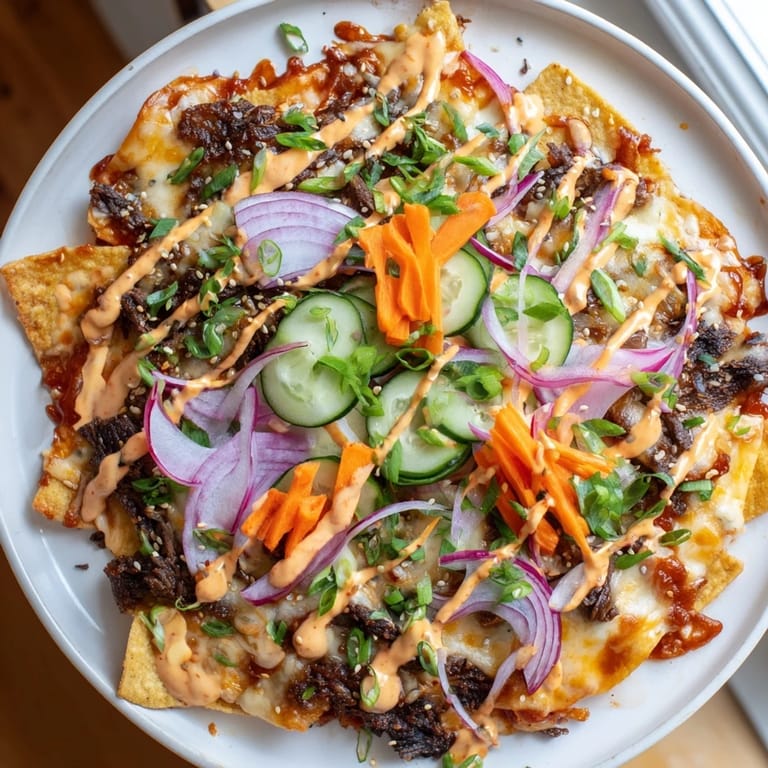
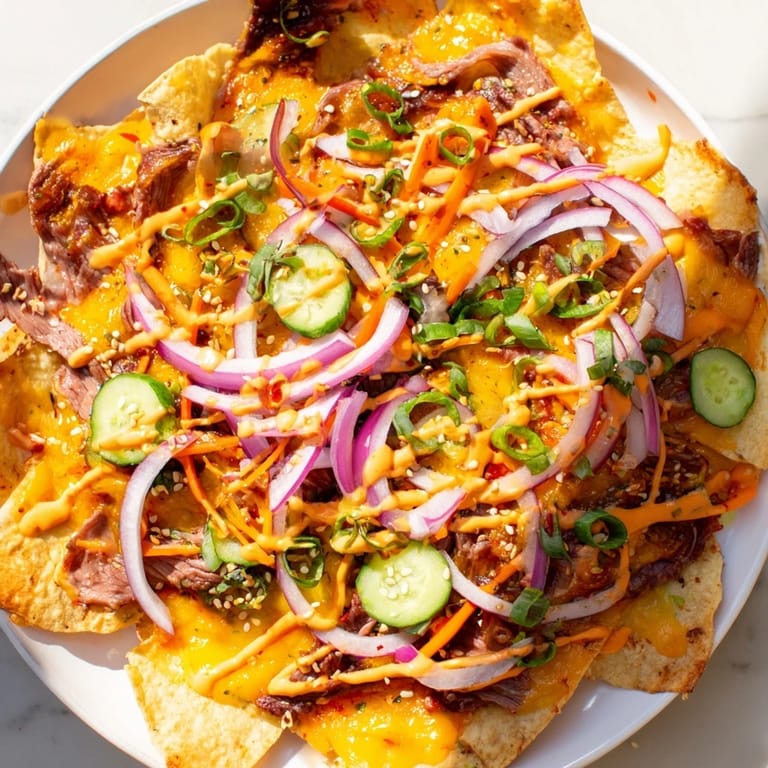
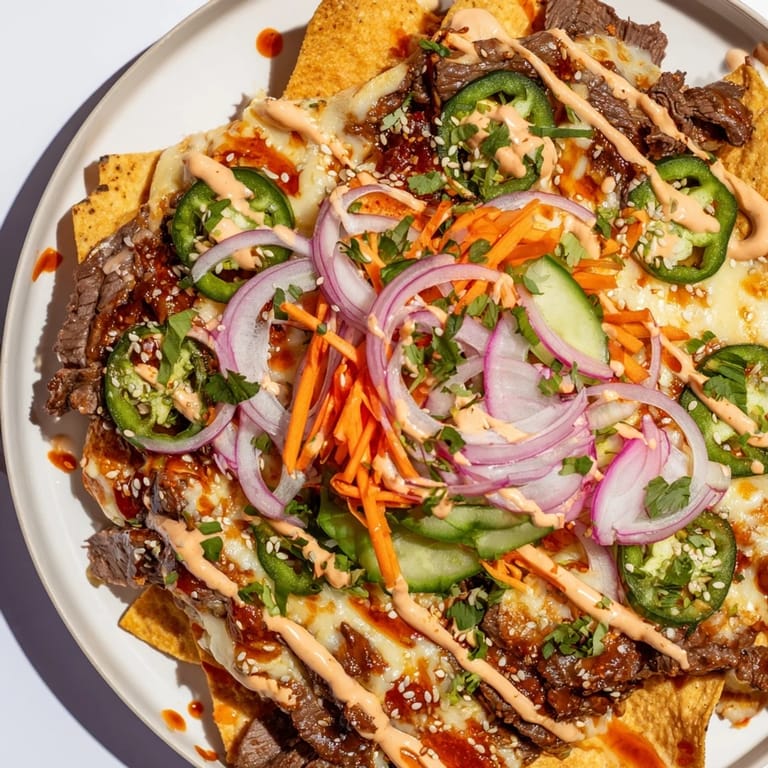
- The moment it comes out, scatter your raw vegetables across the top—red onion, carrot, cucumber, scallions, and chili if you want heat. The warmth from the nachos will slightly soften them while keeping them fresh and crisp.
- Finish and serve:
- Sprinkle sesame seeds, then scatter the chopped kimchi and fresh herbs. Drizzle with sriracha mayo or gochujang mayo if you're using it. Serve immediately with lime wedges on the side for squeezing.
 Save
Save There was an evening when someone eating this said it reminded them of Korean street food, but elevated and playful at the same time. That's exactly what it is—bold flavors that respect the original cuisine, but reimagined in a format where everyone can grab and eat with their hands.
Why This Works as a Dish
The genius of Korean BBQ nachos is how it stacks textures and temperatures—hot melted cheese against cold vegetables, crispy chips against soft beef, spicy against cool. Every bite is different depending on which toppings you grab, so it never feels monotonous. The beef does the heavy lifting flavor-wise while the fresh vegetables keep it from feeling heavy, and that's a balance that actually matters.
Making It Your Own
This isn't a rigid recipe—it's more of a framework. If you love spice, pile on more chili and skip the mayo. If you want to use chicken instead of beef, the marinade works just as well; you might just need 3–4 minutes in the skillet instead of 2–3. Vegetarian versions using marinated mushrooms or even crispy tofu have become favorites in my kitchen once I accepted that the marinade is really the star.
The Details That Change Everything
It's tempting to think nachos are casual and forgiving, and they are—but a few small choices make the difference between good and unforgettable. The quality of your gochujang matters because it's doing so much work. Toasting sesame seeds yourself takes one extra minute and makes the whole dish taste nuttier and more intentional. Using a sturdy chip variety means you're not fighting soggy bottoms the whole time you're eating. These small details compound into something that feels less like nachos and more like a celebration.
- Slice your vegetables uniformly so everything cooks and softens at the same rate.
- If you're making this ahead, you can marinate the beef the night before and sear it cold from the fridge—it takes an extra minute but the texture stays perfect.
- Toast your sesame seeds in a dry skillet for just under a minute; they smell amazing when they're ready and taste infinitely better than raw.
 Save
Save This is the kind of dish that tastes like you put real thought into it, even though you haven't. Serve it warm, eat it with your hands, and watch people's faces light up when they taste the beef.
Cooking Q&A
- → How is the beef marinated for the best flavor?
The beef is marinated for at least 20 minutes in a mixture of gochujang, soy sauce, brown sugar, sesame oil, garlic, ginger, rice vinegar, and black pepper to ensure a balanced spicy, sweet, and savory profile.
- → Can I substitute the beef with other proteins?
Yes, grilled chicken, tofu, marinated mushrooms, or jackfruit can be used for alternatives, accommodating different dietary preferences while maintaining bold flavors.
- → What cheeses are recommended for layering?
A blend of shredded mozzarella and Korean-style cheeses like mozzarella-cheddar or pizza cheese creates the perfect melt and mild creaminess to complement the spiced beef.
- → How should the nachos be assembled before baking?
Layer tortilla chips with half the cheeses, then the cooked beef, followed by the remaining cheese, and bake until the cheese is bubbly and golden brown.
- → What are some suggested garnishes for added flavor?
Fresh vegetables like sliced onion, carrot, cucumber, scallions, red chili, toasted sesame seeds, chopped kimchi, cilantro or shiso leaves, and a drizzle of sriracha or gochujang mayo enhance the dish's complexity.
- → Is this dish suitable for a vegetarian adaptation?
Yes, substituting the beef with marinated mushrooms or jackfruit and ensuring vegetarian-friendly chips allows for a delicious plant-based variation.