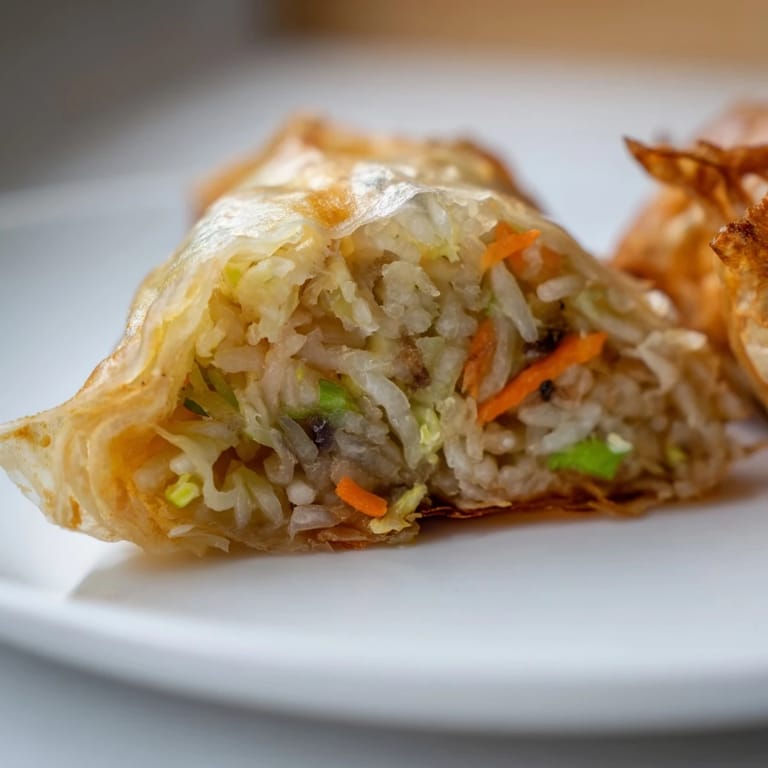
 Save
Save The first time I made these crispy rice paper dumplings, I was hunting for something that felt indulgent but wouldn't leave my kitchen smelling like a deep fryer for three days. A friend had raved about the ones she'd had at a pop up dinner, and I became obsessed with recreating that golden, shattering crunch. What surprised me most wasn't the technique—it was how forgiving the whole process turned out to be, and how quickly they disappeared from the plate.
I made a batch for a small dinner party on a rainy October evening, and I remember standing at the stove flipping dumplings while someone told a story that made everyone laugh so hard one of them snorted wine through their nose. The timing worked out perfectly—they came out of the pan hot and crackling just as we were ready to eat, and I watched people's faces change the moment they bit into one. That's when I knew this recipe was a keeper.
Ingredients
- Green cabbage: The backbone of the filling—it gives bulk without heaviness and stays crisp even after cooking.
- Carrot: Grated fine so it softens quickly and adds natural sweetness that balances the savory soy.
- Shiitake mushrooms: These have a deeper, meatier flavor than regular mushrooms, which is why they matter here.
- Green onions: Slice them thin and add them at the very end of mixing so they keep a little snap.
- Garlic and ginger: Both minced fine—they distribute throughout the filling and make it taste like you spent all day on this.
- Soy sauce or tamari: The umami anchor; use tamari if you need gluten free.
- Sesame oil: Just a teaspoon, but it's the secret that makes people ask what that incredible flavor is.
- Rice paper: The 22 cm round sheets are the standard—they're delicate but strong enough to hold up to frying if you don't soak them too long.
- Neutral oil: Canola or avocado oil both work; save the fancy oils for dipping sauces.
Tired of Takeout? 🥡
Get 10 meals you can make faster than delivery arrives. Seriously.
One email. No spam. Unsubscribe anytime.
Instructions
- Mix the filling:
- Combine all the filling ingredients in a bowl and toss everything together. You want the flavors to get to know each other before the vegetables even hit the pan.
- Cook the filling:
- Sauté over medium heat for just 3 to 4 minutes until the vegetables soften but still have a little texture. The mushrooms will give off liquid—that's perfect, let it cook off. Spread the filling on a plate to cool faster; warm filling is impossible to wrap.
- Wake up the rice paper:
- Fill a shallow dish with warm (not hot) water. Dip each sheet for about 5 to 10 seconds—this is where patience matters. Under soak and it stays brittle; over soak and it tears. You'll feel it go soft and pliable in your fingers.
- Wrap like you mean it:
- Lay the rice paper on a damp kitchen towel. Put 2 tablespoons of filling in the center, fold in the sides, and roll it up tight like a burrito. If it's loose, it'll fall apart in the pan. Work a few and you'll find your rhythm.
- Get the pan ready:
- Heat oil in a large nonstick skillet over medium heat until a small piece of rice paper sizzles when it hits the pan—that's your signal to start. Too cool and they'll absorb oil and feel greasy; too hot and the outside burns before the inside sets.
- Fry with intention:
- Place dumplings seam side down and cook for 2 to 3 minutes until golden and crackling, then flip gently. You want both sides evenly brown and the rice paper to sound crispy when you tap it. This is the moment where everything pays off.
- Make the sauce:
- While they're resting, whisk together soy sauce, rice vinegar, a touch of maple syrup or honey, and chili flakes if you want heat. Taste it—it should make your mouth want to move forward.
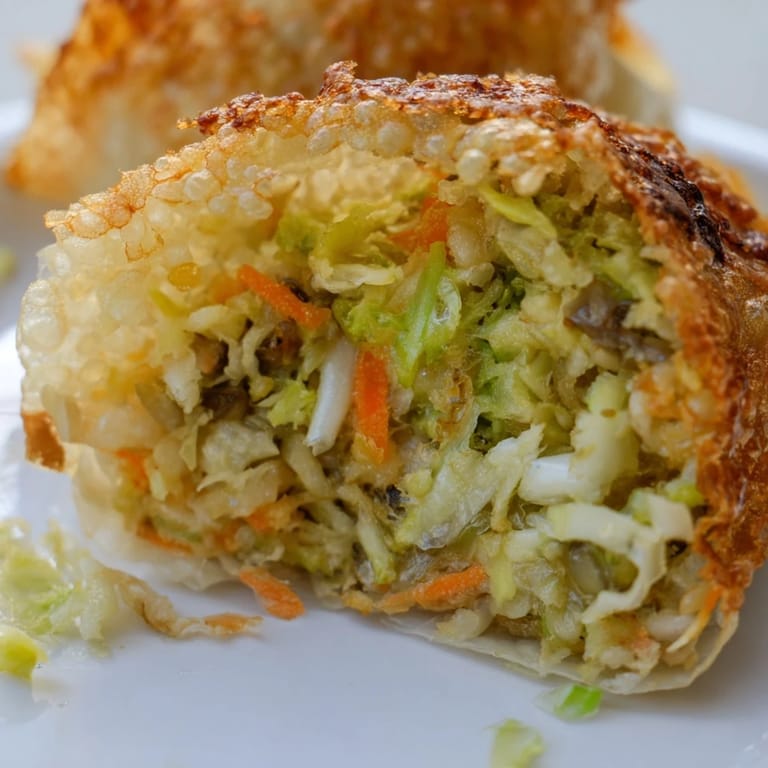 Save
Save There's a moment right before you serve these when you hear that perfect crispy sound, and you know you've done it right. It's such a small thing, but it's the difference between homemade and restaurant-quality, and it happens in your own kitchen.
Why Rice Paper Matters
Rice paper is nothing like regular dumpling wrappers—it's thin, almost translucent, and when you fry it properly, it shatters instead of chewy. The key is respecting the soak time; I learned this after making them too soft and watching them fall apart in the oil. Now I time it like I'm defusing a bomb: not a second longer than 10 seconds. Once you understand that rice paper wants to be crispy, everything else clicks into place.
The Filling is Flexible
I've made these with shredded tofu, leftover cooked chicken, and even finely chopped water chestnuts when I had them. The formula that matters is balancing something absorbent (cabbage, carrot) with something flavorful (mushrooms, garlic, ginger) and something liquid (soy sauce, sesame oil). As long as you keep the filling to 2 tablespoons per dumpling and let it cool completely, you can improvise without guilt. Some nights I add a whisper of white pepper; other times I double the sesame oil. The dumplings don't judge.
Serving and Timing
Serve these immediately while they're still crackling—that's the whole point. If you need to make them ahead, you can wrap and refrigerate them uncooked for up to 4 hours, then fry them straight from cold, which actually works beautifully. Reheat leftover dumplings in a 350°F oven for about 5 minutes to bring back the crunch instead of microwaving them into sadness.
- Make a double batch and freeze the uncooked dumplings on a sheet tray, then fry them straight from frozen without thawing.
- The dipping sauce keeps in the fridge for a week, so make it ahead and you've already won half the battle.
- Arrange them on the plate seam side down so people can see that perfect golden color the moment it arrives at the table.
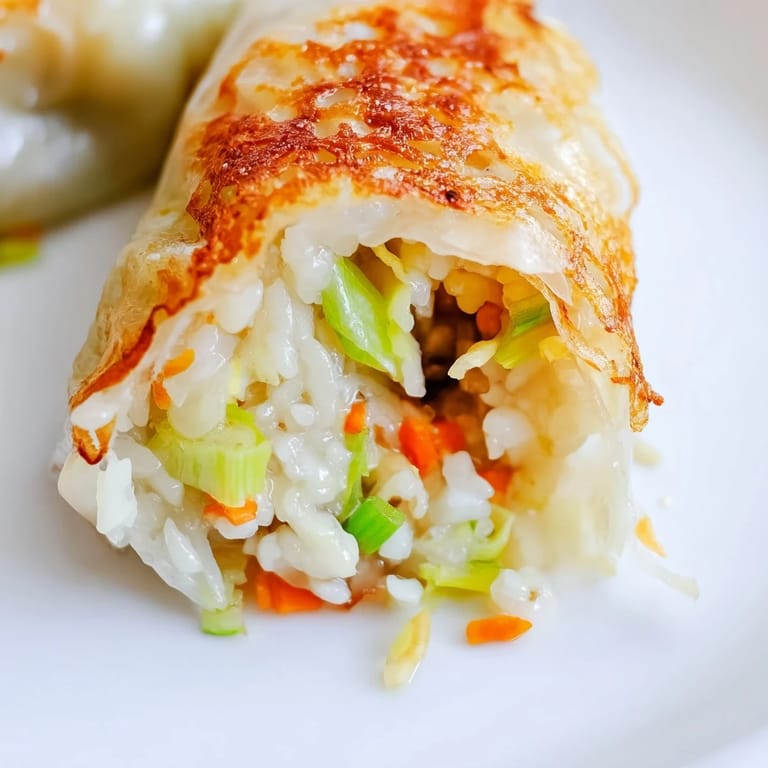 Save
Save These dumplings have become my go-to when I want to impress without stress. Every time someone bites into one and their eyes light up at that crunch, I remember why I love cooking.
Cooking Q&A
- → How do I make the rice paper crispy?
Ensure the rice paper is just softened in warm water, not overly soaked. After rolling, pan-fry in a hot skillet with oil, turning gently until all sides are golden and crisp.
- → Can I add protein to the filling?
Yes, finely chopped tofu or cooked chicken can be incorporated to boost protein while maintaining the filling’s texture.
- → What is the best oil for frying these dumplings?
Neutral oils with high smoke points like canola or avocado oil are ideal for frying to achieve crispiness without overpowering flavors.
- → How should I store leftovers?
Store dumplings in an airtight container in the refrigerator and reheat in a skillet to restore crispness before serving.
- → Is the dipping sauce necessary?
The dipping sauce adds a tangy-sweet contrast that complements the savory filling, but the dumplings are flavorful enough to enjoy on their own.