 Save
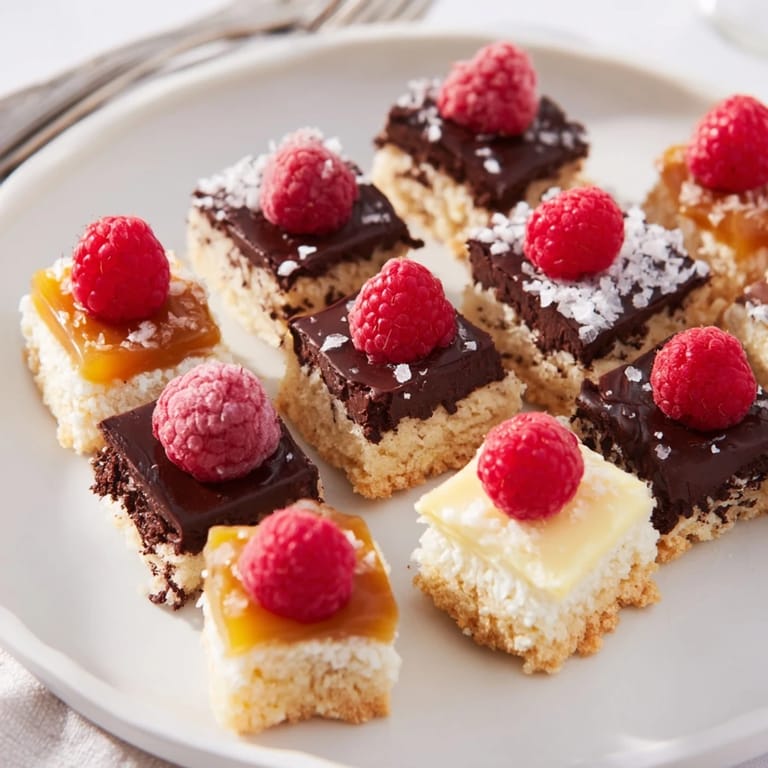
Save I discovered the magic of texture contrast at a dinner party where everything felt a bit too polished, too expected. Someone brought a small wooden board with these petite squares arranged like a game board, and suddenly the table came alive. Each bite was different—the snap of shortbread, the cloud of cream cheese, the silken chocolate—and I realized that dessert didn't have to be one monolithic thing. It could be a conversation starter, a puzzle to solve with your palate. That night, I went home determined to master this playful little creation.
I made this for my sister's book club meeting, and what I didn't expect was how much time people would spend just looking at it before eating. Someone pulled out her phone to photograph it, and then everyone else did too. By the end of the evening, three people had asked for the recipe, but more importantly, they'd all told me how much they appreciated that I'd given them permission to enjoy dessert as something playful rather than precious.
Ingredients
- Crisp shortbread cookies or graham crackers, crushed (80 g): These form your anchor flavor and texture—the familiar comfort that makes the weird flavors less weird.
- Unsalted butter, melted (30 g): Just enough to bind everything together without making it greasy or heavy.
- Cream cheese, softened (80 g): Make sure it's truly soft, or you'll end up with lumps that no amount of beating will fix.
- Powdered sugar (30 g): Finer than granulated, so it dissolves into the cheese instead of creating a grainy texture.
- Vanilla extract (1 tsp): This quiet ingredient prevents the cream cheese from tasting too sharp or one-dimensional.
- Dark chocolate, chopped (100 g): Chopping it yourself matters more than you'd think—pre-chopped chocolate sometimes has additives that interfere with melting smoothly.
- Heavy cream (60 ml): Just enough to create a ganache that's pourable but holds its shape on the shortbread.
- Salted caramel sauce (80 g): Store-bought is absolutely fine here; homemade takes more time than the whole recipe deserves.
- Flaky sea salt, for garnish: The finishing touch that makes people say "oh" when they taste it.
- Small raspberries, optional (16): They add a small pop of tartness and visual charm to the crunchy squares.
Tired of Takeout? 🥡
Get 10 meals you can make faster than delivery arrives. Seriously.
One email. No spam. Unsubscribe anytime.
Instructions
- Build your crunchy foundation:
- Crush the cookies until they're mostly fine crumbs with a few slightly larger pieces for texture. Pour the melted butter over them and mix until every dry bit is coated and the mixture smells like toasted butter. Press this firmly and evenly into your parchment-lined pan—use the bottom of a measuring cup to really flatten it.
- Whip the cream cheese cloud:
- This is easier if you let the cream cheese sit out for twenty minutes first. Beat it with the sugar and vanilla until it looks like thick whipped cream, pale and fluffy. If you see any lumps, keep beating; they'll eventually surrender.
- Create the chocolate magic:
- Bring the cream to a bare simmer—you'll see tiny bubbles around the edges—then pour it over the chopped chocolate and let it sit undisturbed for two minutes. The residual heat will do the melting for you. Stir gently from the center outward until you have something glossy and pourable.
- Map out your grid:
- Once the crunchy base has chilled and firmed up, use a ruler and a sharp knife to lightly score a 4x4 grid into the surface. Don't cut deep; just create visible lines so you know where each square lives. This takes thirty seconds and prevents you from eyeballing it and ending up with uneven pieces.
- Arrange your textural checkerboard:
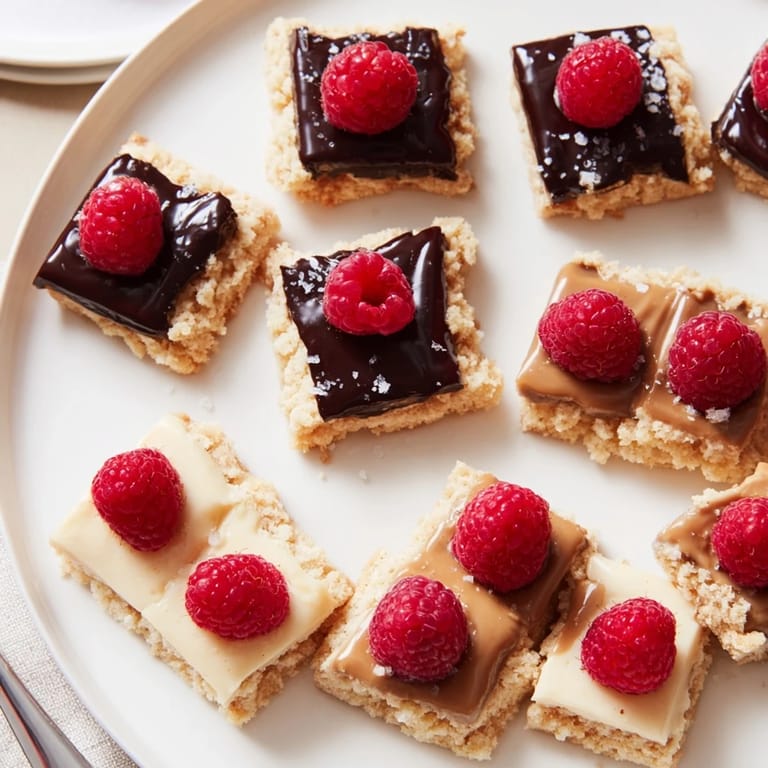
- Now the fun part: spread or spoon each filling into its designated four squares, making sure that no two identical textures sit next to each other (not even diagonally). Leave four squares as naked shortbread, crowned with a single raspberry if you have them. Stand back and admire your edible game board.
- Set and serve:
- Return everything to the refrigerator for thirty minutes so the layers set and adhere to each other. When you're ready to serve, run a sharp knife along your scored lines and lift each square out gently.
 Save
Save What stayed with me most from that dinner party wasn't the compliments, though those were nice. It was watching a seven-year-old carefully examine each square before choosing one, treating it like a decision that actually mattered. That's when I realized this dessert does something most desserts don't: it gives people permission to slow down and really think about what they're eating.
The Architecture of Contrast
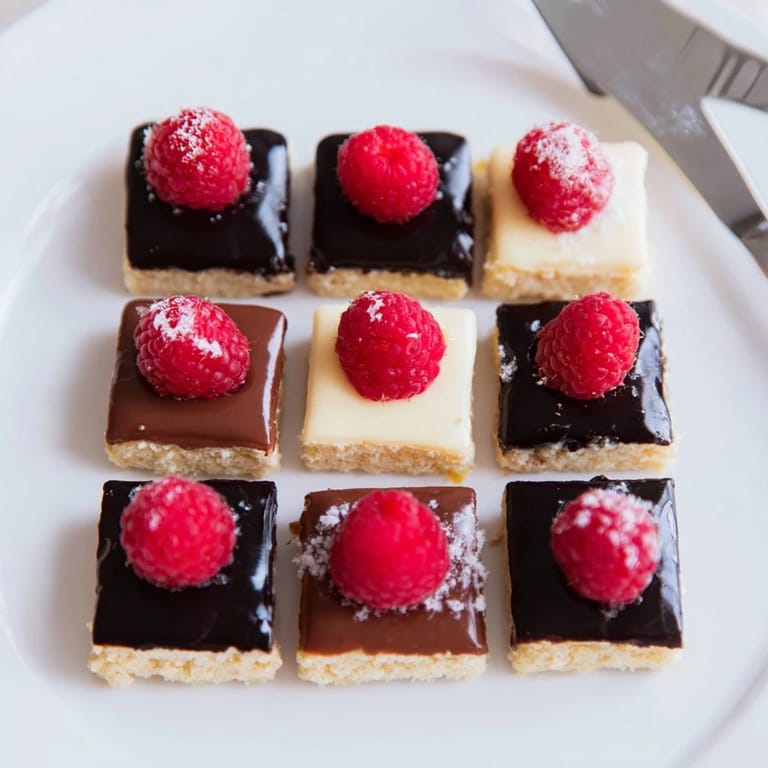
The secret life of this dessert happens in the checkerboard arrangement. By forcing different textures to sit beside each other rather than in layers, you keep your palate awake. One moment you're crunching through shortbread, the next you're enveloped in cream cheese, then chocolate is on your tongue. It's like a flavor conversation where no one interrupts. The pattern also forces you to think about balance; you can't hide all the chocolate in one corner. Everything gets equal real estate, which somehow feels fair.
Customizing Your Squares
The skeleton of this recipe is flexible enough to bend to your preferences without breaking. If you love nuttiness, toast some almonds or hazelnuts, chop them fine, and swap half the cookies for them. If citrus is your love language, add lemon zest to the cream cheese or make a white chocolate ganache instead of dark. I once made a version with matcha in the cream cheese layer and a friend made one with a thin layer of lemon curd in the sweet squares. The structure stays the same; only the details change.
- Toast your own nuts if you use them, and chop them finely so they distribute evenly without creating lumpy spots.
- If you substitute caramel with another topping, make sure it's thick enough not to seep into the shortbread and thin enough to spread easily.
- Remember that whatever you add should complement the other three layers, not compete with them for attention.
Timing and Presentation
Most of the work happens before you assemble, which is why this recipe feels less frantic than it looks. You can make the base and fillings hours ahead, even a day ahead if you store them separately. The actual assembly takes maybe ten minutes, and the final chill is just time passing while you do something else. When you slice and serve, do it right before people eat so the dessert is still slightly cool but not aggressively cold; that's when all four layers taste their best.
 Save
Save This dessert taught me that the most memorable food moments aren't always about flavor alone. Sometimes they're about surprise, about texture talking to you in four different voices at once. Make this for people you want to see smile while they're thinking.
Cooking Q&A
- → How is the crunchy layer prepared?
Crushed shortbread cookies mixed with melted butter are pressed evenly into the pan and chilled to form a firm base.
- → What ingredients create the soft layer?
The soft layer combines cream cheese, powdered sugar, and vanilla extract whipped until smooth.
- → How is the chocolate ganache made?
Heavy cream is gently heated and poured over chopped dark chocolate, then stirred until smooth and glossy.
- → What gives the salty layer its flavor?
Salted caramel sauce with a sprinkle of flaky sea salt provides the salty and rich contrast.
- → How is the checkerboard pattern achieved?
The pan’s chilled base is lightly marked into a 4x4 grid, then each square is carefully filled with different layers so no two identical textures touch.
- → Can this dessert be garnished?
Yes, placing raspberries on the crunchy squares adds fresh color and a slight tartness.