 Save
Save My daughter pressed her nose against the kitchen window on a gray December afternoon, watching the snow fall in thick, lazy flakes. She asked if we could build a village right there on the counter—not with frosting or gingerbread, but with things we could actually eat. That's when I remembered my grandmother's trick of turning simple ingredients into edible art, and suddenly cheese cubes and almonds felt like the perfect architecture for something magical.
I brought these to a holiday potluck last winter, nervous they'd get lost among the heavier casseroles and cookies. Instead, grown adults huddled around the platter like it was a actual tourist attraction, and I watched someone's eyes light up when they realized the roofs were edible. That's the moment I understood this wasn't just a snack—it was edible nostalgia.
Ingredients
- Firm cheese (cheddar, gouda, or swiss): Cut into 2 cm cubes—use what you love eating, because you'll taste every bite. The firmer the cheese, the easier it holds its shape.
- Sliced almonds: These become delicate roofs, and their subtle sweetness balances the cheese perfectly. Toast them lightly first if you want deeper flavor.
- Pale or white crackers: Water crackers or rice crackers work best—they're sturdy enough to hold everything without stealing the show.
- Cream cheese: Softened and spread thin, it mimics fresh snow and acts as gentle glue holding the village together.
- Fresh chives: Snipped into small pieces, they become little trees or garden details. Don't skip this—it's what makes the village feel alive.
- Red bell pepper: Diced into tiny squares, these become doors and windows. The brightness is essential.
- Poppy or sesame seeds: Optional but worth it—a sprinkle adds texture and makes the snow look more real.
Tired of Takeout? 🥡
Get 10 meals you can make faster than delivery arrives. Seriously.
One email. No spam. Unsubscribe anytime.
Instructions
- Create the snowy foundation:
- Spread a thin, generous layer of cream cheese across each cracker—not too much or it becomes sloppy, but enough that it catches the light like actual snow. You'll feel the slight resistance as your knife smooths it out, and that's perfect.
- Place the houses:
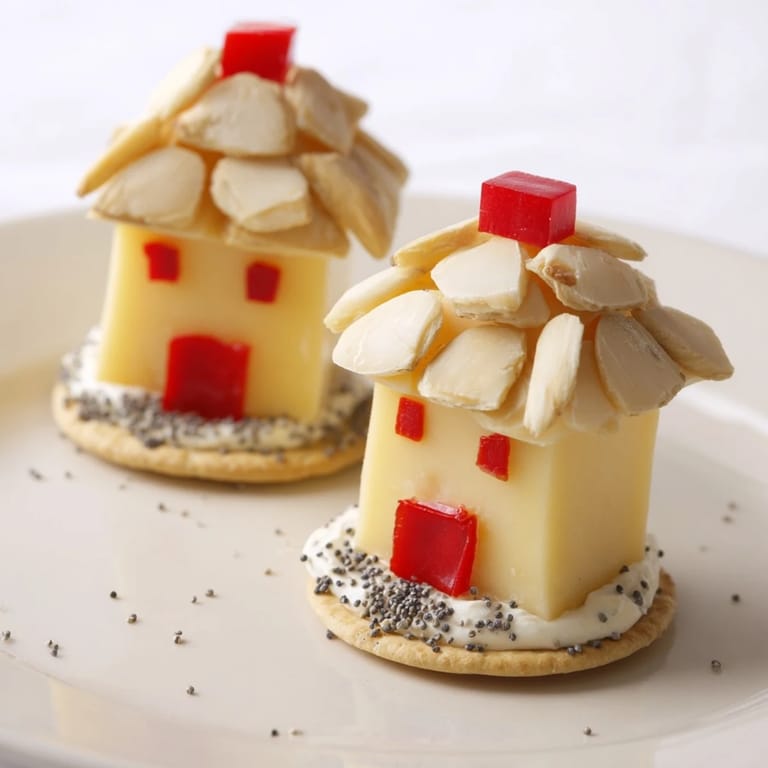
- Set a cheese cube firmly on top of each snowy base, pressing down just enough to anchor it without crumbling the cracker. Each cube should sit like a little cottage settled into winter.
- Build the roofs:
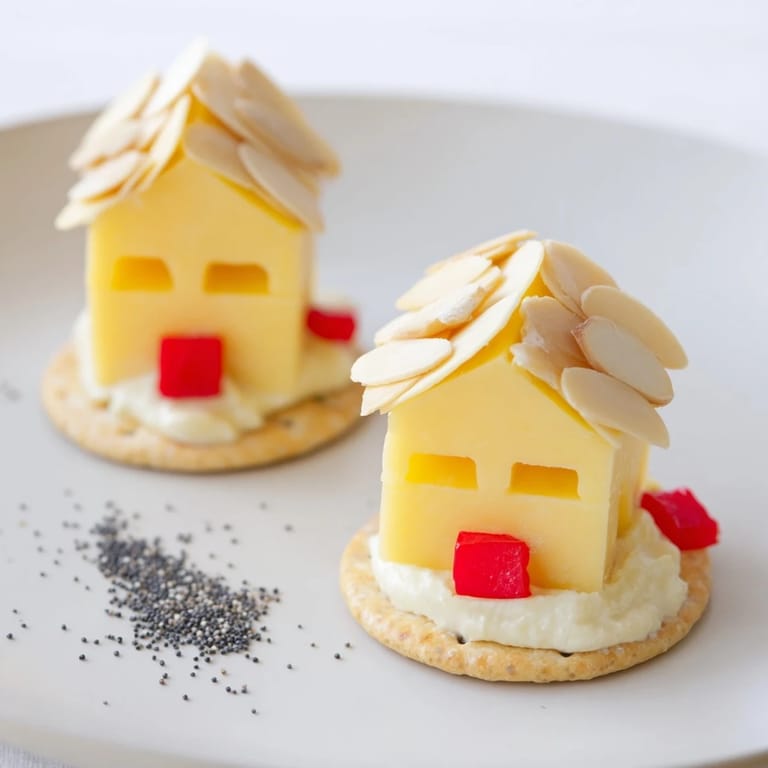
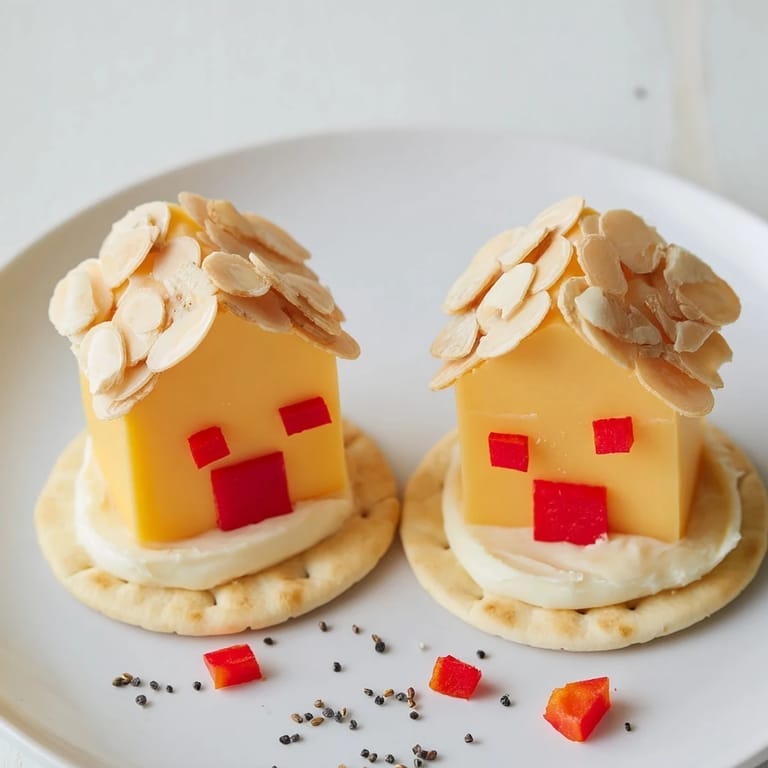
- Take two almond slices and lean them against each cheese cube to form a peaked roof, overlapping them slightly at the top for that authentic Alpine look. This is the part that feels like actual architecture, and it should feel intentional.
- Add character to the village:
- Use your chive pieces and diced red pepper to create doors, windows, and tiny gardens around each house. There's no wrong way—let your hands decide where details belong.
- Finish with snow details:
- If you're using poppy or sesame seeds, sprinkle them lightly across the cream cheese landscape to add texture and sparkle. It transforms everything into something almost storybook-like.
- Arrange on the platter:
- Group your finished houses close together as if they're nestled in the same village square, leaving small cream cheese paths between them. Step back and look—you've just created something both beautiful and delicious.
 Save
Save When my son's friend visited and saw the Alpine Village, he stopped eating for a full minute just to take photographs. He later told his mother it was too pretty to eat, but he ate three anyway. That's when I realized this recipe does something special—it bridges the gap between decoration and nourishment, between childhood wonder and adult taste.
Cheese Selection & Color Variation
The magic of this recipe lives partly in mixing different cheeses to create a village with real character. Use pale cheddar for some houses and darker gouda for others, and suddenly you have architectural variety. Swiss cheese with its holes adds visual interest, and softer varieties like brie can be gently pressed into cubes. I've learned that the color contrast makes the whole platter feel more intentional and less like an accident.
Adaptations & Accessibility
For nut allergies, thin cucumber or carrot slices lean against the cheese cubes just as beautifully, though the crunch is different. Gluten-free crackers work perfectly if that matters in your kitchen. I've even made this with dairy-free cheese blocks when a friend visited, and while the texture changes slightly, the playfulness remains completely intact. The recipe is genuinely flexible—it's more about the assembly than the specific ingredients.
Serving & Storage Wisdom
These taste best served cold or at room temperature, fresh and assembled, though I've kept components separate and assembled them 30 minutes before guests arrived. Set them on your prettiest platter—dark backgrounds make the white cream cheese and cheese cubes stand out dramatically. Everyone always asks if you made this yourself, and somehow even though it took 20 minutes, you get to feel like a culinary artist.
- Assemble on a platter with space between each house so guests can easily pick them up.
- Serve with a small spoon or fork nearby in case anyone wants to eat them more formally.
- Prepare components ahead and assemble just before serving for maximum cracker crispness.
 Save
Save This recipe reminds me that appetizers don't have to be complicated to be memorable. A plate of edible architecture, built with care and a little imagination, feeds something beyond hunger.
Cooking Q&A
- → What types of cheese work best for the houses?
Firm cheeses like cheddar, gouda, or swiss are ideal for cutting into cubes that hold their shape well.
- → How do I make the cracker base resemble snow?
Spread a thin layer of softened cream cheese onto each cracker to create a snowy, creamy landscape effect.
- → What can be used instead of almond slices for roofs?
Thin slices of cucumber or carrot can replace almonds for a nut-free version with similar shape and texture.
- → How can I decorate the cheese houses?
Use chive pieces for trees or bushes, diced red bell pepper for doors or windows, and sprinkle poppy or sesame seeds for added detail.
- → How long can these be prepared ahead of time?
For best texture, assemble shortly before serving as crackers may soften if left too long.